Germany's police statistics describe a country where most crime students encounter is property crime and fraud. That is not the same as saying nothing can happen to you: violent crime and hate crime exist, and the figures only count what is reported. This page puts the 2025 national figures in context, lists the numbers to save, explains your duties and rights when the police check your identity, and describes the scams that target newcomers. Medical emergencies are covered in the emergency-care guide, and racist incidents in the guide to racism and discrimination; the other everyday rules, from Sunday closing to quiet hours, are in the daily-life hub.
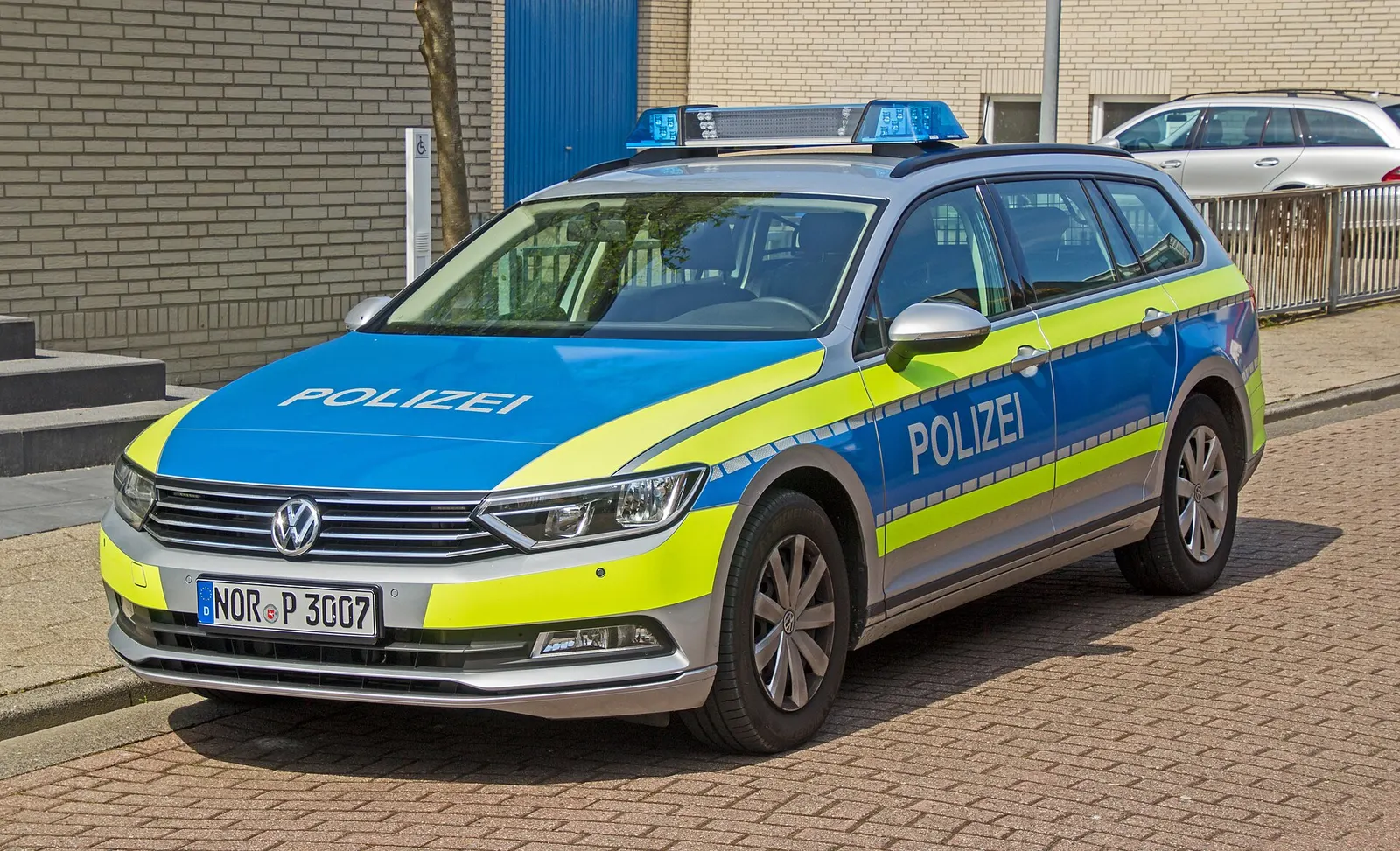
Emergency numbers to save on your first day
| Number | Service | When to call | Notes |
|---|---|---|---|
| 110 | Police emergency | A crime in progress, danger to someone, an accident with injuries, a threat | Free of charge |
| 112 | Fire brigade and ambulance | Fire, life-threatening illness or injury | Also the EU-wide emergency number |
| 116117 | Out-of-hours doctor (ärztlicher Bereitschaftsdienst) | Illness that cannot wait until the practice reopens but is not life-threatening | 24 hours; not for dental emergencies |
| 116 016 | Hilfetelefon Gewalt gegen Frauen | Women affected by violence, and people supporting them | 24 hours, free, anonymous; advice in 18 languages including Turkish and Kurmanji, through interpreters |
When you call 110 or 112, say first where you are (street and house number, or a landmark or station), then what happened and how many people are hurt, and do not hang up until the dispatcher has what they need. If your German fails, say so and keep to the essentials in English. For a crime that is over and needs no urgent response, go to a police station or report it later rather than tying up the emergency line.
Is Germany safe for international students? What the statistics say
The Polizeiliche Kriminalstatistik (PKS) counts the offences the police record, by the year the investigation is closed. In 2025 it recorded 5,508,559 offences, and the police cleared 57.9% of them. The total fell, but the Federal Criminal Police Office warns that it is not comparable with earlier years, because the partial legalisation of cannabis from April 2024 removed a whole category of offences. Violent crime, which is comparable, fell slightly.
| Offence | Cases in 2025 | What it means for a student |
|---|---|---|
| All recorded offences | 5,508,559 | Not comparable with earlier years because of the cannabis law |
| Fraud with a suspect acting in Germany | 681,354 | Online shops, rentals, phone scams; fraud run entirely from abroad is counted separately |
| Bicycle theft | 214,264 | Rarely cleared; a good lock and a noted frame number help |
| Pickpocketing | 95,184 | Rarely cleared, and only about 50 per cent of incidents reach the police; stations, trams and crowds |
| Residential burglary | 82,920 | Up on 2024; lock the door even in a shared flat |
| Violent crime | 212,335 | Includes robbery and serious assault; cleared far more often than theft |
| Hate crime (politically motivated) | 22,159 | Recorded separately from the PKS; 19,484 with a xenophobic motive |
Two cautions apply to every number in that table. They count recorded cases, not the risk to an individual, and they leave out what is never reported: the BKA's own victim survey found that only about 50 per cent of pickpocketing incidents became known to the police. And they are national: this guide did not collect city-level figures, which the Länder and cities publish in their own statistics. The statistics do not break victims down by student status. Newcomers can, however, be particularly exposed to fraud: they rent from abroad, buy online and do not yet know how German authorities communicate.
- Police crime statisticsPolizeiliche Kriminalstatistik (PKS)
- The annual count of offences recorded by the German police, published by the Federal Criminal Police Office (BKA) and the Länder. It records cases when the police investigation ends, so it shows reported crime and police activity, not the true extent of crime. Politically motivated crime is counted in a separate system that classifies cases when they are opened.
Do I have to carry ID in Germany?
As a foreign national you must hold a valid passport or passport substitute for as long as you stay in Germany, and you must present, hand over and temporarily leave your passport (or substitute) and residence title with the authorities enforcing immigration law when they ask, as far as needed for that purpose. The Residence Act does not say in so many words that you must carry these documents at all times. But if the police need to establish the identity of someone suspected of an offence and cannot do so otherwise, they may hold the person until they can, so carrying your documents saves you a trip to the station.
In practice, carry your electronic residence permit card (eAT) once you have it; while your permit is being processed, carry the Fiktionsbescheinigung the foreigners authority gives you, which proves your status (the Fiktionsbescheinigung guide). Many people carry the residence card plus a copy of the passport's photo page; if you are stopped without the passport, establishing your identity can take longer. When you travel abroad, even inside the Schengen area, carry the passport and the residence card together. The permit itself is explained in the residence-permit guide.
- Electronic residence permitelektronischer Aufenthaltstitel (eAT)
- The credit-card-sized residence permit that the foreigners authority issues to non-EU students. Together with your passport it proves that you are in Germany legally; on its own it is not a passport and does not replace one for travel.
What should I do if the police stop me?
Stay calm and check who is asking
Uniformed officers are easy to recognise. Ask a plain-clothes officer for their police identity card (Dienstausweis); the police's own prevention service advises asking for it whenever someone claims to be an officer.
Give your personal details
You must tell a competent official your name, date and place of birth, marital status, occupation, address and nationality. Refusing or giving false details is an administrative offence with a fine of up to €1,000.
Show your documents
Hand over your passport or residence documents if asked; if you do not have them, explain where they are.
Do not discuss the accusation without advice
If you are treated as a suspect, you must be told what you are accused of, and you have the right to say nothing about it and to consult a lawyer of your choice at any time, even before questioning. Using that right is not an admission. Witnesses have different duties.
Language and paperwork
If you report a crime and do not speak German, you are entitled to the help needed to make the report in a language you understand and, on request, to a written confirmation. Whatever your role, do not sign a statement you cannot read.
Scams that target newcomers
Fraud is a real risk for newcomers. The police recorded 4,567 cases of fraud by fake police officers in 2025 alone. The pattern the police's prevention service describes: callers whose number is spoofed to look like a local or police number, claiming that your money is no longer safe; 'officers' at the door with forged ID cards; and fake arrest warrants sent by post or e-mail that demand a fine to avoid arrest. The German police will never ask you for money or valuables, on the phone or at the door.
| Scam | How it works | What to do |
|---|---|---|
| Fake police or officials | A call from a spoofed number, a visitor with a forged ID, or a letter or e-mail with a 'warrant' and a fine to pay | Hang up; call the authority on a number you looked up yourself; never hand over money, cards or valuables |
| Rental fraud | A cheap flat, a landlord 'abroad', a deposit transferred before any viewing or contract | Never pay before a viewing and a signed contract; see the housing-scams guide |
| Fake shops and classified-ad fraud | Goods paid in advance never arrive; a 'buyer' sends a fake payment confirmation | Pay on collection for private sales; check the seller; keep messages |
| Phishing | Messages that imitate your bank, a parcel service or the broadcasting fee office and ask you to log in | Open the official app or website yourself; never follow the link |
If you have been defrauded, report it to the police, keep every message and payment record, and tell your bank at once if money left your account. The housing market and its scams are covered in the housing-scams guide, and safe ways to send money in the money-transfer guide.
Violence, harassment and help
If you are attacked or threatened, call 110, get to a safe place and, if you are hurt, call 112 or go to a hospital emergency department. Report the offence even if it seems pointless: you can file the report with the police, the public prosecutor or a local court, and a racist or xenophobic motive is one of the circumstances the court weighs at sentencing. Women affected by violence, including in a relationship or a shared flat, can call the Hilfetelefon on 116 016 around the clock, free and anonymously, with advice in Turkish and 17 other languages. Rights for women, LGBTIQ+ and disabled students are in the minority-rights guide.
- Violence-against-women helplineHilfetelefon Gewalt gegen Frauen
- The national helpline for women affected by any form of violence, run on behalf of the federal government. It answers 116 016 24 hours a day, also by online chat, and connects callers to interpreters in 18 languages, and can refer callers to local support.
In practice: a safety routine for your first weeks
Set up once
- Save 110, 112, 116117 and 116 016 in your phone
- Carry your residence card or Fiktionsbescheinigung, and keep a copy of your passport's photo page
- Buy a solid bike lock and note your bike's frame number
- Keep your bag closed and in front of you on crowded platforms, trams and at events
- Lock your room and the flat door, even in a shared flat
- Treat any call, letter or e-mail that demands money in the name of the police or an authority as a scam until you have checked it yourself
- Know the nearest hospital emergency department and pharmacy
Frequently asked questions
Is Germany safe for international students?
For most students the realistic risks are theft and fraud rather than violence. In 2025 the police recorded 212,335 cases of violent crime, against 214,264 cases of bicycle theft and 681,354 cases of fraud. The figures count reported cases, not individual risk, and racist hate crime exists, with 19,484 offences recorded with a xenophobic motive.
Do I have to carry ID in Germany?
You must hold a valid passport and present your passport and residence permit to the authorities when asked; the law does not literally require you to carry them at all times. If the police cannot establish a suspect's identity, they may hold the person until they can, so carry your residence card or Fiktionsbescheinigung and a copy of your passport.
What should I do if the police stop me?
Stay calm, ask a plain-clothes officer for their police ID, and give your personal details, which you are obliged to do. If you are accused of something, you have the right to say nothing about it and to consult a lawyer first. Do not sign anything you cannot read.
What is the emergency number in Germany?
110 for the police and 112 for the fire brigade and ambulance; both are free from any phone. For illness that is not life-threatening outside surgery hours, call the out-of-hours medical service on 116117.
How do I recognise a fake police officer?
Real police officers never ask for money or valuables and never collect them at your door. Fraudsters spoof phone numbers and send fake warrants demanding fines. Hang up, ask anyone at the door for their service ID while they wait outside, and check by calling the police on a number you looked up yourself.
What should I do if my phone or wallet is stolen in Germany?
Report it to the police, online in most Länder or at a station, and keep the report number. Block bank cards immediately through your bank's app or hotline, and ask your provider to block your SIM. The loss of your passport must be reported to the immigration office without delay (AufenthV § 56), and your consulate issues a new one; see bank accounts for card details.
Sources
15 sources, all official
- Aufenthaltsverordnung (AufenthV) § 56 — Ausweisrechtliche PflichtenBundesministerium der Justiz / gesetze-im-internet.de (Official)
- Polizeiliche Kriminalstatistik 2025 – IMK-BerichtBundeskriminalamt (BKA) (Official)
- Bundesweite Fallzahlen 2025 – Politisch motivierte Kriminalität (Factsheet)Bundeskriminalamt (BKA) / Bundesministerium des Innern (Official)
- Kontakt aufnehmenBundeskriminalamt (BKA) (Official)
- 116117.de – Der Patientenservice (ärztlicher Bereitschaftsdienst)Kassenärztliche Bundesvereinigung (KBV) (Official)
- Hilfetelefon Gewalt gegen Frauen – 116 016: Neue Nummer, neuer LookBundesamt für Familie und zivilgesellschaftliche Aufgaben (BAFzA) (Official)
- Beratung in 18 SprachenHilfetelefon Gewalt gegen Frauen (Bundesamt für Familie und zivilgesellschaftliche Aufgaben) (Official)
- Aufenthaltsgesetz § 3 PasspflichtBundesministerium der Justiz (gesetze-im-internet.de) (Official)
- Aufenthaltsgesetz § 48 Ausweisrechtliche PflichtenBundesministerium der Justiz / gesetze-im-internet.de (Official)
- Gesetz über Ordnungswidrigkeiten § 111 Falsche NamensangabeBundesministerium der Justiz (gesetze-im-internet.de) (Official)
- Strafprozessordnung § 163b Maßnahmen zur Identitätsfeststellung and § 136 Erste VernehmungBundesministerium der Justiz (gesetze-im-internet.de) (Official)
- Strafprozessordnung § 158 Strafanzeige; StrafantragBundesministerium der Justiz (gesetze-im-internet.de) (Official)
- Strafgesetzbuch § 46 Grundsätze der StrafzumessungBundesministerium der Justiz (gesetze-im-internet.de) (Official)
- Betrug – Themen und TippsPolizeiliche Kriminalprävention der Länder und des Bundes (ProPK), polizei-beratung.de (Official)
- Betrug durch falsche PolizistenPolizeiliche Kriminalprävention der Länder und des Bundes (Official)