German supermarkets are dominated by a few large groups, quick at the till and closed on Sunday. The first shop is confusing for many newcomers: a deposit added to the water, no free carrier bags, cashiers who scan faster than you can pack, and a queue behind you. This page sets out the types of shop, what groceries cost, how the till and the deposit work, and how to plan a week. It belongs to the daily-life hub; the full monthly budget is in the cost-of-living guide.
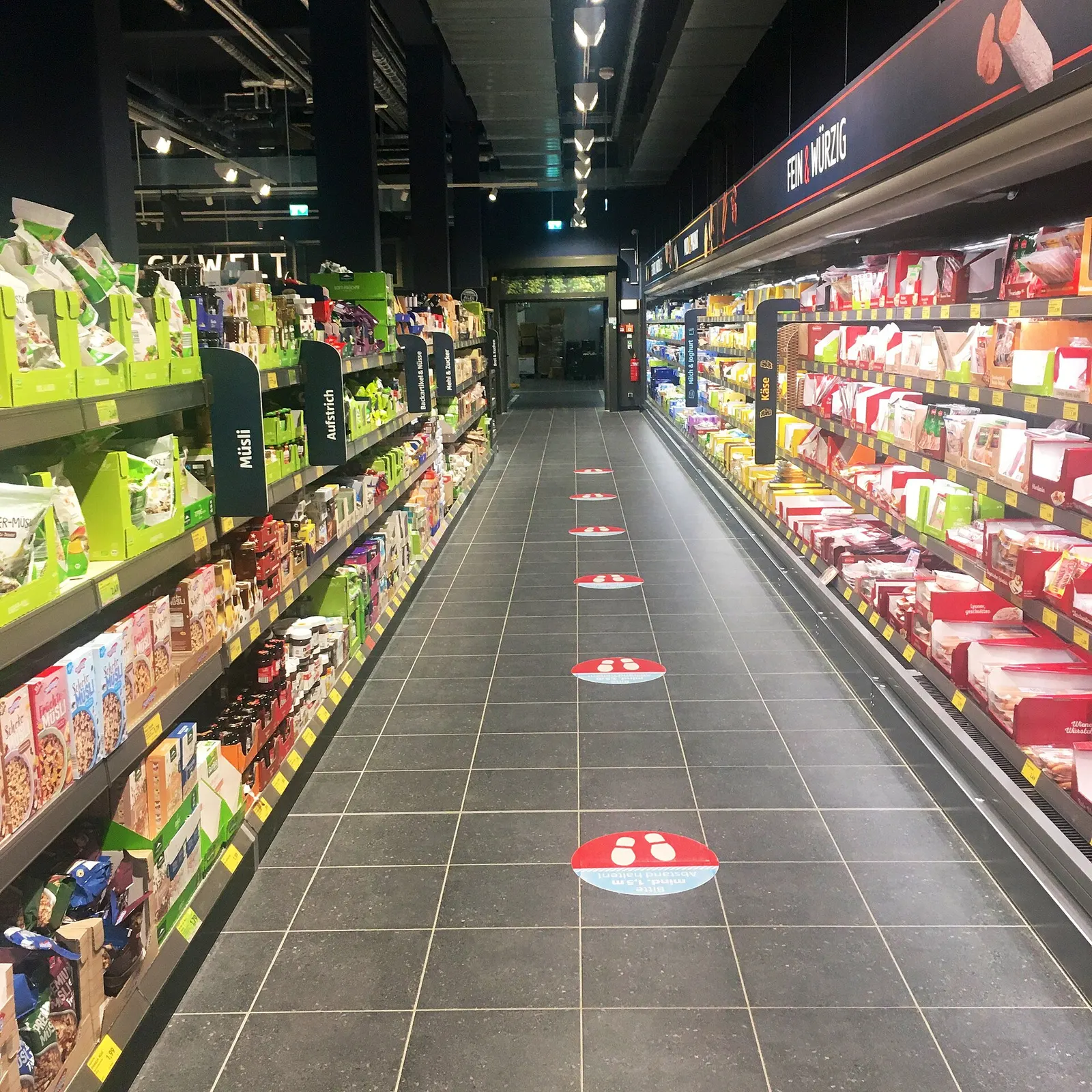
The types of shop and what they are for
| Type | Chains you will see | What it is for |
|---|---|---|
| Discounter | Aldi Nord, Aldi Süd, Lidl, Penny, Netto | The weekly shop: a short range built around own brands, fruit and vegetables, dairy, bread, basic meat; weekly special offers on non-food |
| Full-range supermarket | Rewe, Edeka, Kaufland, regional chains | Wider choice, branded goods, often fresh meat, fish and cheese counters |
| Organic chain | Alnatura, denn's, Bio Company and others | Organic food at higher prices; the discounters and full-range chains carry organic own brands too |
| Drugstore (Drogerie) | dm, Rossmann, Müller | Toiletries, cleaning products, baby goods, some food and supplements |
| Turkish, Arab, Asian and other international grocers | Independent shops and small chains, most of them in the large cities | Halal meat, fresh produce by the kilo, bread, spices, pulses; see the halal and Turkish shops guide |
| Weekly market (Wochenmarkt) | Markets on fixed days | Fruit, vegetables, cheese, bread; prices vary; bring cash, as some stalls take nothing else |
| Kiosk, Späti, petrol station | Independent | Drinks and snacks late at night or on Sunday, at a premium |
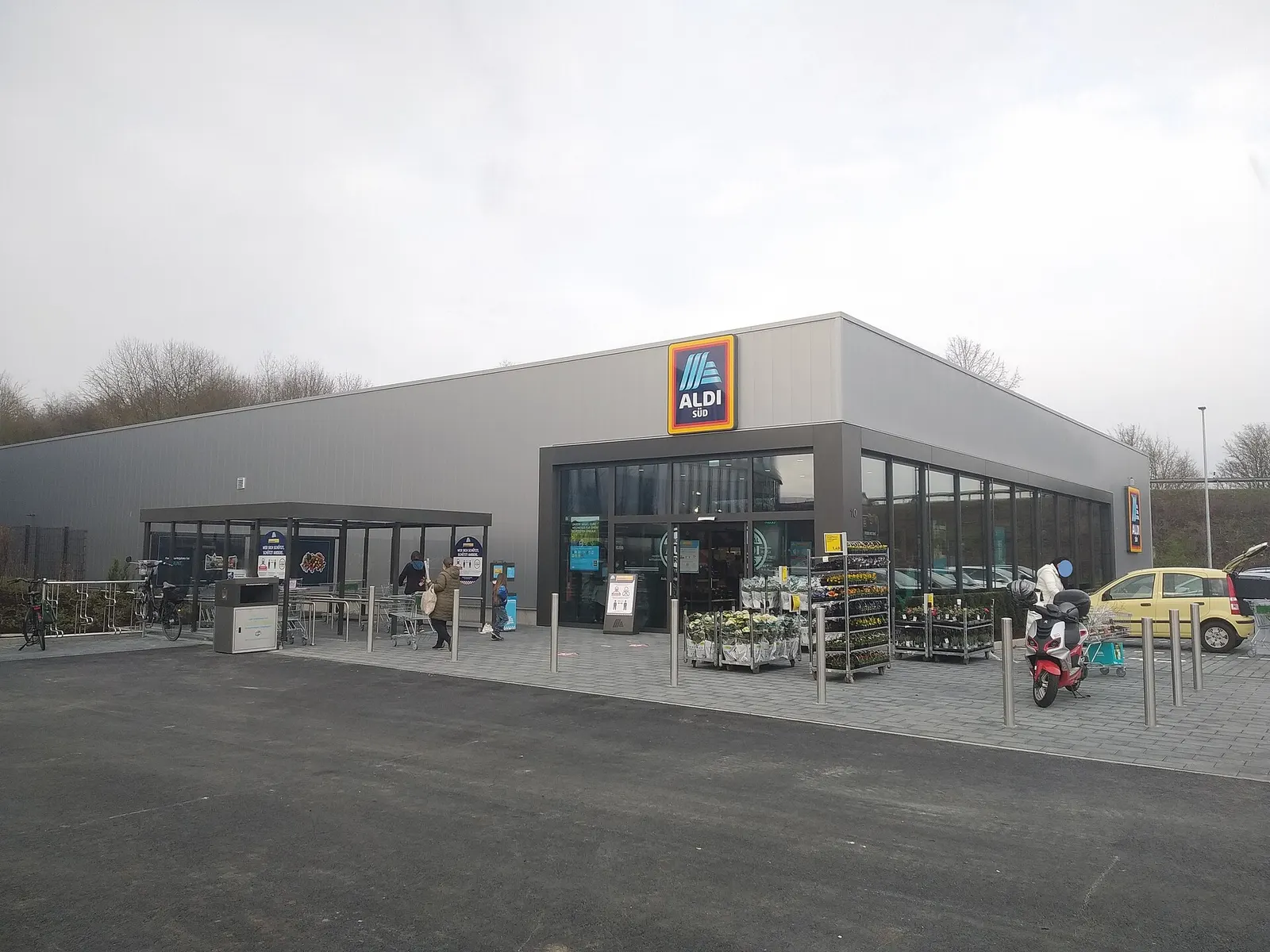
Four groups dominate: according to the Federal Cartel Office, EDEKA, REWE, the Schwarz group (Lidl and Kaufland) and ALDI together took more than 90 per cent of food-retail turnover in 2025. There is no official price comparison of the chains, so this guide does not rank them. The fair comparison is the unit price (per kilo or litre) on the shelf label, not the pack price, and own brands are usually the cheaper choice in any chain; which combination of shops is cheapest for you depends on what you eat.
What groceries cost
The most recent national student survey (22nd Social Survey, fieldwork in 2021) found an average food spend of €198 per month, the second-largest item after rent. Prices have risen since, but recently only slowly: the consumer price index put food 0.4% above the previous September in September 2026, with some items (eggs, fresh vegetables) well above that average and others below. Treat the survey figure as a floor and budget above it if you eat out, buy branded goods or shop at organic chains.
Where German students' money goes each month
Average € per month · 22nd Social Survey, fieldwork summer 2021
Rent is the biggest monthly cost at €410, then food at €198 and health at €100; DAAD puts total living costs at €900–€1,200 a month.
- Rent incl. utilities€410
- Food€198
- Health€100
- Transport€89
- Leisure€65
- Clothing€46
- Phone, internet, TV fee€32
- Books and materials€31
| Item | Value |
|---|---|
| Rent incl. utilities | €410 |
| Food | €198 |
| Health | €100 |
| Transport | €89 |
| Leisure | €65 |
| Clothing | €46 |
| Phone, internet, TV fee | €32 |
| Books and materials | €31 |
| These items together | €971 |
The newest national survey; rents have risen since 2021, so read these as a floor. DAAD estimates €900–€1,200 a month in total, depending on the city.
Source: DAAD. Last checked:
Image (PNG)The cheapest hot meal in any university town is the Mensa run by the Studierendenwerk. The Munich Studierendenwerk, for example, charges students €0.90 per 100 g in its pay-by-weight canteens, with fixed add-ons for meat and fish dishes, and between €2.95 and €5.25 for a main dish in its two canteens that price per plate; the payment card costs €12 including a refundable deposit and starting credit. Other Studierendenwerke have their own price lists, published on their websites, and vegetarian dishes are common on the menu. A Mensa lunch on teaching days plus own-brand shopping keeps food spending low.
| Item | Student price |
|---|---|
| Self-service canteens, pay by weight | €0.90 per 100 g, plus a fixed add-on for meat, fish and asparagus dishes |
| Main dish in the two per-plate canteens (Weihenstephan, Lothstraße) | €2.95 to €5.25 |
| Payment card (Legic) | €12, of which part is a refundable deposit; students of the Munich universities can pay with their student card instead |
In practice: at the till
Return your empties first
The return machine is at the entrance. Feed in the deposit bottles and cans, take the receipt and hand it to the cashier with your shopping; the deposit is deducted. The mechanics are in the Pfand guide.
Bring a bag
Lightweight plastic carrier bags may no longer be handed out at the till, so bring your own or buy a sturdier one; the very thin bags at the fruit counter are for loose food. Trolleys often need a coin or a plastic token.
Weigh what the shop asks you to weigh
In some shops loose fruit and vegetables are weighed and labelled at a scale in the produce section; in others the cashier weighs them. Watch what other customers do or look for a scale with number keys.
Pack fast or step aside
Cashiers are quick. If you cannot keep up, put everything back in the trolley or basket and pack at the shelf behind the tills where there is one.
Card or cash
Supermarkets and discounters generally take cards, but check before you rely on a credit card. Small bakeries, kiosks and market stalls may be cash only; see the cash-and-cards guide.
Check the receipt for the deposit line
The deposit appears as its own line (Pfand) on the receipt, so you can see what you paid and what you got back.
Reading prices, dates and labels
German price labels carry more information than they first appear to. By law, a shop selling packaged goods by weight or volume must show the unit price (Grundpreis) next to the total, per kilogram or per litre, and loose goods show only the unit price (PAngV §§ 4–5). That small second figure on the shelf edge is the fastest way to compare a large own-brand pack with a small branded one, or the discounter's price with the Turkish grocer's.
- Unit priceGrundpreis
- The price per kilogram, litre or other unit shown on the shelf label next to the pack price, required by the Price Indication Ordinance.
- Best-before dateMindesthaltbarkeitsdatum (MHD)
- The date until which the manufacturer guarantees the product's qualities. Food is often still fine afterwards if sealed and stored correctly, and shops may still sell it, often reduced.
- Use-by dateVerbrauchsdatum, 'zu verbrauchen bis'
- A hard limit on highly perishable food such as minced meat, fresh poultry and fish: after this date it may neither be sold nor eaten.
| German | Meaning | Why it matters |
|---|---|---|
| Angebot / Aktion | Special offer, usually for one week | The weekly leaflet (Prospekt) lists them, online and at the entrance |
| Eigenmarke | The shop's own brand | Usually the cheapest version of a product |
| Grundpreis | Unit price per kg or litre | Compare this, not the pack price |
| MHD / zu verbrauchen bis | Best before / use by | Reduced items near their MHD are a bargain; never eat food past its use-by date |
| Leergut / Pfand | Empties / deposit | Return machine at the entrance, receipt redeemed at the till |
| Bio | Organic, under EU rules | Costs more; own-brand Bio is the cheaper way in |
| Kasse / Selbstbedienungskasse | Till / self-checkout | Scan, pay by card or cash and pack yourself; staff help if an item needs an age check |
For halal products the label works differently, because 'halal' is not a protected term in German food law; how to read such claims is explained in halal food and Turkish shops. If you shop online or have groceries delivered, the statutory 14 days withdrawal right does not cover goods that spoil quickly (BGB § 312g), so check the order before the courier leaves; for non-food items bought online the general rules in the daily-life overview apply. And because opening hours vary by Land, plan the big shop before Saturday evening; Sunday closures explains what stays open.
Opening hours and Sunday closing
Shop hours are state law. The ceilings are generous on working days, Monday–Saturday around the clock (0–24) in Berlin, Monday–Saturday 06:00–24:00 in Hamburg, Monday–Saturday 06:00–22:00 in Saxony, and tighter in Bavaria at Monday–Saturday 06:00–20:00; each shop sets its own hours within them. On Sundays and public holidays ordinary staffed supermarkets are closed throughout Germany, though Bavaria, Hesse and Baden-Württemberg now let small staff-less shops open. The exceptions, the state-by-state table and a planning routine are in the Sunday-closing guide; the short version is to do the weekly shop before Saturday evening.
Why the water cost more than the label said
Most single-use bottles and cans of 0.1–3.0 litres carry a deposit of €0.25 per container, added at the till and repaid when you return the empty container to a machine; reusable bottles carry usually 8 or 15 cents. Shelf labels show the drink price and a separate deposit note ('zzgl. Pfand'), and the shelf itself is signed 'EINWEG' or 'MEHRWEG'. A six-pack of water is therefore cheaper than it looks once the bottles go back, and a bag of empties is worth real money. Juice and milk drinks in plastic bottles carry the deposit too; in cartons they do not.
A weekly food plan that stays inside a student budget
Lunch in the Mensa on teaching days
The cheapest hot meal in town, close to the lecture hall, with the price list on the Studierendenwerk's site.
One main shop a week at a discounter
A written list, own brands, loose fruit and vegetables by the kilo, and the weekly offers leaflet (Prospekt), which is online and in the shop entrance.
Top-ups at the nearest full-range supermarket
Their own brands are priced close to the discounter; the branded goods are where the money goes.
Reduced items
Look for reduced-price stickers on items close to their best-before date.
Compare the drugstore
For toiletries and cleaning products, compare the unit prices at dm or Rossmann with the supermarket's.
International grocers for staples
Rice, pulses, spices, bread and fresh herbs are worth comparing at a Turkish or Asian grocer, which is also where most halal meat is sold; see the halal and Turkish shops guide.
Cook in the WG
A shared evening meal in a flat of three is cheaper than three single ones; agree a kitty and who buys what.
Where this fits in the whole budget, including rent, insurance, the semester contribution and the broadcasting fee, is in the cost-of-living guide.
Frequently asked questions
What is the cheapest supermarket in Germany?
There is no official price comparison, so no honest single answer. The discounters (Aldi, Lidl, Penny, Netto) build their range around own brands, and the full-range chains sell own brands too. Compare the unit price per kilo or litre on the shelf label rather than the chain's name.
How much do groceries cost per week in Germany?
The last national student survey (fieldwork 2021) found an average of €198 per month on food, roughly a quarter of that per week; prices have risen since, by 0.4% in the year to September 2026 alone. Eating out and branded goods push it up; Mensa lunches and own brands keep it down.
Are German supermarkets expensive?
For students, rent is the expensive part of the budget, not food: in the last national survey food was the second-largest item at €198 per month, well below rent. Own brands and the Mensa keep it down.
Are supermarkets open on Sundays in Germany?
No. Ordinary staffed supermarkets are closed on Sundays and public holidays in every state; shops inside railway stations and airports (for travel needs), petrol stations and bakeries for limited hours are the main exceptions, and Bavaria, Hesse and Baden-Württemberg allow small staff-less shops. Saturday is the last chance before Monday.
Why do I pay extra for bottles in German supermarkets?
Because most single-use bottles and cans carry a deposit of €0.25 per container and reusable bottles usually 8 or 15 cents, added at the till. You get it back by returning the empty container to a shop that sells that type of container, usually through a machine.
Is food past its best-before date safe to buy in Germany?
Usually, yes. The best-before date (MHD) is the manufacturer's quality guarantee; sealed food stored correctly is often fine afterwards, and shops may sell it, often at a reduced price. The use-by date ('zu verbrauchen bis') on minced meat, fresh poultry or fish is different: after it, the food may not be sold or eaten. See the cost of living for budgeting food.
Sources
13 sources, 12 official
- Bürgerliches Gesetzbuch (BGB) § 312g — WiderrufsrechtBundesministerium der Justiz / gesetze-im-internet.de (Official)
- Preisangabenverordnung (PAngV) § 4 — Pflicht zur Angabe des GrundpreisesBundesministerium der Justiz / gesetze-im-internet.de (Official)
- Mindesthaltbarkeitsdatum (MHD) ist nicht gleich VerbrauchsdatumVerbraucherzentrale Bundesverband / verbraucherzentrale.de (Institutional)
- Costs of education and livingDAAD (German Academic Exchange Service) (Official)
- Inflationsrate im September 2026 bei +3,3 % (Pressemitteilung Nr. 364 vom 13. Oktober 2026)Statistisches Bundesamt (Destatis) (Official)
- Preise und BezahlungStudierendenwerk München Oberbayern (Official)
- Verpackungsrecht-Durchführungsgesetz (VerpackDG) vom 13. Juli 2026, §§ 46–47 (Pfand- und Rücknahmepflichten; Hinweispflichten)Bundesministerium der Justiz / gesetze-im-internet.de (Official)
- Pfandflasche = Mehrwegflasche???Bundesministerium für Umwelt, Klimaschutz, Naturschutz und nukleare Sicherheit (BMUKN) (Official)
- Ladenöffnungszeiten – Ausnahmen aus besonderem Anlass anzeigenService-Portal Berlin (Land Berlin) (Official)
- Öffnungszeiten im Einzelhandel (Ladenöffnungszeiten)hamburg.de (Freie und Hansestadt Hamburg) (Official)
- Bayerisches Ladenschlussgesetz (BayLadSchlG) vom 25. Juli 2025 (GVBl. S. 246)Bayerische Staatskanzlei / BAYERN.RECHT (gesetze-bayern.de) (Official)
- Gesetz über die Ladenöffnungszeiten im Freistaat Sachsen (Sächsisches Ladenöffnungsgesetz – SächsLadÖffG), rechtsbereinigt mit Stand vom 1. Dezember 2020Sächsische Staatskanzlei / REVOSax (Official)
- EDEKA darf tegut-Standorte unter weitreichenden Nebenbestimmungen übernehmen (press release, 28 September 2026)Bundeskartellamt (Official)