Newcomers used to paying by card or phone almost everywhere are often surprised when a German bakery or market stall asks for cash. The stereotype has a basis, though it is fading. The Bundesbank, Germany's central bank, regularly surveys how people actually pay. Its 2025 study is the source for this page: for the first time, more than half of purchases were cashless, but cash was still the most used single means of payment. What follows is what that means at the till, which card to carry, and how cash machines charge.
How Germans paid in 2025
| Means of payment | Share of transactions | What to know |
|---|---|---|
| Cash | 45% | Still the most used single means; six points fewer than in 2023 |
| Debit card | 26% | The girocard was by far the most used debit card |
| Mobile payment | 10% | Up four points; Apple Pay the most used mobile method at the till |
| All cashless means together | 55% | The first time more than half |
By value the picture is different: cash accounted for 23% of what was spent, level with bank transfers and behind debit cards. Cash dominates small, everyday purchases; large sums go by card or transfer. The study also measured what was possible, not only what was done. Cash could have been used at 94% of in-person purchases and a cashless payment at 86%, and about a quarter of respondents had been unable to pay cashless as they wished at least once in the previous month. That gap is the practical reason to carry some cash. For online shopping, PayPal dominated, holding about 86% of internet payment methods.
Cash in Germany: still the most used way to pay
Bundesbank payment behaviour study, 2025
- Of payments made in cash
- 45%
- by number of transactions
- Of the money spent, paid in cash
- 23%
- Where cash worked
- 94%
- in-person purchases
- Where a card or phone worked
- 86%
- in-person purchases
Keep some cash on you: a card is not possible everywhere, and some places that take the girocard do not take Visa or Mastercard.
Source: Deutsche Bundesbank. Last checked:
Image (PNG)The girocard, and why your bank's card may not be one
- girocardgirocard (formerly EC-Karte)
- The German banks' own debit card scheme, linked directly to your current account. Many Germans still call it the EC card. Shops often advertise 'EC-Karte' or 'girocard' rather than Visa or Mastercard, and some places that take the girocard do not take international cards.
- Debit cardDebitkarte
- A card that takes the money straight from your account. In Germany this can be a girocard or a Visa or Mastercard debit card; the latter work wherever Visa and Mastercard are accepted, which is most large shops but not every small one.
Here is the trap for newcomers. The most used debit card in Germany is the girocard, but several online banks issue a Visa or Mastercard debit card as standard. N26 Standard comes with a virtual Mastercard debit card, and DKB with a Visa debit card. ING includes a Visa debit card and sells a girocard for €1.49 per month. For most purchases the difference does not matter: supermarkets, chains and larger shops take both. It matters at the small businesses that take girocard or cash only, and at some machines. If you expect to pay in such places often, a bank that provides a girocard is worth the fee, or keep cash for them. Choosing a bank is covered in opening a bank account in Germany.
Credit cards, phones and contactless
Credit cards are not accepted everywhere. In the Bundesbank's 2025 study the debit card, above all the girocard, was the most used means of payment after cash. Where a card terminal exists, contactless payment by card or phone normally works, and Apple Pay was the most used mobile method at the till; Google Pay and the European Wero scheme are offered by some banks too. The deciding question is never whether a terminal is contactless but whether the shop has one at all and which schemes it accepts. A sticker at the door or the till usually tells you. The student canteens show how mixed the picture is: the Studierendenwerk München Oberbayern accepts bank cards and mobile payment at the till in many of its canteens, while everywhere it also uses the StudentCard or its own Legic card, which costs €12 with a deposit and credit built in, and is topped up with banknotes at a machine or by direct debit.
Where you will still need cash
The Bundesbank's study measures how often a cashless payment was impossible, not where. The list below is therefore practical guidance, not a statistic: these are the kinds of places where it is wise to have cash ready, and a sign at the door or till usually settles it.
- Small independent shops, bakeries, kiosks and market stalls, which may have no card reader.
- Flea markets, seasonal markets and festival stands.
- Some small restaurants and cafés; check before you order.
- Tips and bills split among friends.
- Older vending machines that take coins only.
- Private purchases, such as second-hand furniture, where there is no card reader at all.
Public transport and self-service tills are where cash is least accepted, according to the study, so the pattern is the reverse of the stereotype there: on a bus or a station machine, a card or a phone can be the only option. The canteen cards above are another cashless island. In practice, a student needs both: a card or phone for the supermarket and the ticket app, and a reserve of cash for everything else.
Cash machines and their fees
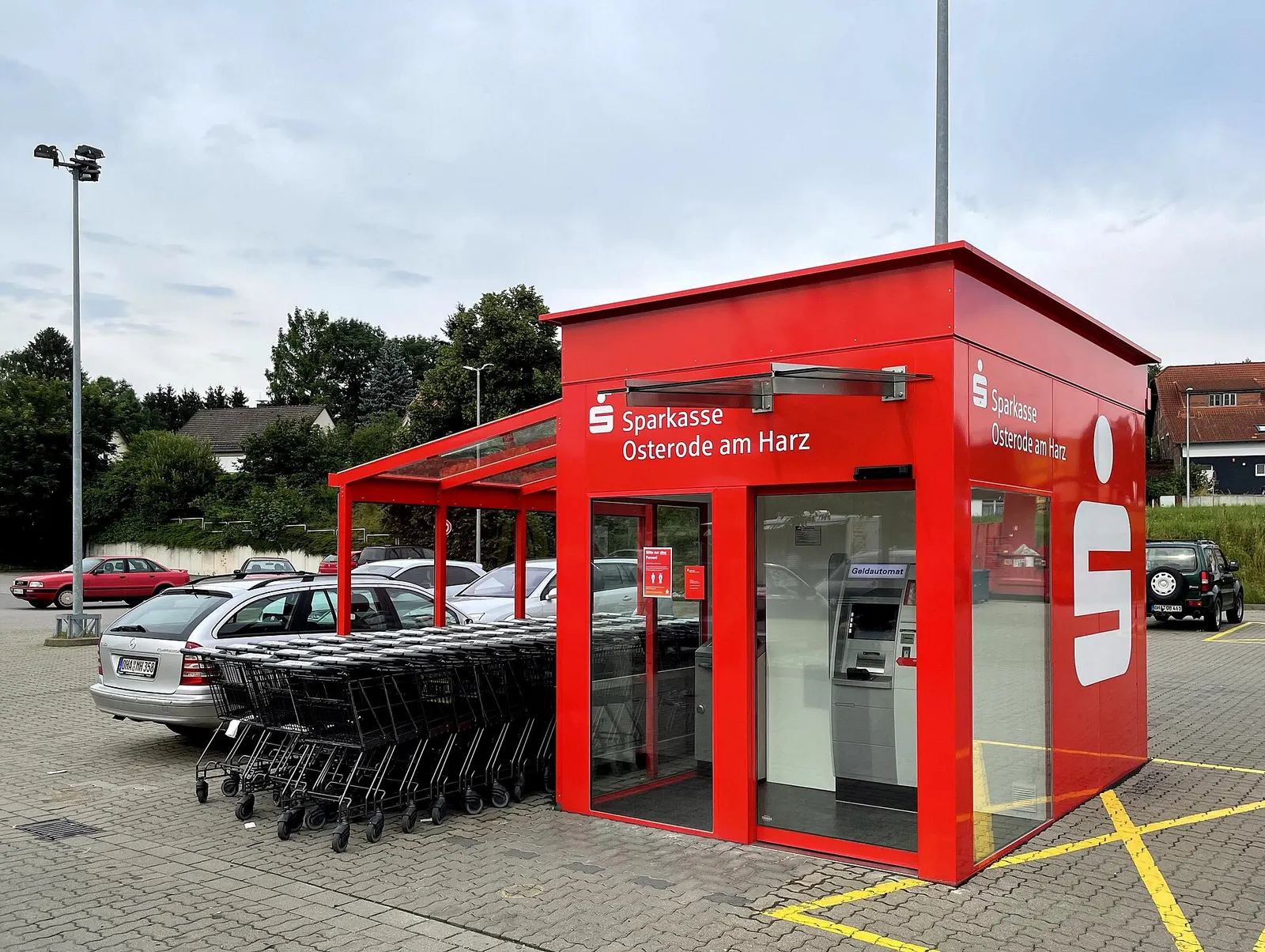
- Cash machineGeldautomat
- An ATM. In Germany most belong to a bank or a banking group, and withdrawing at your own bank or its partner network is often free, while another bank's machine or an independent operator may charge.
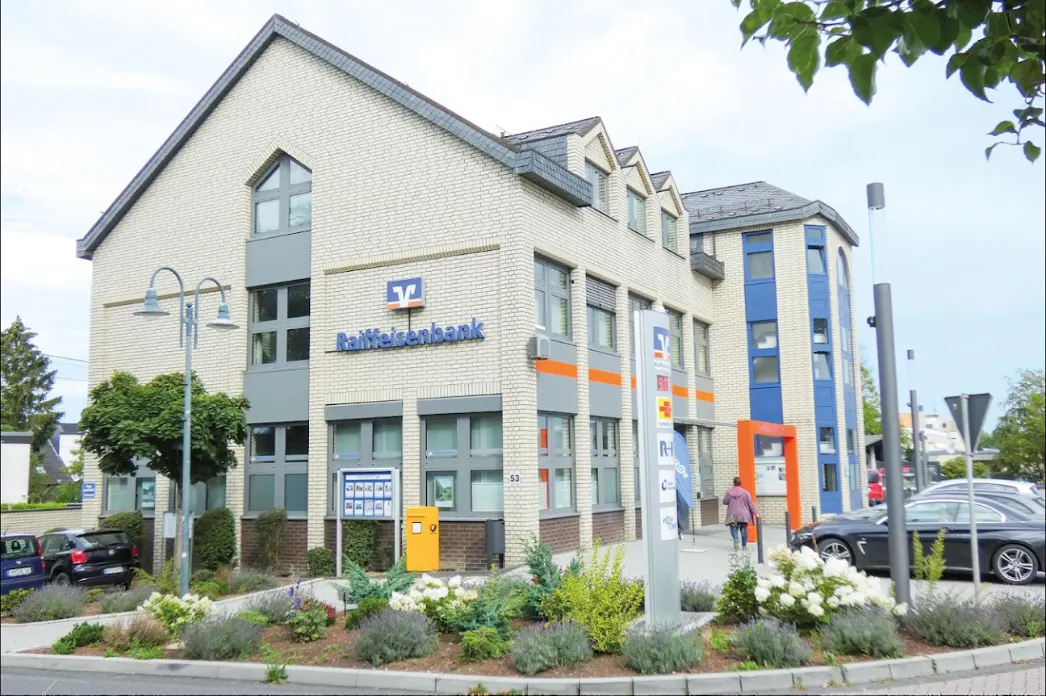
BaFin, the financial supervisor, explains the rule that catches people out: 'your bank charges nothing' does not mean the withdrawal is free. The machine's operator may charge its own fee even when your bank does not. The fee must be shown on the screen before you confirm, and you can cancel. Partner networks can be regional or limited to the partner's own direct customers. Online banks handle this differently: N26 Standard includes 2 free ATM withdrawals a month in the euro area, after which its own charge applies; the amount was not shown on the page read. No official figure for typical operator fees exists, so read the screen every time.
Safety and the rules around cash
- Deposits are protected: money in a German bank account is covered up to €100,000 per person and bank by the statutory deposit guarantee and repaid within 7 working days if the bank fails; cash in a drawer is not.
- Large cash deposits need proof: İşbank AG, for example, accepts cash deposits above €10,000 only with proof of origin.
- Crossing the border: €10,000 or more in cash must be declared to customs when entering or leaving the EU, unprompted; see customs rules on arrival.
- Official fees are cashless: the broadcasting fee, for example, must be paid by transfer or direct debit; cash is allowed only for people who prove they cannot get a bank account.
- Rent and deposits by transfer: paying a landlord in cash leaves no trace; since 9 October 2025 banks check free of charge that the payee's name matches the IBAN, which protects you when you transfer a deposit.
Rent, tickets and fees: the cashless payments that run your month
Day-to-day shopping is only part of the picture. Most fixed costs in Germany never touch cash or a card: they are paid from your current account by transfer, standing order or direct debit. Rent usually goes by standing order (Dauerauftrag) at the start of the month, as described in rental contracts; the semester contribution is a transfer to the university before the deadline in the semester contribution guide; and the broadcasting fee, gym and mobile contracts are usually collected by direct debit. That is one reason a German IBAN matters even if you could pay in shops with a Turkish card.
- SEPA direct debitSEPA-Lastschrift
- A payment the payee collects from your account on the basis of a mandate you signed. For a SEPA core direct debit you can ask your own bank to refund it without giving reasons within 8 weeks of the debit (BGB § 675x).
- Standing orderDauerauftrag
- A transfer you set up once in your banking app, which your bank then repeats on a fixed date, typically for rent.
| Cost | Usual method | Watch out for |
|---|---|---|
| Rent and deposit | Standing order; deposit by transfer | Never pay a deposit before you have a contract; see rental scams |
| Semester contribution | Transfer with the reference the university gives | A missing reference can delay enrolment or re-registration |
| Broadcasting fee | Direct debit or transfer per quarter | Letters arrive after the Anmeldung; ignoring them leads to fees |
| Mensa | Student card or canteen card, topped up at a machine or by direct debit | In Munich the canteen card is topped up with banknotes or by Autoload direct debit; check your Studierendenwerk |
| Groceries, cafés, bakeries | Card, phone or cash | Small shops may not take credit cards |
The refund right is a safety net, not a way out of a contract: reversing a direct debit you genuinely owe leaves the bill unpaid, and the creditor will send reminders and may charge fees, which is how SCHUFA entries start. A debit you never authorised is different: report it to your bank at once, and in any case within 13 months of the debit (BGB § 676b). Check your account statements regularly for that reason, particularly in the first months when new contracts begin.
In practice: a student's week of payments
Supermarket
Card or phone at the till where the shop accepts them; look for the scheme stickers at the entrance or the till.
Canteen
StudentCard or the Studierendenwerk's own card where it is used, bank card or phone where the canteen has a reader, as in many Munich canteens.
Bakery, kiosk, market
Have cash ready; ask or look for the sign before you queue.
Public transport
Card, phone or app, since cash is less often accepted on public transport. If your university has a Deutschlandsemesterticket, you already have your ticket; see the Deutschlandsemesterticket guide.
Rent, insurance, broadcasting fee
Standing order and direct debits from your current account, never cash.
Cash machine
Use your own bank's or its partners'; read the screen for an operator fee and cancel if it surprises you.
If you are deciding which bank to open an account with, the choice between a girocard and an international debit card is one of the few things that changes your daily life; the banking hub sets the options side by side. Students who shop in Turkish or halal grocers will find them in the guide to halal and ethnic shops, and the general supermarket landscape in supermarkets in Germany.
Frequently asked questions
Do German shops accept credit cards?
Many do, especially chains and larger shops, but acceptance is far from universal. In the Bundesbank's 2025 study a cashless payment was possible at 86% of in-person purchases, and debit cards, above all the girocard, were used far more than credit cards. Small shops, bakeries and market stalls may take cash only.
What is a girocard?
The German banks' own debit card, still widely called the EC card, linked directly to your current account. It was by far the most used debit card in 2025 and is accepted at some small businesses and machines that do not take Visa or Mastercard. Several online banks issue international debit cards instead and charge for a girocard; ING, for example, charges €1.49 per month.
How much cash should I carry in Germany?
There is no official figure. Because cash could be used at 94% of purchases in 2025 but a cashless payment only at 86%, a modest reserve for small purchases is sensible, topped up at your own bank's cash machines rather than carried in large amounts.
Are cash machines free in Germany?
Often at your own bank or its partner network, not necessarily elsewhere. The operator of a machine may charge a fee even if your bank does not; it must be shown on the screen before you confirm, and you can cancel. N26 Standard includes 2 free ATM withdrawals a month in the euro area.
Can I pay with my phone in Germany?
Yes, wherever there is a contactless terminal. Mobile payments made up 10% of transactions in 2025, and Apple Pay was the most used mobile method at the till. The limit is the terminal: a shop without a card reader takes neither cards nor phones.
Can I get money back from a direct debit in Germany?
Yes. For an authorised SEPA core direct debit you can ask your bank for a refund without giving reasons within 8 weeks of the debit. That does not cancel the debt itself, so use it for wrong amounts or cancelled contracts. An unauthorised debit must be reported to your bank without delay and at the latest within 13 months; see opening an account for setting up online banking.
Sources
13 sources, 9 official
- Bürgerliches Gesetzbuch (BGB) § 675x — Erstattungsanspruch bei einem vom oder über den Zahlungsempfänger ausgelösten autorisierten ZahlungsvorgangBundesministerium der Justiz / gesetze-im-internet.de (Official)
- Bürgerliches Gesetzbuch (BGB) § 676b — Anzeige nicht autorisierter oder fehlerhaft ausgeführter ZahlungsvorgängeBundesministerium der Justiz / gesetze-im-internet.de (Official)
- Bargeldlos im Trend — Zahlungsverhalten in Deutschland 2025 (Pressemitteilung, Juni 2026)Deutsche Bundesbank (Official)
- Gebühren beim Geldabheben mit der GirocardBundesanstalt für Finanzdienstleistungsaufsicht (BaFin) (Official)
- N26 Standard – dein kostenloses GirokontoN26 Bank SE (Institutional)
- Kostenloses GirokontoDeutsche Kreditbank AG (DKB) (Institutional)
- Kostenloses GirokontoING-DiBa AG (Institutional)
- Consumer Banking — İşbank AGİşbank AG (Frankfurt am Main) (Institutional)
- Einlagensicherung und AnlegerentschädigungBundesanstalt für Finanzdienstleistungsaufsicht (BaFin) (Official)
- New EU rules make instant euro payments faster and saferEuropean Commission (DG Financial Stability, Financial Services and Capital Markets Union) (Official)
- Anmelde- und Anzeigepflicht beim Grenzübertritt aus oder in Nicht-EU-StaatenGeneralzolldirektion (zoll.de) (Official)
- Preise und BezahlungStudierendenwerk München Oberbayern (Official)
- Zahlung des RundfunkbeitragsARD ZDF Deutschlandradio Beitragsservice (rundfunkbeitrag.de) (Official)