German customs (Zoll) treats a student flying in from Türkiye like any traveller from a non-EU country, with one important addition: as someone coming to study, you may bring your personal study equipment and household items duty-free. The rules that catch new students out are not the money limits but the veterinary ones — the ban on meat and dairy from outside the EU — and the duty to declare large sums of cash. This page sets out the allowances, the student relief, food, medicines and cash, and what happens at the airport. For the rest of your arrival, see arriving in Germany.
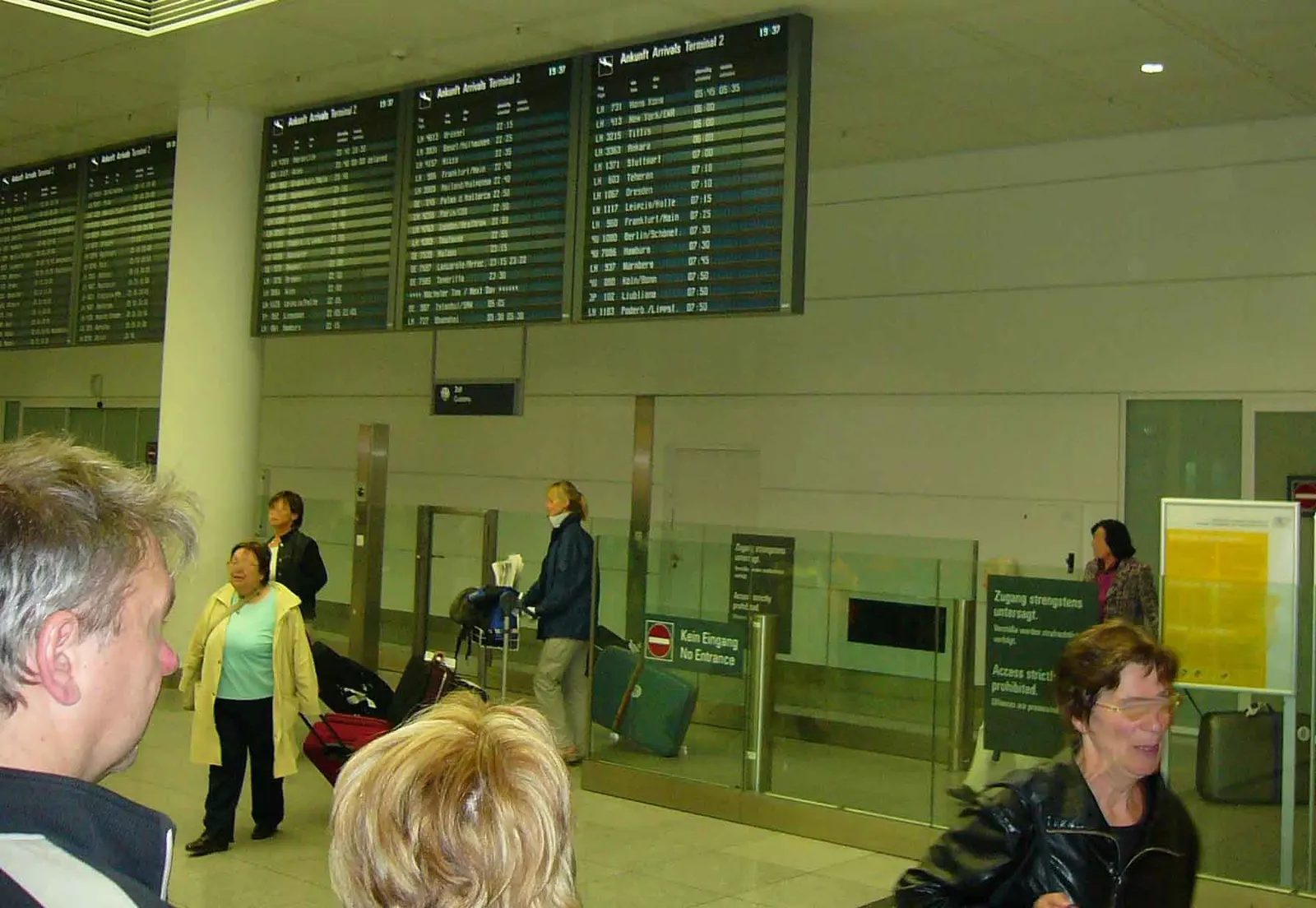
Duty-free allowances arriving from a non-EU country
- Travel allowancesReisefreimengen
- The quantities and values of goods a traveller may bring in duty-free from outside the EU, for personal use or as gifts, in their own luggage. Goods sent ahead, by post or by courier do not count as carried and are not covered.
- Red and green channelsroter / grüner Ausgang
- At airports with channel systems, the green exit is for travellers with nothing to declare; the red exit is where you declare goods above the allowances, cash at or above the threshold, or study items worth more than the green-channel limit.
| Goods | Allowance | Conditions |
|---|---|---|
| Other goods (gifts, clothes beyond the student relief, electronics) | €430 by air or sea; €300 by land; €175 for travellers under 15 | Total value, carried personally; tobacco, alcohol and medicines are not counted in it |
| Cigarettes | 200 cigarettes | Or 100 cigarillos, 50 cigars, or a proportional mix; only travellers 17 years or older |
| Smoking tobacco, including water-pipe (nargile) and heated tobacco | 250 grams of tobacco | Instead of the cigarettes, not in addition |
| Spirits above 22% vol., such as rakı | 1 litre of spirits above 22% vol. | Or 2 litres of drinks up to 22% vol.; only travellers 17 years or older |
| Still wine | 4 litres of still wine | On top of the spirits allowance |
| Beer | 16 litres of beer | On top; beer above this cannot be cleared at the flat rate |
| Medicines | The quantity you personally need | See the medicines section below |
Allowances are per traveller and apply only to goods you carry yourself. Everything above them must be declared.
The student relief: laptop, clothes and furniture duty-free
Customs has a separate relief for pupils and students who are not resident in the EU and come to Germany to study (Articles 21–22 of the EU duty relief regulation): in the words of zoll.de, students who spend school years or semesters here and are properly enrolled at an institution for full-time attendance. The goods must actually belong to you. It covers clothing and household linen, which need not be used; study equipment such as a laptop, a printer or other computers; and the furniture of a normal student room. The goods must be for your personal use during your studies and not in commercial quantities. They are free of customs duty and import VAT — not of excise duties, so tobacco and alcohol remain under the normal allowances.
How you use it at the airport depends on the value. If your study items together are worth less than €430, you may walk through the green channel. At €430 or more, declare them orally in the red channel. Carry your admission or enrolment letter to show the relief applies. The relief does not cover new things you order online and have posted to Germany separately.
Above the allowance: the flat rate
Goods above the allowances must be declared orally at the customs office — in practice, by using the red channel. If the goods you must declare are worth no more than €700 in total and are for personal use, customs charges a flat rate of 17.5% of their value, which covers customs duty, import VAT and excise together; the rate is 15% for goods that qualify for customs preferences, and cigarettes and alcohol have their own flat rates. Above €700, or if you decline the flat rate, the duties are calculated item by item under the tariff, with import VAT at 19% (7% for, for example, food or books). Keep the receipts for anything new.
Food: what you can and cannot bring from Türkiye
Under EU animal-health rules, meat, milk and products made from them that travellers carry from non-EU countries must meet the same veterinary requirements as commercial imports — certificates and a border inspection post — which in practice means they cannot come in luggage. Türkiye is not among the exempt countries. Customs refuses non-compliant food, it may have to be destroyed on the spot, and the agriculture ministry warns that undeclared products can be fined.
| Food | Allowed? | Notes |
|---|---|---|
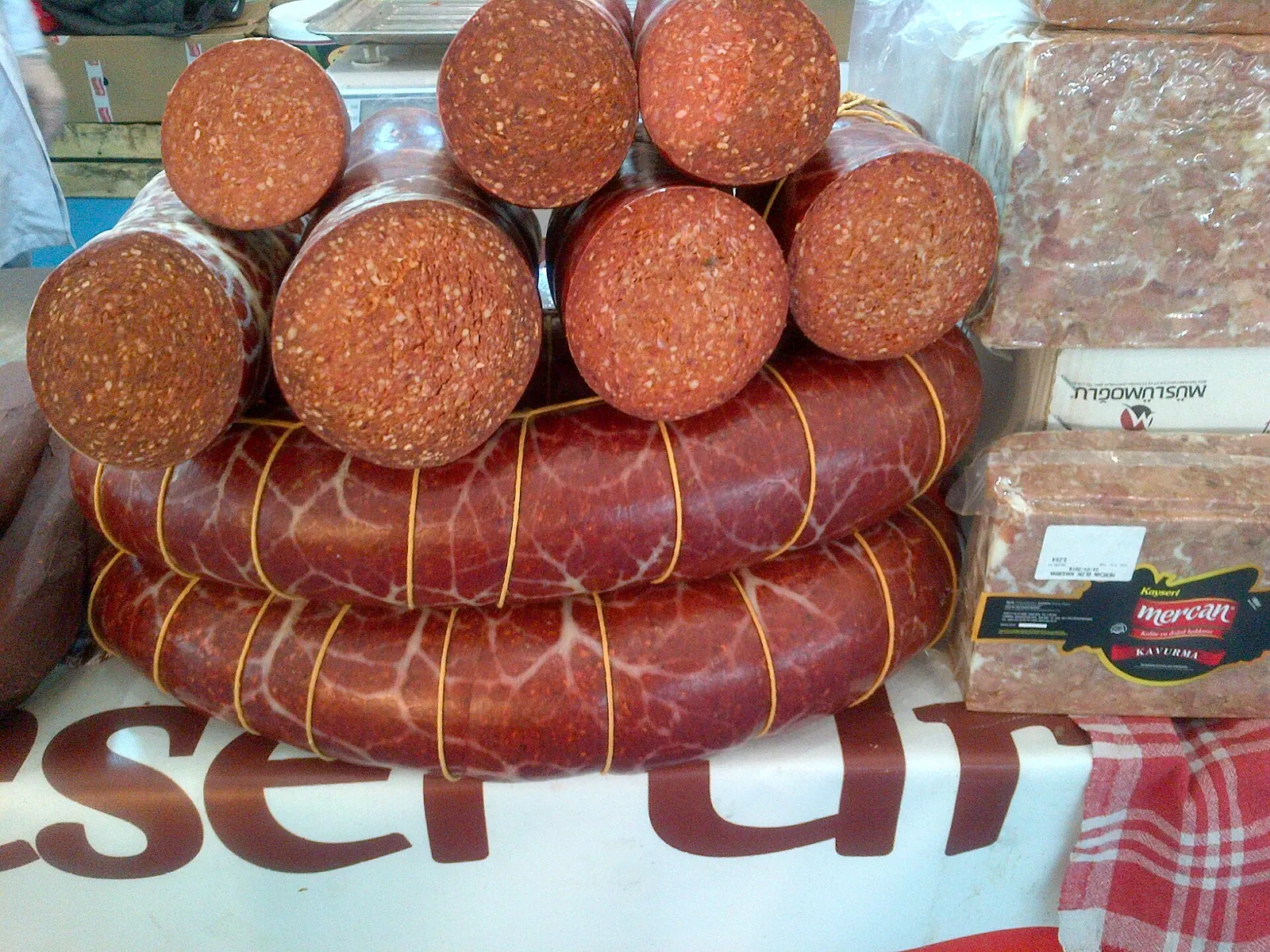
| Sucuk, pastırma, kavurma, other meat and sausage | No | Meat and meat products are banned in luggage |
| Beyaz peynir, kaşar, tulum, butter, yoghurt and other dairy | No | Milk and milk products are banned in luggage |
| Infant formula, infant food, medically required special food | Up to 2 kg | In unopened retail packs |
| Honey and other animal products not banned outright | Up to 2 kg | For personal use |
| Fish and fishery products | Yes, within a limit | A separate, larger quantity limit applies |
| Bread, cakes, biscuits, waffles, rusks | Yes | No quantity limit as travel provisions |
| Chocolate and sweets, pasta | Yes | No quantity limit |
Where to buy Turkish and halal food after you arrive is covered in halal, Turkish and international food shops.
Medicines
Medicines for your own use may be brought in duty-free in the usual personal quantity, which customs defines as at most 3 months' supply per medicine at the recommended dose — whether you bought them abroad and whether or not they are approved in Germany. Two warnings from customs: supplements, high-dose vitamins and herbal remedies sold freely abroad can count as medicines in Germany, and counterfeit medicines and certain doping substances may not be brought in at all. Keeping medicines in the original packaging in your hand luggage, with the prescription or a doctor's letter, is practical advice rather than a customs rule, but it makes it easy to show what they are and that they are yours.
Prescribed narcotic medicines (Betäubungsmittel under Germany's narcotics law) are different. Customs allows them in a quantity appropriate to the length of the trip, with the prescription as proof, and for entry from outside the Schengen area it advises carrying a multilingual certificate from the prescribing doctor stating the single and daily doses, the active ingredient and the length of the trip; no particular form is prescribed. Germany's Federal Opium Agency at the BfArM points to the International Narcotics Control Board's guidelines for travellers, which provide for carrying narcotics for a trip of at most 30 days. Ask your doctor before you leave whether your medicine falls under narcotics law. If you depend on such a medicine for longer, plan to continue the prescription with a doctor in Germany soon after you arrive — see finding a doctor in Germany.
Cash: the declaration rule
- Cash declarationBarmittelanmeldung
- The compulsory declaration of cash worth €10,000 or more — including bearer cheques and gold coins or bars of high purity — when entering or leaving the EU through Germany.
If you carry cash worth €10,000 or more when entering Germany from a non-EU country, you must declare it to customs without being asked. You can declare online in advance through the customs portal (the Zoll-Portal form, which gives you an identification code) or on the paper form; arriving by air, you use the red channel. Foreign currency counts at the day's exchange rate. Even below the threshold, customs may ask where the money comes from and what it is for, and you must answer. Failing to declare, or declaring wrongly, can cost an administrative fine of up to €1,000,000, and travellers without a fixed residence in Germany may have to lodge a security on the spot. There is rarely a good reason to carry that much: your blocked account and any further money can be sent by bank transfer, as explained in sending money to Germany.
Boxes sent ahead and parcels from home
The allowances and the student relief at the airport apply to what you carry. Luggage sent ahead, by post or by courier does not count as carried, and the student relief expressly excludes new goods ordered online and posted to you separately. Before shipping boxes of belongings, check customs' rules for that specific case rather than assuming the airport allowances apply. And do not assume a food parcel from home is treated more leniently than your luggage: check customs' guidance on postal consignments before anyone sends meat or dairy.
Customs is only the first check of the day. Keep the documents for the next steps in your hand luggage rather than in a checked suitcase: the passport with your national D visa, the admission letter, the confirmation of your blocked account or other proof of means, your health insurance documents and, if you already have it, the landlord confirmation for your new address. Officers at passport control may ask about the purpose of your stay and your means, and the same papers are needed again within days for the Anmeldung and at the enrolment office. If you carry money for the first weeks, remember that larger sums are easier and safer to move by bank transfer than in cash; see sending money from Türkiye.
In practice: walking through customs on arrival
Decide on the plane
Add up anything new you carry beyond your personal and study items. If you are within the allowances, carry no banned food and less than the cash threshold, the green channel is right; otherwise use the red one.
Have the papers in your hand luggage
Passport, admission or enrolment letter, receipts for new items, prescriptions or the doctor's certificate, and your cash declaration code if you filed one online.
Declare in the red channel
Tell the officer what you are declaring — the student relief, goods above the allowance, or cash. Flat-rate charges are calculated on the spot.
If customs objects to food
Do not argue about meat or dairy: it will be refused and may be destroyed. Fines are possible for products that were not declared.
Customs-safe packing list
- Clothing, linen and your laptop or other study equipment — covered by the student relief
- Admission or enrolment letter in your hand luggage
- Receipts for new electronics or other valuable new items
- Prescription medicines in original packs, with the prescription or a doctor's letter
- A multilingual doctor's certificate for any narcotic medicine
- Bread, biscuits, chocolate and sweets if you want a taste of home — not meat or dairy
- Tobacco and alcohol only within the allowances, and only if you are 17 or older
- Cash well below €10,000, or a declaration filed in advance
Frequently asked questions
Can I bring food into Germany?
Yes, but not meat, milk or products made from them when you come from a non-EU country such as Türkiye — so no sucuk, pastırma or cheese. Bread, cakes, biscuits, chocolate, sweets and pasta have no quantity limit, and infant food and honey are allowed up to 2 kg.
Can I bring medicine to Germany?
Yes, in the usual personal quantity, which customs defines as at most 3 months' supply per medicine; keeping the prescription or a doctor's letter with them helps. For prescribed narcotic medicines, customs advises a multilingual doctor's certificate when you arrive from outside the Schengen area, and the international guidelines the Federal Opium Agency points to cover trips of at most 30 days.
How much cash can I bring into Germany?
Cash worth €10,000 or more must be declared without being asked when you arrive from a non-EU country — online in advance or in the red channel. Not declaring can be fined up to €1,000,000. A bank transfer is the safer way to move larger sums.
Do I have to pay duty on my laptop?
Not if you come to study and are properly enrolled: study equipment such as a laptop or printer, clothing and student-room furniture are free of customs duty and import VAT. Below €430 in total you may use the green channel; at that value or more, declare them orally in the red channel and show your admission letter.
How much nargile tobacco or rakı can I bring?
Travellers aged 17 or over may bring 250 grams of tobacco — water-pipe tobacco is expressly included — instead of the cigarette allowance, and 1 litre of spirits above 22% vol., plus still wine and beer within their own limits.
What documents should I carry through passport control and customs?
Carry your passport with the national visa, the university admission letter, proof of financial means such as the blocked-account confirmation, and your health insurance documents in your hand luggage. Customs itself only asks about goods and cash; the other papers are what the border police may check and what you need in your first weeks for the first 30 days of paperwork.
Sources
8 sources, all official
- Reisefreimengen (Rückkehr/Einreise aus einem Nicht-EU-Staat)Generalzolldirektion (zoll.de) (Official)
- Überschreiten der ReisefreimengenGeneralzolldirektion (zoll.de) (Official)
- Schulmaterial, Ausstattung und Haushaltsgegenstände von Schülern und StudentenGeneralzolldirektion (zoll.de) (Official)
- Einfuhr von tierischen Erzeugnissen im ReiseverkehrGeneralzolldirektion (zoll.de) (Official)
- Fleisch oder Milchprodukte im Gepäck? Helfen Sie mit, Tierseuchen zu vermeiden! (erschienen 21.07.2021)Bundesministerium für Landwirtschaft, Ernährung und Heimat (BMLEH) (Official)
- Anmelde- bzw. Anzeigepflicht bei Ein- oder Ausreise aus bzw. in Nicht-EU-Mitgliedstaat (Barmittel)Generalzolldirektion (zoll.de) (Official)
- Reisen mit BetäubungsmittelnBundesinstitut für Arzneimittel und Medizinprodukte (BfArM), Bundesopiumstelle (Official)
- Arzneimittel und Betäubungsmittel (Reisen nach Deutschland aus einem Nicht-EU-Staat)Generalzolldirektion (zoll.de) (Official)