Dresden is the capital of Saxony and, with Leipzig, one of the Land's two large university cities. It combines a TU9 technical university that is also a University of Excellence with rents well below those of Munich, Frankfurt or Hamburg, a semester ticket included in the fees and a microelectronics cluster that the city calls Europe's largest. It also asks more of an international newcomer than Berlin or Cologne: daily life runs in German, and the Turkish community is small. This page covers what is specific to Dresden; the ten cities are compared in the student cities guide and the budgets in cost of living by city.
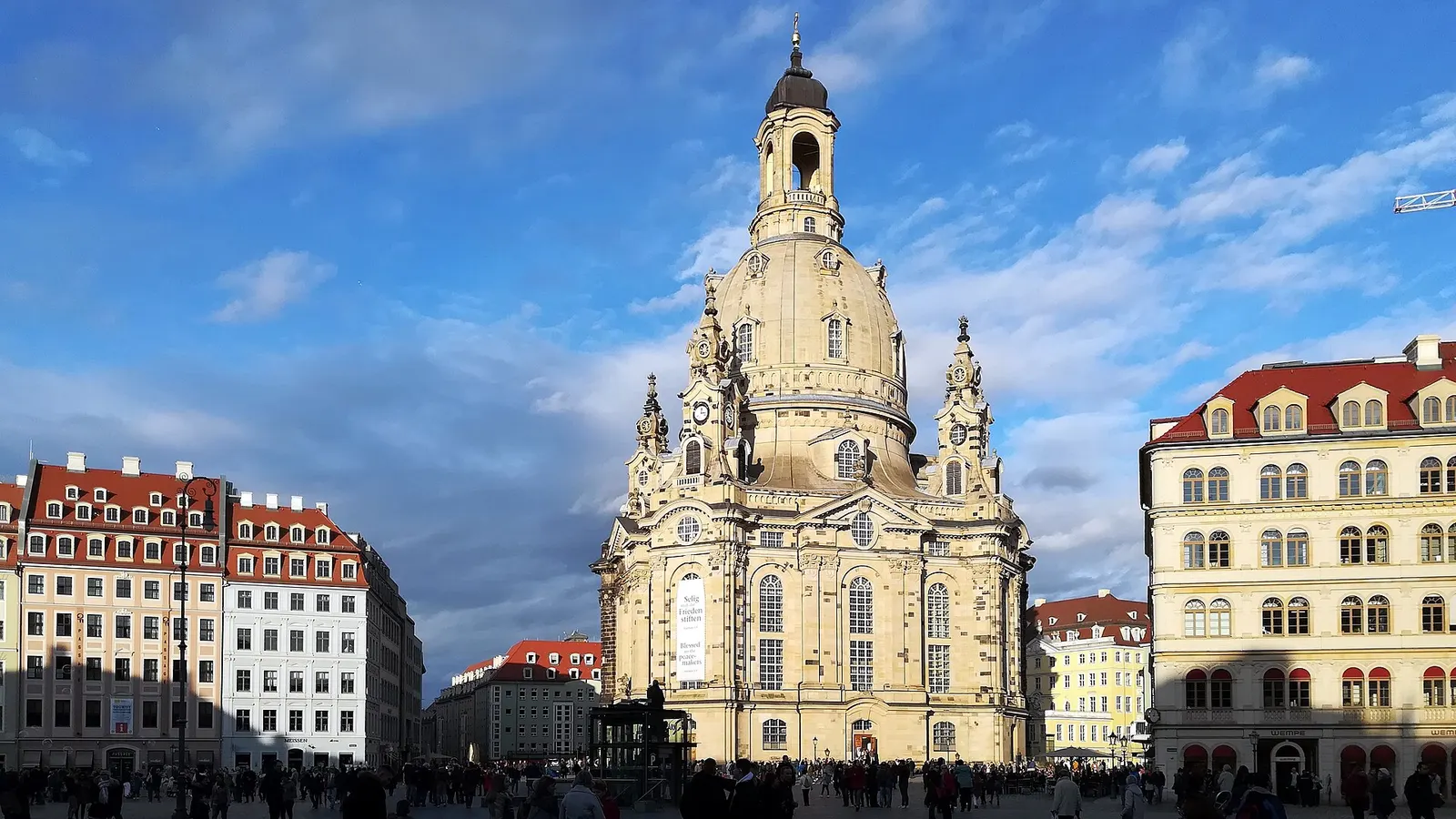
Universities in Dresden
The institutions inside the city had 36,410 students in winter semester 2025/26, and TU Dresden alone accounts for the large majority of them. It also teaches at sites in Tharandt and Zittau outside the city, whose students are not in the city figure. Alongside it stand HTW Dresden, a large university of applied sciences, the art and music academies, the Saxon Cooperative State University (DHSN, a work-and-study model), the Protestant university of applied sciences (EHS) and a handful of private institutions.
| Institution | Type | What to know |
|---|---|---|
| Technische Universität Dresden (TU Dresden) | Technical university, founded 1828; TU9 member | about 29,000 students; University of Excellence, confirmed in March 2026 for funding from 2027; THE 2027 rank =168; international applications through uni-assist's standard procedure |
| HTW Dresden | University of applied sciences | Practice-oriented programmes; see the university-types guide |
| Hochschule für Bildende Künste (HfBK), Hochschule für Musik (HfM), Palucca Hochschule für Tanz | Art, music and dance academies | Admission by artistic aptitude test, with their own deadlines. HfM Dresden charges students from outside the EU who did not obtain their school-leaving qualification in Germany €2,000 per semester for a first degree and €1,300 per semester for a master's (fee regulations of July 2026); HfBK's fee regulations contain no such fee; check Palucca's own rules |
| Berufsakademie Sachsen / DHSN Dresden, Evangelische Hochschule (EHS) | Cooperative and church-run universities of applied sciences | DHSN study is tied to a contract with a practice partner |
| Private institutions (among them IU, SRH, Dresden International University, Fachhochschule Dresden) | Private universities of applied sciences | Programme fees; check state recognition before you apply |
TU Dresden uses uni-assist's standard procedure for international applications, so for most applicants from outside the EU the route runs through uni-assist, which checks your certificates and forwards the application to the university; the first application costs €75. The uni-assist guide explains the procedure, and Turkish school leavers should read the YKS rule for Turkish diplomas first. TU Dresden's place among Germany's technical universities is set out in the TU9 guide.
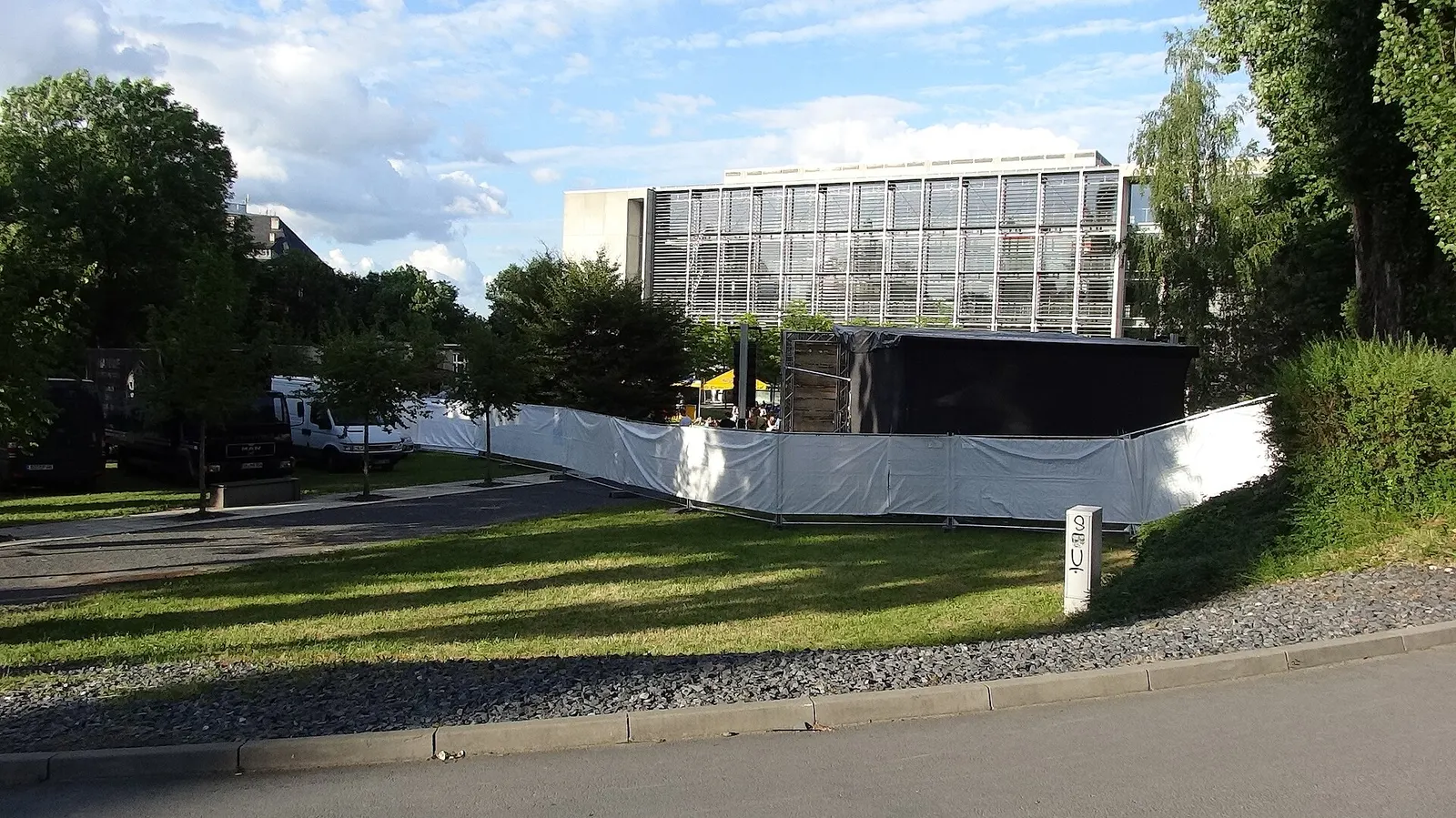
- Studentenwerk DresdenStudentenwerk Dresden
- The public student-services organisation for the city's institutions and for TU Dresden's Tharandt campus. It runs the halls of residence, the canteens (Mensen), BAföG administration and social counselling, and part of every student's semester contribution goes to it. In Saxony the word is 'Studentenwerk'; most other Länder say 'Studierendenwerk'.
Rent and student housing in Dresden
Dresden's average net cold rent in existing tenancies was €6.92 per m² a month in the 2022 census, below the German average of €7.28 per m² a month and second-lowest of the ten guide cities after Leipzig. That figure describes what sitting tenants paid in 2022, not what a newcomer is asked today, and no asking-rent figure for shared-flat (WG) rooms on the same basis as the big-city medians was available for Dresden; budget from the hall prices below and from current listings, not from the census. The student-hall stock is large: 5,841 places in 31 halls, all run by the Studentenwerk, enough for 16.03% of students, against 15.79% in Saxony as a whole.
Rent per square metre in the big student cities
Average net cold rent in existing tenancies, € per m² a month · census, 15 May 2022
In the 2022 census, tenants paid an average net cold rent of €12.89 per square metre in Munich, €10.58 in Frankfurt and €10.39 in Stuttgart, against €7.28 across Germany, €6.92 in Dresden and €6.44 in Leipzig.
- Munich€12.89
- Frankfurt€10.58
- Stuttgart€10.39
- Heidelberg€10.02
- Cologne€9.39
- Hamburg€9.16
- Aachen€8.04
- Berlin€7.67
- Germany€7.28
- Dresden€6.92
- Leipzig€6.44
| Item | Value |
|---|---|
| Munich | €12.89 |
| Frankfurt | €10.58 |
| Stuttgart | €10.39 |
| Heidelberg | €10.02 |
| Cologne | €9.39 |
| Hamburg | €9.16 |
| Aachen | €8.04 |
| Berlin | €7.67 |
| Germany | €7.28 |
| Dresden | €6.92 |
| Leipzig | €6.44 |
Rents in existing tenancies, before heating and other running costs. A newcomer is asked more, most visibly in Berlin; for a student room, the WG medians are the better guide.
Source: Statistische Ämter des Bundes und der Länder. Last checked:
Image (PNG)| Hall | Location | Room type | Rent per place |
|---|---|---|---|
| Fritz-Löffler-Straße 12 (513 places) | Next to the TU and HTW campus | Single room in a 2- to 6-person flat, partly or fully furnished; single apartments | from €250 a month for a partly furnished room; single apartments cost more |
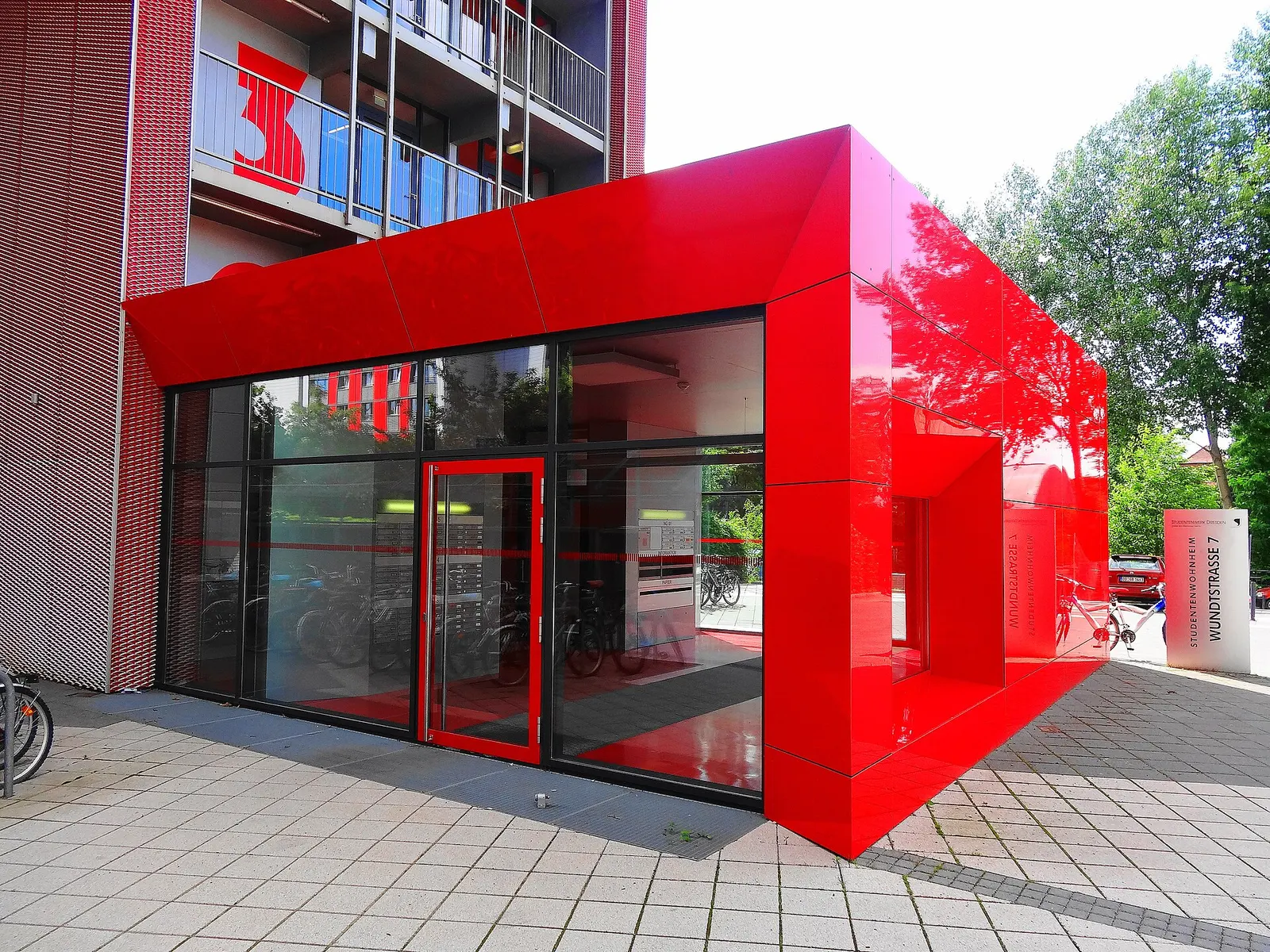
| Wundtstraße 1 (210 places) | Close to the TU and HTW, canteen on the ground floor | Room in a 2-person flat or single apartment, all fully furnished | up to €360 a month for a single apartment |
| Deposit (both halls) | €300 |
These two halls are examples, not the full range across the city; each hall's page lists its own prices, and you choose your preferences in the online application. The application rules reward precision rather than speed. You may file one application only, with your admission letter or enrolment certificate as a PDF of no more than 1 MB, and the allocation for a given move-in date starts from two months before the requested move-in date at the earliest; for move-ins in September, October and November only from five weeks before. Applicants from abroad do not need a German bank account to apply but must open one within a few days of arrival; the Studentenwerk cannot collect rent from accounts whose IBAN starts with GB, CH, PL, HU, BG or CZ. Once you live in a hall, you must e-mail a current enrolment certificate by 30 November (winter semester) and 31 May (summer semester), every semester, even though the lease runs for your standard period of study. Hall types and the general rules are compared in student halls in Germany.
The semester contribution and getting around
TU Dresden charges no general tuition (fees apply only to long-term students, second degrees, distance learning and some continuing-education programmes), but every student pays the semester contribution: €361 per semester for winter semester 2026/27, made up of the Studentenwerk's share and a student-body share that pays for the Deutschlandsemesterticket and the city's bike-sharing systems. The ticket covers local and regional public transport throughout Germany, so trams and buses in Dresden, regional trains to Leipzig or the Saxon Switzerland and the S-Bahn to the airport cost nothing extra. Continuing students re-register by paying within the period TU Dresden sets, 1 July to 5 September for the winter semester, and the university warns that a transfer can take 2 to 7 days to be booked; re-registration counts only once the money has arrived. How the ticket works nationally is in the Deutschlandsemesterticket guide, and the full fee picture in the semester-contribution guide.
- Re-registrationRückmeldung
- The step by which you confirm each semester that you are continuing your studies. At TU Dresden it is done by paying the semester contribution within the re-registration period; if you do not re-register, the university's enrolment regulations require it to start your exmatriculation, and a student residence permit depends on being enrolled, so treat the period as a hard deadline.
Jobs: microelectronics and student work
Dresden's economic-development office describes the city as Europe's largest microelectronics location and says that one in three of the microchips made in Europe come from there; treat that as the city's own claim rather than a statistic. The companies it names as investing in the city are TSMC, through the ESMC joint venture with Bosch, Infineon and NXP, GlobalFoundries, Infineon, Bosch and X-FAB, alongside research institutes and chip-design start-ups. For students in the related subjects that can mean internships and working-student posts nearby; in other fields the job market is that of a regional capital.
Your residence permit sets the limit, not the employer: students from outside the EU may work 140 days of work per calendar year or 280 half days per calendar year without extra approval, and the Dresden foreigners authority publishes an information sheet on how it counts them. Mandatory internships do not count. The rules are in working hours for international students and the working-student guide; for the period after graduation, the city's Welcome Center, part of the foreigners authority, advises international skilled workers and their employers, and the wider market is covered in the job-market guide.
The Turkish community and the social climate
Dresden has the smallest Turkish community of the ten guide cities: the 2022 census counted 1,279 residents with Turkish citizenship. That figure leaves out Turkish-Germans with a German passport, but even allowing for them the contrast with western Germany, where about 3,062,000 people have a Turkish migration background, is stark. In practice it means few Turkish grocers and butchers and less chance of meeting people from home outside the university; the halal and Turkish shops guide explains how to shop when the choice is limited, and the page for Turkish students covers the consulates and Turkey-side procedures.
Saxony's political climate is a question many applicants ask about. This guide has no city-level figures on racist incidents to offer; nationally, the police recorded 19,484 offences with a xenophobic motive in 2025, and Saxony's interior minister said in March 2026 that the number of politically motivated offences, while falling, 'remains at a high level' and that right-wing politically motivated crime 'remains a focus of the police and security authorities in Saxony'. What that means for an individual student is not something the statistics can answer. The practical response is to know where support is: the guide to racism and discrimination sets out your rights and the deadlines, and the safety guide the emergency numbers and what to do after an incident.
The Turkish consulate for Dresden
Turkish citizens studying in Dresden are served by the Consulate General of Türkiye in Heerstraße 21, 14052 Berlin, whose district covers Berlin, Brandenburg, Mecklenburg-Western Pomerania and Saxony. Saxony has no Turkish consulate of its own, so a passport appointment means a trip to Berlin. The Deutschlandsemesterticket covers that journey on regional trains, though not on ICE or IC services. You will need the consulate for a new passport or identity card, civil-registry entries, notarised powers of attorney for family matters at home, and military-service matters. Most of these require an appointment through www.konsolosluk.gov.tr; book it weeks ahead of any passport expiry, because your German residence permit is tied to a valid passport. Deferral rules and recognition back in Türkiye are explained in the guide for Turkish students.
Climate
Dresden's mean temperature is 9.7 °C at the Dresden-Klotzsche station by the airport, with 636.5 mm of precipitation a year. Of the ten stations used in this guide it has the coldest January, and it has the most frost days of the stations that record them, so winter coats and proper shoes are a real budget item for anyone arriving from the Turkish coast. The station sits on the heights north of the city, more than 100 metres above the Elbe valley; the German Weather Service's grid-completed normal for its city-centre station, Dresden (Mitte), is 10.3 °C, so the centre is milder than the airport figures.
In practice: your first weeks in Dresden
Move in and collect the landlord form
In a Studentenwerk hall the caretaker hands you the Wohnungsgeberbestätigung, the landlord's confirmation that you live there, with your move-in date on it. A private landlord must give you the same form.
Register your address
Book an appointment online at a Bürgerbüro and register within 2 weeks of moving in, bringing your passport and the landlord form. Registration is a legal duty; the Anmeldung guide explains it.
Open a bank account and confirm it to the Studentenwerk
Hall rent is collected by direct debit; bring the signed SEPA mandate from your application to the lease signing.
Apply for your residence permit
Since May 2026 all appointments at Dresden's foreigners authority take place at Lingnerallee 3 (north entrance), 01069 Dresden, near the Deutsches Hygiene-Museum and Pirnaischer Platz stops. Book well before your entry visa expires; the process is in the residence-permit guide.
Send your enrolment certificate
Each semester, e-mail it to the Studentenwerk's letting team by 30 November (winter semester) and 31 May (summer semester).
- Landlord's confirmationWohnungsgeberbestätigung
- A form in which your landlord, or the Studentenwerk's caretaker, confirms that you moved into the flat and on which date. The registration office will not register you without it, and the same form is needed for every later move.
Shops in Saxony may open Monday–Saturday 06:00–22:00 and are closed on Sundays, when bakeries and newsagents may open for 6 hours in total; the main station's shops are the fallback. Do the weekly shop on Saturday, as the Sunday-closing guide explains.
Before you choose Dresden
- Whether your programme is taught in Dresden or at the Tharandt campus
- A hall application filed once, with all preferences, as soon as your admission letter arrives
- A budget built on hall rents of €250–€360 a month, the deposit of €300 and the semester contribution of €361 per semester
- A plan for German: daily life, offices and most part-time jobs run in German
- Warm winter clothing, and realistic expectations about Turkish shops and community life
Frequently asked questions
Is Dresden a good student city?
For technical subjects, yes: TU Dresden is a TU9 member and a University of Excellence, and the city's microelectronics cluster can offer internships and working-student posts in related subjects. Rents are below the national average and the Studentenwerk has hall places for 16.03% of students. The drawbacks are a small Turkish community and a daily life that runs mostly in German.
How expensive is Dresden for students?
Cheaper than the big western cities. The 2022 census rent was €6.92 per m² a month, below the German average, and rooms in two central Studentenwerk halls cost €250–€360 a month. Add the semester contribution of €361 per semester, which includes a Germany-wide transport ticket, health insurance and food.
How do I apply to TU Dresden?
Most international applicants apply through uni-assist, which checks the certificates and forwards the application to TU Dresden; the first application costs €75. Check your programme's page for language requirements and deadlines, and if you hold a Turkish school diploma, check first whether you qualify for direct entry or need a Studienkolleg.
How do I get a room in a Dresden student hall?
Apply online to the Studentenwerk Dresden with your admission letter or enrolment certificate. Only one application per person is processed, and places for a given move-in date are allocated from two months before the requested move-in date at the earliest; for move-ins in September, October and November only from five weeks before. The deposit is €300 in the central halls.
Is there a Turkish community in Dresden?
A very small one: the 2022 census counted 1,279 residents with Turkish citizenship, the fewest of the ten cities in this guide. Turkish-Germans with German citizenship are not in that figure, but Turkish shops and community life are far thinner than in Berlin, Cologne or the Ruhr.
Is there a Turkish consulate near Dresden?
No. Dresden is in Saxony, which belongs to the district of the Turkish Consulate General in Berlin, at Heerstraße 21, 14052 Berlin. Book passport, identity-card, civil-registry and military-service appointments through www.konsolosluk.gov.tr and plan the trip to Berlin in advance.
Sources
31 sources, 30 official
- Alle politisch selbständigen Gemeinden mit ausgewählten Merkmalen am 31.12.2025 (Gemeindeverzeichnis, Jahresausgabe)Statistisches Bundesamt (Destatis) (Official)
- Statistischer Bericht – Statistik der Studierenden – Wintersemester 2025/2026 (Tabellen 21311-01 und 21311-12)Statistisches Bundesamt (Destatis) (Official)
- Zensus 2022, Tabelle 4000W-0004: Wohnungskennzahlen – Durchschnittliche Nettokaltmiete (Gemeinden, Stichtag 15.05.2022)Statistische Ämter des Bundes und der Länder (Zensusdatenbank) (Official)
- Zensus 2022, Tabelle 1000A-1021: Personen – Staatsangehörigkeit (Häufigste Länder), Gemeinden, Stichtag 15.05.2022Statistische Ämter des Bundes und der Länder (Zensusdatenbank) (Official)
- Vieljährige Mittelwerte 1991–2020 (Temperatur, Niederschlag, Sonnenscheindauer, Frost- und Sommertage) für KlimastationenDeutscher Wetterdienst (DWD), Climate Data Center (Official)
- Wohnheimantrag: Bewerbung für ein Zimmer im WohnheimStudentenwerk Dresden (Official)
- Wohnen für Anfänger: (my) best time @ wohnheimStudentenwerk Dresden (Official)
- Wohnheim Fritz-Löffler-Straße 12 in DresdenStudentenwerk Dresden (Official)
- Wohnheim Wundtstraße 1 in DresdenStudentenwerk Dresden (Official)
- Mikroelektronik: Europas Halbleiter-Herz schlägt in DresdenLandeshauptstadt Dresden, Amt für Wirtschaftsförderung (Official)
- Dresden Welcome Center (Willkommen)Landeshauptstadt Dresden, Ausländerbehörde (Official)
- Medieninformation: Polizeiliche Kriminalstatistik Sachsen 2025 (31 March 2026)Sächsisches Staatsministerium des Innern (Official)
- Wohnraum für Studierende — Statistische Übersicht 2025 / Student Housing in Germany — Statistical OverviewDeutsches Studierendenwerk (DSW) (Official)
- Rückmeldung zum SemesterTechnische Universität Dresden (Official)
- Wohnraum für Studierende — Statistische Übersicht 2025Deutsches Studierendenwerk (DSW) (Official)
- Zahlen und Fakten / Facts and figuresTechnische Universität Dresden (Official)
- TU9 – Allianz führender Technischer Universitäten in DeutschlandTU9 German Universities of Technology e.V. (Official)
- Zehn Exzellenzstandorte werden weitergefördert (Gemeinsame Pressemitteilung von WR und DFG, 11. März 2026)Wissenschaftsrat / Deutsche Forschungsgemeinschaft (Official)
- TU Dresden – World University Rankings profileTimes Higher Education (THE) (Institutional)
- Technische Universität Dresden (TU Dresden) – uni-assist university entryuni-assist e.V. (Official)
- Information: Arbeitstagekonto für Studierende aus Nicht-EU-Staaten (Stand April 2024)Landeshauptstadt Dresden, Welcome Center (Official)
- § 16b AufenthG – Studium (Arbeitstagekonto, Absatz 3)Bundesministerium der Justiz / Bundesamt für Justiz (gesetze-im-internet.de) (Official)
- Gesetz über die Ladenöffnungszeiten im Freistaat Sachsen (Sächsisches Ladenöffnungsgesetz – SächsLadÖffG), rechtsbereinigt mit Stand vom 1. Dezember 2020Sächsische Staatskanzlei / REVOSax (Official)
- Bundesweite Fallzahlen 2025 – Politisch motivierte Kriminalität (Factsheet)Bundeskriminalamt (BKA) / Bundesministerium des Innern (Official)
- Bundesmeldegesetz (BMG), consolidated text (last amended by Art. 10 G v. 22.7.2026, BGBl. 2026 I Nr. 222)Bundesministerium der Justiz / gesetze-im-internet.de (Official)
- Statistischer Bericht – Bevölkerung nach Migrationshintergrund – Endergebnisse 2024 (Tabelle 12211-05)Statistisches Bundesamt (Destatis) (Official)
- Gebühren- und Entgeltordnung der Hochschule für Musik Carl Maria von Weber Dresden (14.07.2026)Hochschule für Musik Carl Maria von Weber Dresden (Official)
- International Office – Studiengebühren, Semesterbeitrag, BewerbungsgebührHochschule für Musik Carl Maria von Weber Dresden (Official)
- Gebühren- und Entgeltordnung der Hochschule für Bildende Künste Dresden (15.01.2025)Hochschule für Bildende Künste Dresden (Official)
- Häufige Fragen zum Studium (FAQ) – 07. Gibt es an der TU Dresden Studiengebühren?Technische Universität Dresden (Official)
- İletişim – T.C. Berlin BaşkonsolosluğuMinistry of Foreign Affairs of the Republic of Türkiye (Official)