Where you study changes your budget more than almost any other decision. The same room in a shared flat costs €305 per month in Chemnitz and €850 per month in Munich, and rent is the largest item in every student budget. A few costs differ by Land rather than by city: tuition for non-EU students in Baden-Württemberg, and whether the semester contribution includes a transport ticket. This page compares the cities with the most current official and institutional figures, then turns them into monthly budgets. The item-by-item method is explained in the monthly cost of living for students.

Rent by city
| City | WG room, median | WG room, cheaper quarter from | Census rent per m² | Hall places |
|---|---|---|---|---|
| Munich | €850 per month | €550 per month | €12.89 per m² a month | 10.03% |
| Frankfurt am Main | €630 per month | €550 per month | €10.58 per m² a month | 9.86% |
| Hamburg | €650 per month | €560 per month | €9.16 per m² a month | 7.47% |
| Berlin | €650 per month | €530 per month | €7.67 per m² a month | 5.09% |
| Cologne | €640 per month | — | €9.39 per m² a month | 8.47% (North Rhine-Westphalia) |
| Stuttgart | — | — | €10.39 per m² a month | 14.71% (Baden-Württemberg) |
| Heidelberg | — | — | €10.02 per m² a month | 14.71% (Baden-Württemberg) |
| Aachen | — | — | €8.04 per m² a month | 8.47% (North Rhine-Westphalia) |
| Dresden | — | — | €6.92 per m² a month | 15.79% (Saxony) |
| Leipzig | — | — | €6.44 per m² a month | 15.79% (Saxony) |
| Chemnitz | €305 per month | — | — | 15.79% (Saxony) |
| Germany | €510 per month | — | €7.28 per m² a month | 10.12% |
The columns measure different things, so read them side by side rather than mixing them. The WG figures are asking rents for new contracts in winter semester 2026/27, warm and mostly including electricity and internet. They come from the Moses Mendelssohn Institut's analysis of offers on WG-Gesucht.de, and the press release names only the expensive cities and the cheapest; a dash means no figure was published. The census figures are average cold rents per square metre that existing tenants paid in May 2022. They rank cities' price levels reliably but understate what a newcomer pays today. The hall-place share shows your chances of the cheapest housing: Saxony's halls have places for 15.79% of its students, Berlin's for 5.09%.
- Asking rentAngebotsmiete
- The rent a landlord or flatmate asks in an advertisement, as opposed to the rent sitting tenants pay under existing contracts (Bestandsmiete). Asking rents are what you will meet as a newcomer, and they are higher, which is why the official rent index rises more slowly than the price of the room you are looking for.
- First quartileerstes Quartil
- The rent below which a quarter of the observed offers lie. It shows how cheap the cheaper offers are: in Hamburg the cheapest quarter of WG offers stops at €560 per month, so a room under that is rare.
Fixed monthly costs by city
- Hall of residenceStudierendenwohnheim
- Student housing run by the local Studierendenwerk or another public or non-profit operator, let only to enrolled students at rents that include utilities. Publicly funded halls are the cheapest housing in every city, but they have places for only a minority of students.
The table adds the costs no student avoids to the median WG rent: health and care insurance of €148.09 per month, a transport ticket, and a three-way share of the broadcasting fee, €6.12 per month. Munich's semester contribution includes no ticket, so the Bavarian student ticket is used there. Elsewhere the calculation assumes a university whose contribution includes the Deutschlandsemesterticket, as it does in winter semester 2026/27 at FU Berlin, TU Chemnitz, the University of Hamburg, Goethe University Frankfurt and the University of Cologne; at other institutions in those cities, check the breakdown. Food, phone and the rest of the semester contribution come on top.
| City | Rent | Transport | Fixed costs | Compared with the monthly payout |
|---|---|---|---|---|
| Munich | €850 per month | €43 per month | €1,047.21 per month | €55.21 over, before food |
| Hamburg | €650 per month | €37.80 per month | €842.01 per month | Below, with little left for food |
| Berlin | €650 per month | €37.80 per month | €842.01 per month | Below, with little left for food |
| Cologne | €640 per month | €37.80 per month | €832.01 per month | Below, with little left for food |
| Frankfurt am Main | €630 per month | €37.80 per month | €822.01 per month | Below, with little left for food |
| Germany (median) | €510 per month | €37.80 per month | €702.01 per month | €289.99 per month left |
| Chemnitz | €305 per month | €37.80 per month | €497.01 per month | About half the payout left |
A hall place changes these numbers more than the choice of city. With a Studierendenwerk room, the same fixed costs, now with the full broadcasting fee for a corridor room, come to €540.81 per month in Berlin, €610.05 per month in Munich and €522.43 per month at the national average. The blocked account's monthly payout of €992 per month covers those comfortably. Hall places are scarce, though, and in Munich the waiting time is 1 to 7 semesters, so plan the first months with a WG or a temporary room. Applying for a hall is covered in student halls of residence.
City by city
Munich
The most expensive student city in Germany on every measure: the highest WG median, the highest census rent per square metre, and university estimates of about €1,500 per month from LMU and €1,300–€2,000 per month from TUM. LMU puts a private room at €700–€1,000 per month and a room in student housing at €400–€600 per month. Two things soften the bill. The semester contribution is only €97 per semester, because it includes no ticket, and the Bavarian student ticket costs €43 per month. LMU also charges no tuition, while TUM charges new non-EU students. More in studying in Munich and finding a room in Munich.
Berlin
Berlin's WG median of €650 per month matches Hamburg's, but its census rent per square metre is far below the western big cities, so cheaper offers exist: the cheaper quarter starts at €530 per month. The weak point is halls. Berlin has places for only 5.09% of its students; studierendenWERK BERLIN charged €336.56 per month on average, and the state-owned berlinovo €463 per month. FU Berlin's semester contribution, €376.80 per semester, includes the semester ticket. Berlin's immigration office charges Turkish nationals the lower identity-card fee for a student permit, €46 from age 24. More in studying in Berlin.
Hamburg, Frankfurt and Cologne
These three sit just below Munich for WG rents: €650 per month in Hamburg, €630 per month in Frankfurt and €640 per month in Cologne. In Hamburg even the cheaper quarter of offers starts at €560 per month, the highest first quartile the analysis names, and halls house 7.47% of students. Frankfurt's Studierendenwerk offers a temporary bridge, its hostel at a student rate of €630 per month for a three-month stay, useful while you search. See Hamburg, Frankfurt and Cologne.
Stuttgart, Heidelberg, Karlsruhe and the rest of Baden-Württemberg
Rents per square metre in Stuttgart (€10.39 per m² a month) and Heidelberg (€10.02 per m² a month) are among the highest of the ten big student cities, though Baden-Württemberg has more hall places than most Länder, for 14.71% of its students. The bigger cost difference is tuition: non-EU/EEA students pay €1,500 per semester, the equivalent of €250 per month, at every state institution in the Land unless exempt. Every student also pays an administrative fee of €80 per semester. Heidelberg's semester contribution is €189.80 per semester. Read where non-EU students pay tuition before you shortlist Stuttgart, Heidelberg or KIT in Karlsruhe, and see Stuttgart and Heidelberg.
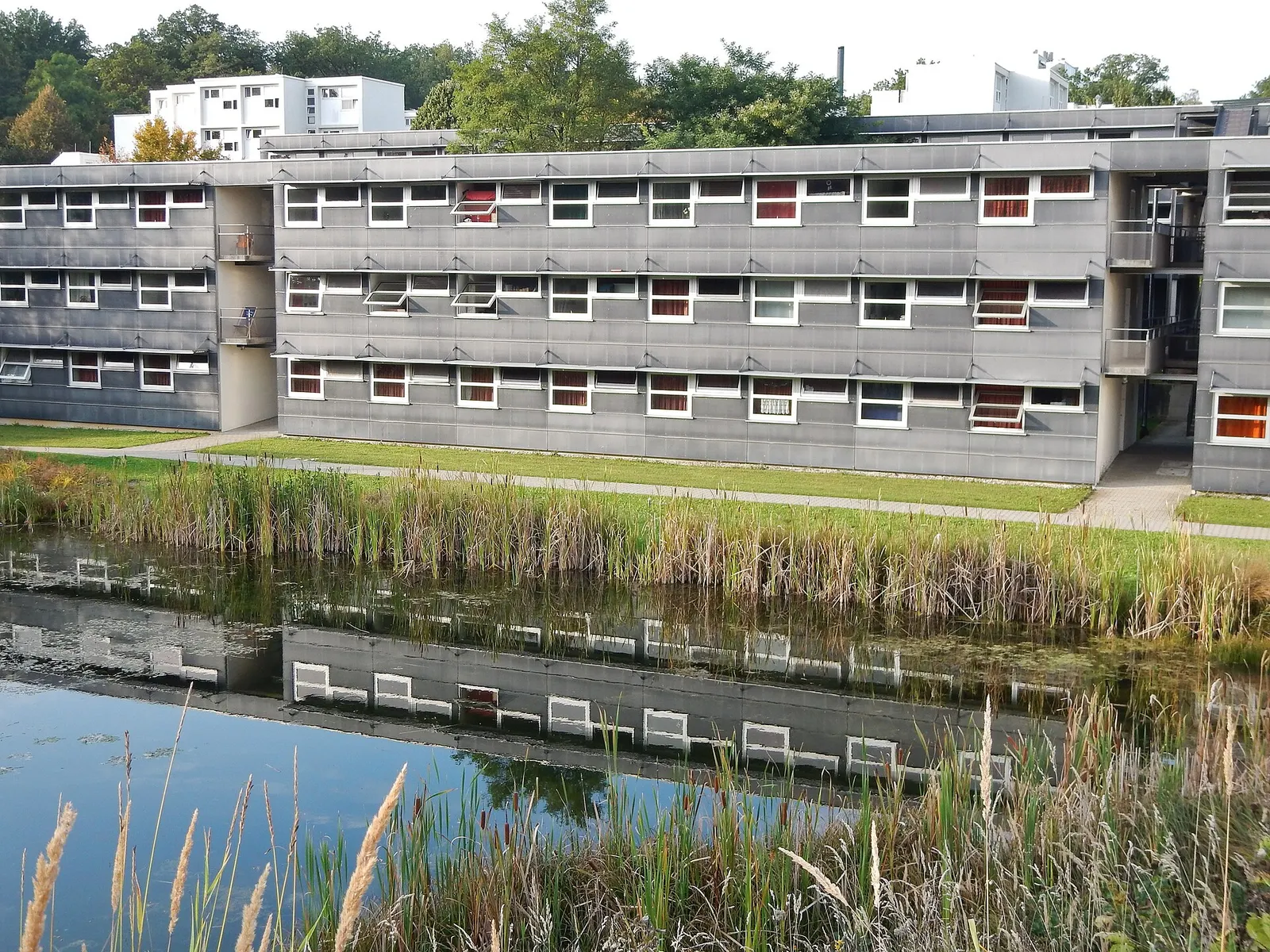
Aachen
Aachen's census rent of €8.04 per m² a month per square metre sits between Berlin and the expensive western cities, and North Rhine-Westphalia's halls have places for 8.47% of students. RWTH's semester contribution was not checked for this guide; look it up on the university's re-registration page. More in studying in Aachen.
Leipzig, Dresden and Chemnitz
Saxony's cities are the value end of the scale. In the 2022 census Leipzig (€6.44 per m² a month) and Dresden (€6.92 per m² a month) had the lowest rents per square metre of the ten big student cities, below the national average of €7.28 per m² a month. Chemnitz had the cheapest WG rents of all 90 university towns in winter semester 2026/27, at €305 per month, with Studentenwerk rooms at €264.50–€344.50 per month. Saxony also has hall places for 15.79% of its students, one of the highest rates in Germany. Semester contributions include the ticket: €361 per semester at TU Dresden and €341.40 per semester at TU Chemnitz. See Leipzig and Dresden.
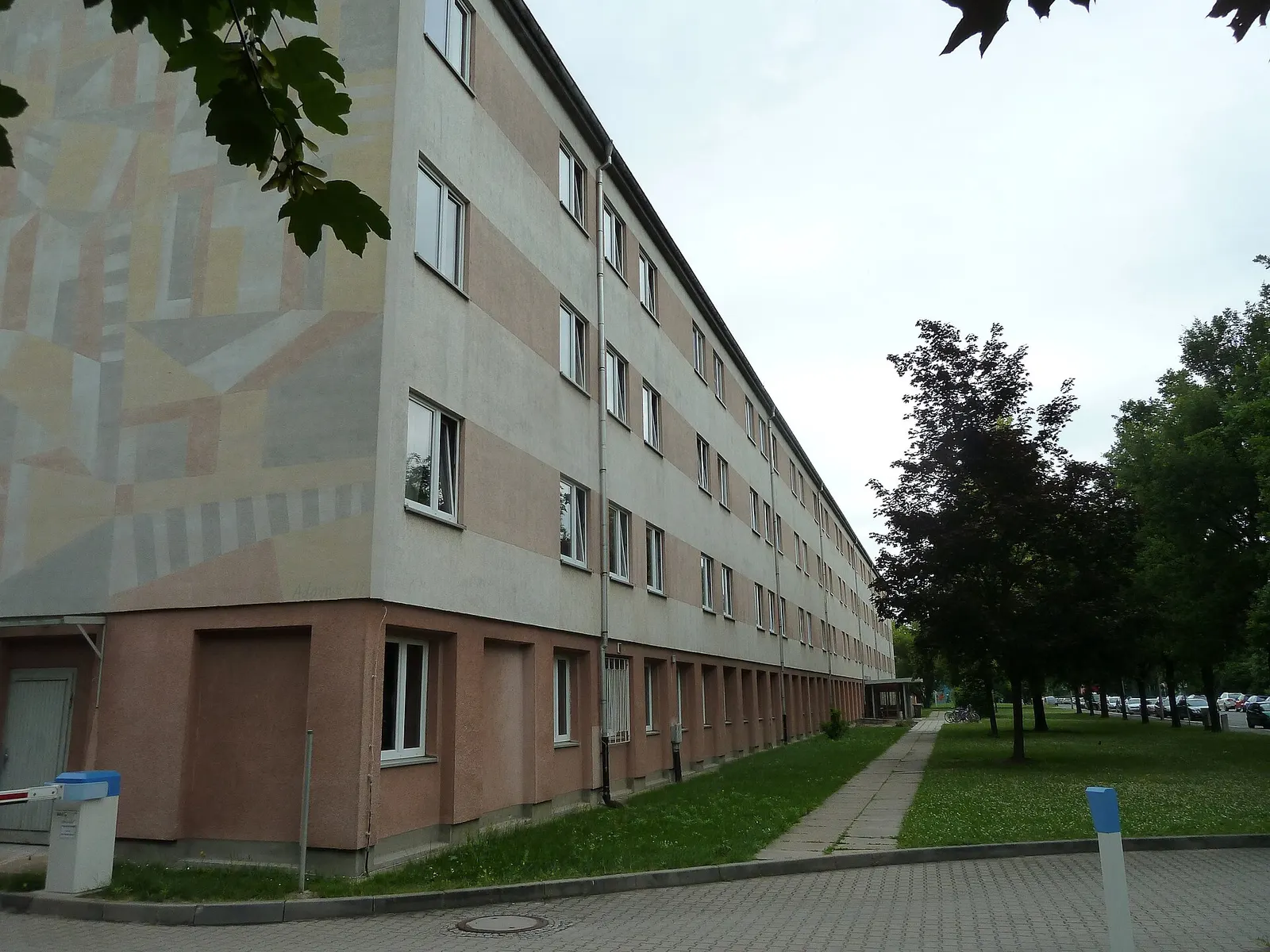
Hannover
Leibniz Universität Hannover gives its students' average living costs as €965–€1,106 per month, within DAAD's national range. Its semester contribution is one of the highest, €453.16 per semester, because it includes the semester ticket and Lower Saxony's administrative fee.
Costs that change with the Land, not the city
- Tuition: non-EU students pay €1,500 per semester in Baden-Württemberg; in Bavaria it depends on the institution (TUM and TH Nürnberg charge, LMU does not).
- The transport ticket: most semester contributions include the Deutschlandsemesterticket at €37.80 per month; Munich's does not, and Bavaria sells a student ticket for €43 per month.
- Administrative fees: Baden-Württemberg charges every student €80 per semester, and Berlin and Lower Saxony charge their own fees inside the contribution.
- Hall-place chances: from 5.09% in Berlin to 15.79% in Saxony.
- Residence permit fees are set by federal law. For Turkish nationals, Berlin's immigration office states the lower identity-card fee, €46 from age 24; other offices' practice was not checked for this guide.
In practice: comparing two cities before you apply
Start with the WG median and the cheaper quarter
They tell you what you will pay in your first months, before a hall place comes through. Where no median is published, look at current offers for rooms in two- or three-person flats.
Check the Studierendenwerk's residence list
Note rents, waiting times and when you may apply. Some accept applications only after admission, others earlier.
Read the semester contribution and ticket
On each university's re-registration page, check the total and whether it includes the Deutschlandsemesterticket.
Check the tuition rules of the Land
In Baden-Württemberg and at some Bavarian institutions, non-EU tuition can outweigh any rent difference.
Compare the totals with your money
Add insurance, food and phone, then compare with your blocked-account payout and any other income. The student cities guide adds what money cannot measure: universities, jobs and daily life.
Frequently asked questions
What is the cheapest city in Germany for students?
On WG rents, Chemnitz: its rooms averaged €305 per month in winter semester 2026/27, the lowest of 90 university towns analysed. Among the ten big student cities, Leipzig and Dresden had the lowest rents per square metre in the 2022 census. Saxony also has one of the highest shares of hall places, 15.79%.
How much does it cost to live in Munich as a student?
LMU tells students to calculate with about €1,500 per month, and TUM gives €1,300–€2,000 per month for greater Munich. A WG room has a median asking rent of €850 per month, and with insurance, transport and the broadcasting fee the fixed costs reach €1,047.21 per month before food.
Is Berlin expensive for students?
Less than Munich, but no longer cheap: a WG room's median asking rent is €650 per month, the same as Hamburg's. Halls are scarce, with places for only 5.09% of students, so most newcomers rent privately at first.
Is Leipzig cheaper than Berlin for students?
On the census measure, yes: Leipzig's average rent per square metre in 2022 was €6.44 per m² a month, against €7.67 per m² a month in Berlin. Saxony also has far more hall places per student than Berlin. A current WG median for Leipzig was not published in the analysis used here.
Do non-EU students pay more in some cities?
Yes, through tuition, which depends on the Land and the institution. At every state institution in Baden-Württemberg, including Stuttgart, Heidelberg and Karlsruhe, non-EU students pay €1,500 per semester unless exempt, and in Bavaria TUM, TH Nürnberg and, from summer semester 2027, FAU Erlangen-Nürnberg charge new non-EU students too.
How much money do I need per month in a cheaper city like Chemnitz or Leipzig?
Rent is what changes most. In Chemnitz the average WG room was advertised at €305 per month in winter 2026/27, and Scholway's illustration of fixed costs for a Chemnitz WG room comes to €497.01 per month, before food and personal spending. For visa purposes the required amount is the same everywhere, €992 per month; see financial proof and studying in Leipzig.
Sources
21 sources, 19 official
- Pressemitteilung: Studentische Wohnkosten Wintersemester 2026/2027 (19 September 2026)Moses Mendelssohn Institut (with WG-Gesucht.de) (Institutional)
- Studentische Wohnkosten im Wintersemester 2026/27: WG-Zimmer kosten durchschnittlich 510 EuroWG-Gesucht.de with the Moses Mendelssohn Institut (MMI) (Secondary)
- Chemnitz bietet im bundesweiten Vergleich die günstigsten Studierenden-WGs (Pressemitteilung, 21.09.2026)Technische Universität Chemnitz (Official)
- Wohnraum für Studierende — Statistische Übersicht 2025Deutsches Studierendenwerk (DSW) (Official)
- Schriftliche Anfrage Drucksache 19/22916: Studentisches Wohnen in Berlin (Antwort vom 26. Juni 2025)Abgeordnetenhaus Berlin / Senatsverwaltung für Wissenschaft, Gesundheit und Pflege (Official)
- Living costs (International Student Guide)LMU Munich (Official)
- Semester fees for the Munich Student Union (Studierendenwerk)LMU Munich (Office of the University Registrar) (Official)
- Study fees and costsTechnical University of Munich (TUM) (Official)
- Studienkosten (Semesterbeitrag, Langzeitstudiengebühren)Leibniz Universität Hannover (Official)
- Gebühren (Semestergebühren und -beiträge)Freie Universität Berlin (Official)
- Rückmeldung zum SemesterTechnische Universität Dresden (Official)
- Beiträge & GebührenUniversität Heidelberg (Official)
- Beitrags- und GebührenübersichtKarlsruher Institut für Technologie (KIT), Studierendenservice (Official)
- Tuition Fees for International StudentsMinisterium für Wissenschaft, Forschung und Kunst Baden-Württemberg (MWK) (Official)
- Kosten & Beitrag zur studentischen KrankenversicherungAOK-Bundesverband (statutory health insurance) (Official)
- Informationen für StudierendeARD ZDF Deutschlandradio Beitragsservice (rundfunkbeitrag.de) (Official)
- SemesterbeitragUniversität Hamburg (Campus-Center) (Official)
- Studium weiterführen und beenden (Rückmeldung)Goethe-Universität Frankfurt am Main (Official)
- Übersicht Semesterbeiträge seit dem Sommersemester 2015Universität zu Köln (Studierendensekretariat) (Official)
- Internationale SemesterbeiträgeTechnische Hochschule Nürnberg Georg Simon Ohm (Official)
- Studiengebühren für Studierende aus Nicht-EU-StaatenFriedrich-Alexander-Universität Erlangen-Nürnberg (FAU) (Official)