KIT at a glance
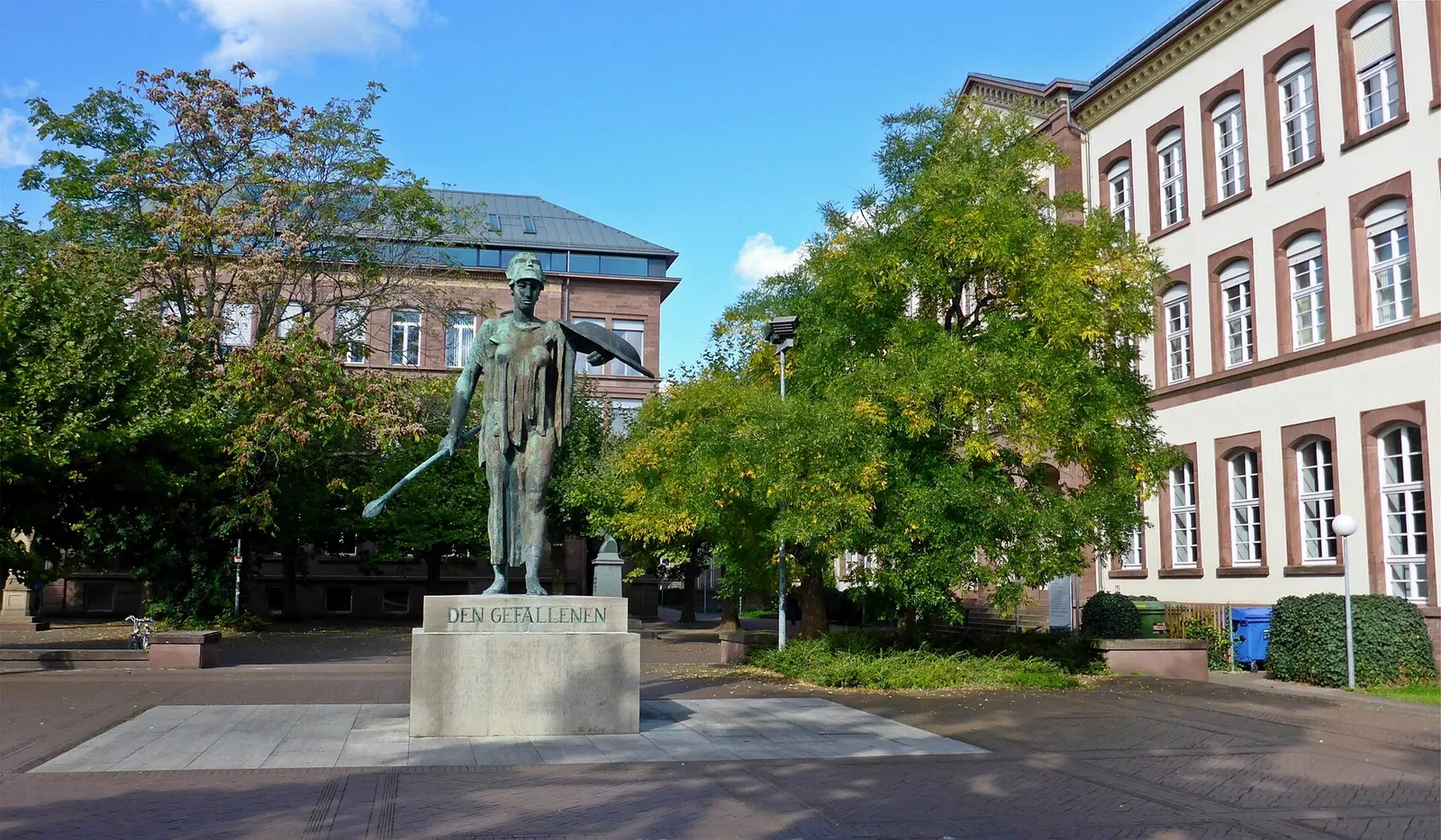
The Karlsruhe Institute of Technology was created on 1 October 2009 when the Universität Karlsruhe, whose roots go back to the Polytechnic School of 1825, merged with the Forschungszentrum Karlsruhe, a national research centre. KIT therefore calls itself 'The University in the Helmholtz Association': it teaches like a technical university and runs large-scale research like a Helmholtz centre. It is a member of TU9 and one of the excellence sites whose funding continues from 2027. Its programme list centres on engineering, computer science, the natural sciences and economics, alongside some humanities and teacher-training programmes.
| Item | What the sources say |
|---|---|
| Founded | 2009 (merger; roots in the Polytechnic School of 1825) |
| Students, KIT's own description | approximately 23,000 |
| Students, statistical office, winter semester 2025/26 | 22,404 |
| Alliances and labels | TU9; Helmholtz Association; Excellence Strategy site, funding continued from 1 January 2027 |
| THE World University Rankings 2027 | =143 (joint rank) |
| Master's taught only in English (KIT's overview) | 19 master's programmes |
| Application route | Directly in KIT's application portal; not on uni-assist's list |
| Tuition for non-EU students | €1,500 per semester |
| Compulsory semester charges | €184 per semester, no transport ticket included |
KIT's own 'approximately 23,000' and the statistical office's count refer to the university part of KIT; the research-centre side employs staff rather than enrolling students. The wider comparison is on the universities hub.
Which master's KIT teaches in English
KIT's degree programme overview marks each programme's language of instruction. On 30 October 2026 it listed 19 master's programmes as English-only, three more as German and English (Mechanical Engineering, Materials Science and Engineering, Mathematics) and the rest in German. Six of the English-only programmes are postgraduate courses of KIT's HECTOR School, which charge fees and are aimed at professionals; the others are regular, tuition-free apart from the Baden-Württemberg non-EU fee.
| Programme | Limited places | Deadline rule |
|---|---|---|
| Computer Science; Electrical Engineering and Information Technology; Industrial Engineering and Management; Computational Modeling in Engineering (new); Biomedical Engineering; Remote Sensing and Geoinformatics; Water Science and Engineering | yes | Programme's own dates: Computer Science 15 June / 15 January; Electrical Engineering and Information Technology, Industrial Engineering and Management, Computational Modeling in Engineering 15 July / 15 January; Biomedical Engineering, Remote Sensing and Geoinformatics, Water Science and Engineering 15 June / 30 November; Optics and Photonics 15 June for non-EU applicants (15 September for EU applicants), winter intake only |
| Computational and Data Science (new); Mechatronics and Information Technology; Meteorology and Climate Physics; Physics; Geophysics | no | Non-EU nationals 15 July (winter semester) / 15 January (summer semester); EU nationals 30 September (winter semester) / 31 March (summer semester) |
| Optics and Photonics | no | Winter intake only; see the programme's own dates above |
| HECTOR School postgraduate courses: Energy Engineering and Management; Financial Engineering; Management of Product Development; Production and Operations Management; Information Systems Engineering and Management; Mobility Systems Engineering and Management | no | Own dates; fee-based |
Mechanical Engineering, KIT's largest engineering field, is listed as German and English, so check the programme page for which modules are available in English. For the national picture, see English-taught programmes in Germany.
How admission works: paperless, directly at KIT
KIT is not a uni-assist member. Applications go through KIT's own portal and are paperless: every document is uploaded in the password-protected part of the portal, and no paper copies are posted. KIT's International Students Office has an admissions team for international applicants, while the Studierendenservice handles enrolment and student administration. KIT publishes one overview of all programmes with their admission restrictions and deadlines, including a separate column for non-EU nationals.
| Programme type | German and EU nationals | Non-EU nationals |
|---|---|---|
| Open admission (no limited places), many master's | 30 September (winter semester) / 31 March (summer semester) | 15 July (winter semester) / 15 January (summer semester) |
| Open admission, bachelor's | 15 September for German and EU nationals; 15 July for non-EU nationals (winter intake only) | As stated in the same rule |
| Limited places (NC) | Programme's own date, the same for everyone | Programme's own date, the same for everyone |
Check the programme in KIT's overview
Note the degree, whether places are limited and the deadline in the non-EU column, then read the programme's admission regulations for content requirements and language proof.
Prepare uploads
Certificates and transcripts with translations, proof of English for English-taught programmes, and programme-specific documents. KIT's 'Official Verification of Documents' and 'Foreign and Other School Certificates' pages explain what it accepts.
Apply in the application portal
Create an account and submit the application with all uploads before the deadline for your nationality.
Admission and fee payment
After admission, enrol and pay the semester charges plus, for non-EU students with a foreign entrance qualification, the tuition fee.
If you are applying from Türkiye
- Master's: your bachelor's content is checked against the programme; your university's anabin status should be H+. See recognition.
- Bachelor's: anabin and DAAD Türkiye give a Lise Diploması direct access only with a YKS placement in a four-year, face-to-face (örgün) lisans programme and more than 180 points (170 for the 2020 exam) in score type SAY, SÖZ, EA or DİL, for the same or a related subject; anabin lists no Studienkolleg route for the Lise Diploması alone. KIT's bachelor's programmes are taught in German apart from Mechanical Engineering (International). See the YKS requirement.
- Tuition: the Baden-Württemberg fee applies to Turkish citizens with a Turkish school certificate or degree; a Studienkolleg qualification does not exempt you. See the fee section below.
- Translations: Turkish documents need official translations; KIT's verification page sets the rules. See certified copies.
What KIT costs: the Baden-Württemberg fee plus semester charges
KIT's fees page states the rule plainly: international students from outside the EU who newly enrol for a degree programme pay tuition of €1,500 per semester; a second degree costs €650 per semester for anyone. The statutory exemptions, including a German school-leaving qualification and several residence statuses, are the same across the state and are explained in where non-EU students pay tuition. The International Students Office provides the details.
| Charge | Amount | Note |
|---|---|---|
| Administrative charge | €80 per semester | Since summer semester 2025; refunded if you de-register within a month of the start of lectures |
| Studierendenwerk Karlsruhe | €92 per semester | Includes liability insurance and access to psychological counselling |
| Student union (Verfasste Studierendenschaft) | €12 per semester | Statutory membership fee |
| Total semester charges | €184 per semester | No Deutschlandsemesterticket included |
| Non-EU tuition fee | €1,500 per semester | On top of the charges above |
| Late re-registration | €18 | Fine for paying after the deadline |
Because no semester ticket is bundled, a Karlsruhe student budgets separately for transport, for example a Deutschlandticket at €63 per month in 2026. For the national rules on contributions, see the semester contribution.
Who is exempt from the Baden-Württemberg fee
The exemptions are set by state law, not by KIT, and most of them turn on your residence history rather than your passport. They rarely help a student who comes straight from Türkiye, but they matter for Turkish citizens who grew up or worked in Germany. Each university may additionally exempt up to 5% of its international students, for example for merit or need; part of that quota is reserved for students from ACP states and Least Developed Countries, a group Türkiye is not in, so Turkish applicants compete for the general part under KIT's own rules.
Tuition for non-EU students: mostly in Baden-Württemberg and Bavaria
€ per semester for new non-EU students, on top of the semester contribution · 2026/27
Most public universities charge no tuition, but non-EU students pay €1,500 a semester at every state institution in Baden-Württemberg, from €2,000 (bachelor's) and €4,000 (master's) at TUM, €1,800 at HMT Leipzig, and €500 to €1,500 at several other Bavarian institutions.
- TUM, master's€4,000
- TUM, bachelor's€2,000
- HMT Leipzig€1,800
- Baden-Württemberg (all)€1,500
- Hochschule Coburg€1,500
- TH Ingolstadt, master's€1,200
- TH Nürnberg€1,000
- Hochschule Ansbach€1,000
- FAU Erlangen-Nürnberg€1,000
- Bavarian HAW service fee€500
| Item | Value |
|---|---|
| TUM, master's | €4,000 |
| TUM, bachelor's | €2,000 |
| HMT Leipzig | €1,800 |
| Baden-Württemberg (all) | €1,500 |
| Hochschule Coburg | €1,500 |
| TH Ingolstadt, master's | €1,200 |
| TH Nürnberg | €1,000 |
| Hochschule Ansbach | €1,000 |
| FAU Erlangen-Nürnberg | €1,000 |
| Bavarian HAW service fee | €500 |
TUM: the lower of its two usual rates, which depend on the programme and rise for intakes from winter semester 2027/28. FAU charges from summer semester 2027, depending on the programme (lowest rate shown). Exemptions exist everywhere: check the institution's own fee page.
Source: MWK, HTWG Hochschule Konstanz, DAAD +7 more. Last checked:
Image (PNG)| Ground | Condition |
|---|---|
| German school-leaving qualification | An Abitur or equivalent acquired in Germany; a Studienkolleg qualification does not count |
| Own work history | 5 years of presence in Germany with legal employment |
| Parent's work history | a parent who lived in Germany for a total of three of the six years before the start of studies and was legally employed there |
| Permanent residence | Several residence-based grounds, generally with at least 15 months of uninterrupted legal presence |
| University quota | Up to 5% of international students, under each university's criteria |
Living in Karlsruhe
Karlsruhe is not one of the ten cities profiled in this guide, so it has no city page yet. The former research centre is today KIT's Campus North, a separate site from the university's main campus, so check where your institute is before choosing housing. Baden-Württemberg's other large technical university, the University of Stuttgart, is also a TU9 member; Stuttgart's rents averaged €10.39 per m² a month at the 2022 census, against €7.28 per m² a month nationally. Use the cost of living and student dormitories for planning.
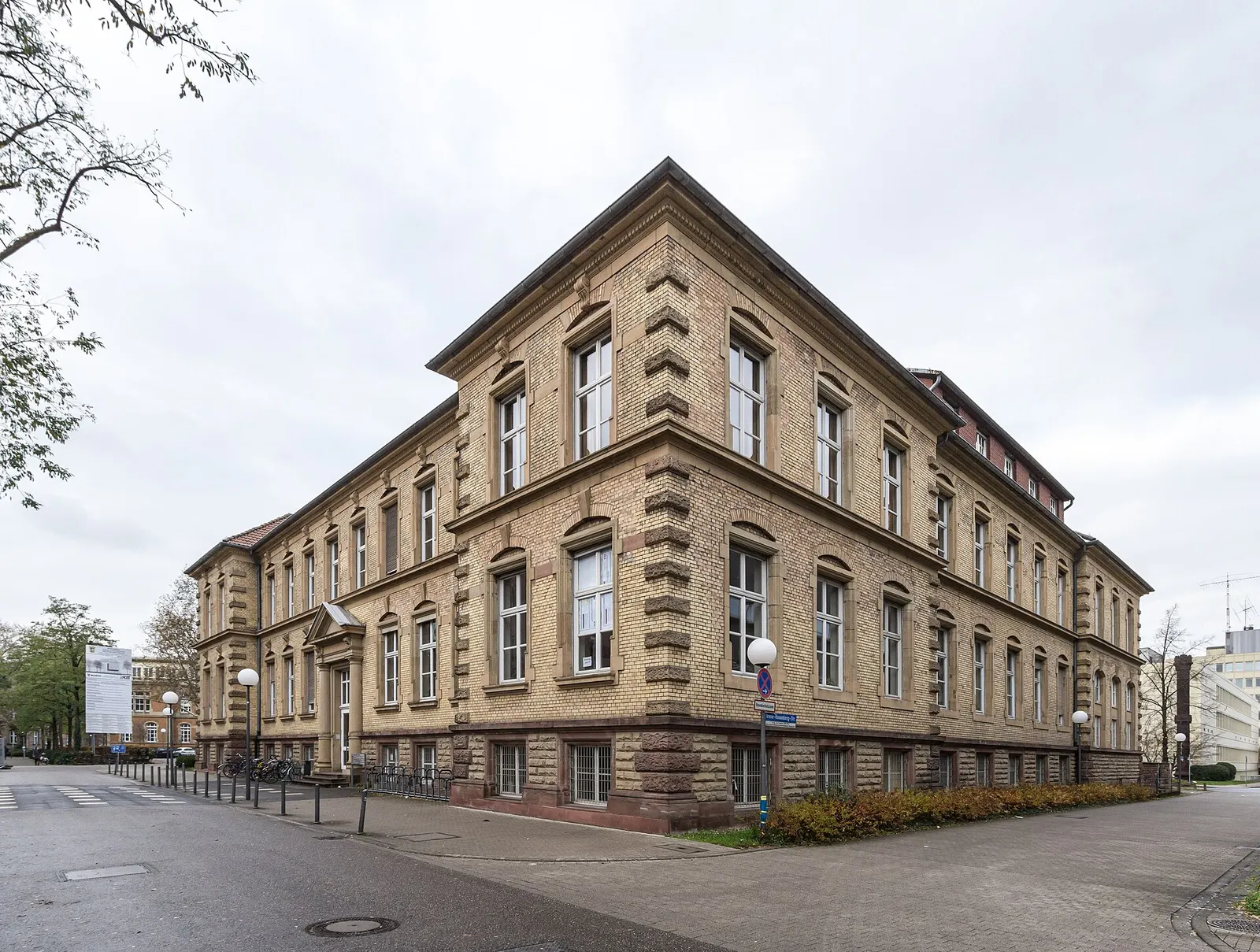
KIT itself puts the average expenses of a student in Karlsruhe at €800 to €900 per month, including rent, food, insurance, phone, study materials and transport, depending on how you live. That figure does not include the non-EU tuition fee, which KIT lists separately. For a non-EU student the honest monthly picture therefore has two layers, as the table shows.
| Item | Amount | Where it comes from |
|---|---|---|
| Living costs in Karlsruhe, KIT's estimate | €800 to €900 per month | KIT's study-start pages |
| Non-EU tuition fee, spread over six months | €250 per month | €1,500 per semester paid each semester |
| Semester charges, spread over six months | About one sixth of €184 | Administrative charge, Studierendenwerk, student union |
| Monthly payout of a blocked account (2026 minimum) | €992 per month | Proof of means for the visa |
The gap is plain: the blocked account at the minimum covers ordinary living costs in Karlsruhe, but not the tuition fee on top. Non-EU students at KIT should plan for savings, family support, a scholarship or part-time income to cover the fee, and check early whether one of the statutory exemptions or KIT's own fee-waiver quota applies to them. Housing is the other variable. Studierendenwerk Karlsruhe manages 22 halls of residence with 2,658 rooms in Karlsruhe and Pforzheim, which is modest for a university of KIT's size, so apply for a hall place as soon as you have your admission and look at shared flats in parallel; see shared flats and scholarships.
KIT in the rankings
In the Times Higher Education World University Rankings 2027 (published 30 September 2026, checked 30 October 2026) KIT holds the joint position =143, a clear rise from the previous edition. QS's 2027 position could not be verified because QS blocks automated access. For engineering and computing, subject-level tables and the programme's own content say more than an overall rank; see how to read the rankings.
In practice: the KIT calendar for a non-EU applicant
Treat KIT's overview PDF as your calendar: it is dated, lists every programme on one sheet and carries the non-EU footnote. For a winter start in an open-admission master's, a non-EU application must be complete by the July date in 15 July (winter semester) / 15 January (summer semester), which for a Turkish graduate means ordering translations in spring and uploading a transcript that may still lack the final semester; check in the programme's regulations whether a provisional transcript is accepted. For limited-place programmes such as Computer Science, the programme's own, often earlier date applies to everyone.
After admission, the administrative charge and the student union fee are refundable only if you de-register within one month of the start of the lecture period, and the Studierendenwerk charge only on written application within its deadlines; a tuition exemption must be proven before the fee is charged. The Deutschlandticket is bought separately and can be cancelled by the 10th of a month, effective at the end of that month. For arrival steps, see the first 30 days.
Before you apply to KIT
- Programme found in KIT's overview with its non-EU deadline and admission restriction
- Admission regulations read for content requirements and English proof
- Documents scanned with official translations, ready for the paperless portal
- Tuition exemption checked; otherwise budget €1,500 per semester plus semester charges
- Transport budget: no semester ticket at KIT
- Accommodation search started with the Studierendenwerk Karlsruhe
Frequently asked questions
Does KIT charge tuition for non-EU students?
Yes. KIT is a state institution in Baden-Württemberg, so international students from outside the EU/EEA pay €1,500 per semester when they newly enrol, plus KIT's own semester charges of €184 per semester. The state's exemptions apply, for example for a German school-leaving qualification or certain residence statuses.
What are KIT's admission requirements?
Each programme's admission regulations set them: a related first degree for a master's, programme-specific content requirements, and proof of English or German. Programmes with limited places select among qualified applicants. Applications are submitted paperlessly in KIT's own portal, not through uni-assist.
Does KIT offer English-taught master's?
Yes. KIT's overview listed 19 master's programmes taught only in English on 30 October 2026, including Computer Science, Electrical Engineering and Information Technology, Industrial Engineering and Management, Physics and Meteorology and Climate Physics; Mechanical Engineering is taught in German and English.
What is the KIT application deadline for non-EU students?
For open-admission programmes, 15 July (winter semester) / 15 January (summer semester), earlier than the EU deadline. Programmes with limited places have their own dates, for example 15 June or 15 July for the winter semester, which apply to all applicants.
Does KIT use uni-assist?
No. KIT is not on uni-assist's list; you apply directly in KIT's application portal and upload all documents there. The International Students Office is the first contact for international applicants.
How much does it cost to live in Karlsruhe as a KIT student?
KIT estimates average student expenses in Karlsruhe at €800 to €900 per month, including rent, food, insurance and transport. Non-EU students pay Baden-Württemberg's tuition of €1,500 per semester on top, which works out at €250 per month over a semester. A blocked account at the 2026 minimum covers living costs but not the fee, so budget for it separately.
Sources
19 sources, 18 official
- ProfileKarlsruher Institut für Technologie (KIT) (Official)
- HistoryKarlsruher Institut für Technologie (KIT) (Official)
- Application and AdmissionKarlsruher Institut für Technologie (KIT) – Studying and Teaching (Official)
- Degree Programs (overview with deadlines and language of instruction)Karlsruher Institut für Technologie (KIT) – Studying and Teaching (Official)
- Overview of KIT Degree Programs for Winter Term 2026/27 and Summer Term 2027 (12 May 2026)Karlsruher Institut für Technologie (KIT) (Official)
- Charges and FeesKarlsruher Institut für Technologie (KIT) – Studying and Teaching (Official)
- uni-assist universities (list of member universities)uni-assist e.V. (Official)
- Karlsruhe Institute of Technology – World University Rankings profileTimes Higher Education (THE) (Institutional)
- TU9 – Allianz führender Technischer Universitäten in DeutschlandTU9 German Universities of Technology e.V. (Official)
- Zehn Exzellenzstandorte werden weitergefördert (Gemeinsame Pressemitteilung von WR und DFG, 11. März 2026)Wissenschaftsrat / Deutsche Forschungsgemeinschaft (Official)
- Almanya'da yükseköğrenim (lisans ve master başvurusu)DAAD Türkiye (DAAD Information Centres Istanbul/Ankara) (Official)
- Tuition Fees for International StudentsMinisterium für Wissenschaft, Forschung und Kunst Baden-Württemberg (MWK) (Official)
- Beitrags- und GebührenübersichtKarlsruher Institut für Technologie (KIT), Studierendenservice (Official)
- Statistischer Bericht – Statistik der Studierenden – Wintersemester 2025/2026 (Tabellen 21311-01 und 21311-12)Statistisches Bundesamt (Destatis) (Official)
- Zensus 2022, Tabelle 4000W-0004: Wohnungskennzahlen – Durchschnittliche Nettokaltmiete (Gemeinden, Stichtag 15.05.2022)Statistische Ämter des Bundes und der Länder (Zensusdatenbank) (Official)
- anabin – Türkei: Lise Diplomasi einer 12-jährigen allgemeinbildenden Sekundarschule (Bewertung mit Fallgruppen TUR-BV05 bis TUR-BV08 und TUR-BV14)Kultusministerkonferenz – Zentralstelle für ausländisches Bildungswesen (anabin) (Official)
- Financing / part-time job (Studienstart)Karlsruhe Institute of Technology (Official)
- Housing (Wohnen)Studierendenwerk Karlsruhe (Official)
- FAQs zu den Gebühren für Internationale Studierende und das ZweitstudiumMinisterium für Wissenschaft, Forschung und Kunst Baden-Württemberg (MWK) (Official)