Heidelberg University at a glance
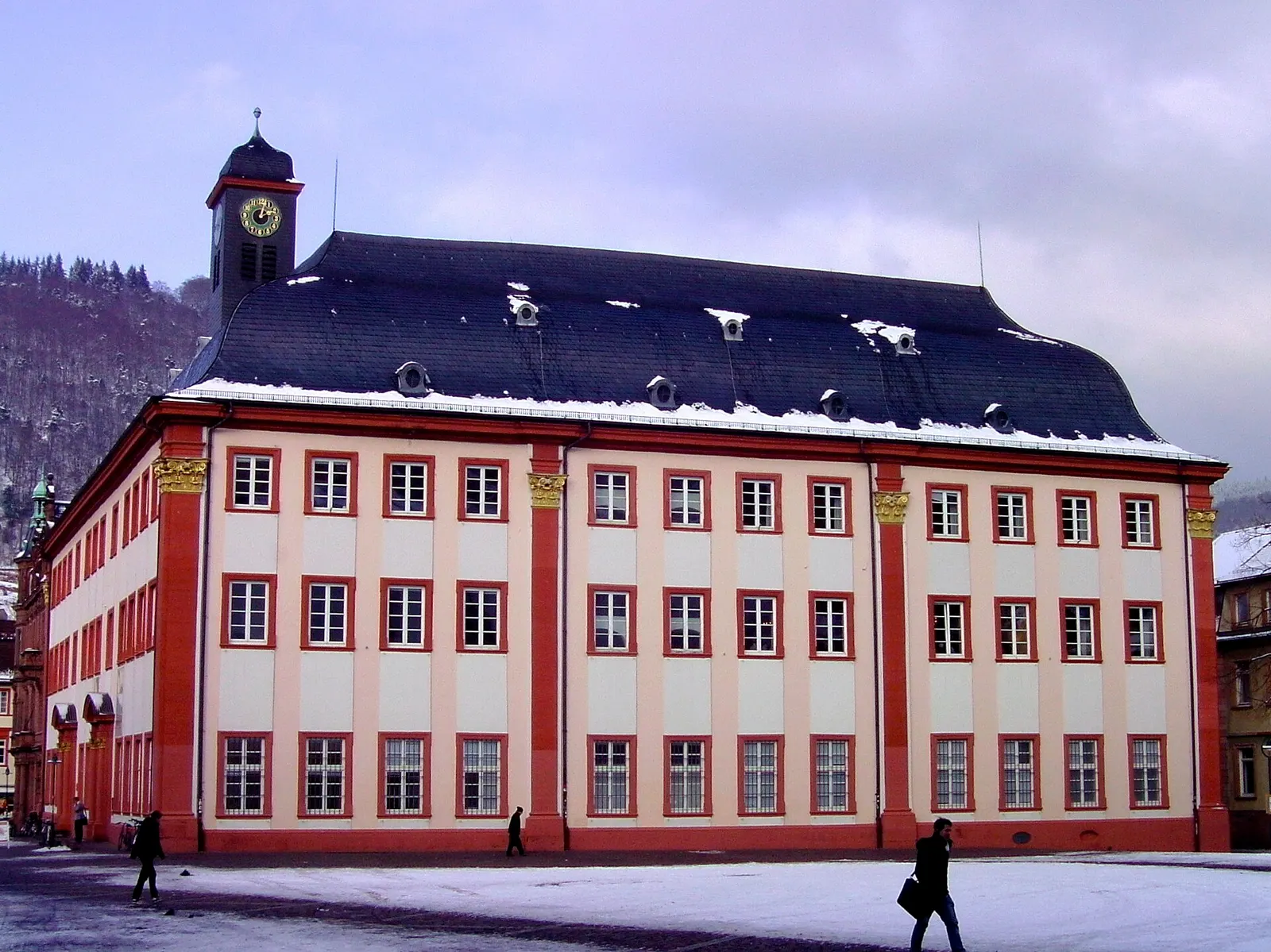
Ruprecht-Karls-Universität Heidelberg received its charter in 1386 and is the oldest university in today's Germany. It is a comprehensive research university with a strong medical and natural-science side, a member of the German U15 group, and a University of Excellence since 2007 whose funding continues under the Excellence Strategy from 2027. Its medical faculty in Mannheim is part of the university, which is why two student counts circulate. For international applicants the practical points are different: everything runs through Heidelberg's own portal, every master's has access restrictions, and the Baden-Württemberg tuition fee for non-EU students applies.
| Item | What the sources say |
|---|---|
| Founded | 1386 |
| Students, university's head count (1 December 2025) | 32,178 |
| Students, statistical office, winter semester 2025/26 | 31,417, including the Mannheim medical faculty |
| Students of Turkish nationality, winter semester 2025/26 | 450 students |
| Alliances and labels | German U15; University of Excellence since 2007, funding continued from 1 January 2027 |
| THE World University Rankings 2027 | =45 (joint rank) |
| Master's taught in English (university's list) | 18 master's programmes |
| Application route | Directly in the heiCO portal, regardless of nationality |
| Tuition for non-EU students | €1,500 per semester |
| Semester fee, winter semester 2026/27 | €189.80 per semester |
The university's statistics count nationality, so its 'international' figures include Turkish citizens who went to school in Germany; the statistical office's count is the one to use when comparing universities. The national picture is on the universities hub.
Programmes taught in English
Heidelberg's list of programmes taught in English, read on 30 October 2026, names 18 master's programmes, almost all of them consecutive master's. The list leans towards the sciences and data: Data and Computer Science, Scientific Computing, Mathematics of Machine Learning and Data Science, Physics, Molecular Biosciences, Molecular Systems Science and Engineering, Matter to Life, Biomedical Engineering and Translational Medical Research. Economics, Computational Linguistics, Transcultural Studies, Sociocultural Anthropology, South Asian Studies, American Studies and Christianity and Culture cover the social sciences and humanities, and International Health is an advanced-study master's.
The university's facts page also advertises a much larger number of 'international programmes', a wider category that includes German-taught programmes with an international element; it is not a count of English-taught degrees. For the national offer, see English-taught programmes in Germany.
How admission works: heiCO, not uni-assist
Heidelberg is not a uni-assist member; the 'Heidelberg' entry on uni-assist's list is the separate Heidelberg University of Education. All applicants, whatever their nationality and degree, apply online through heiCO, the university's campus management portal. The only exceptions are German and equal-status applicants for the nationally restricted subjects (medicine, dentistry, pharmacy), who go through hochschulstart. The Study Programme Finder tells you which admission procedure your subject uses and tailors the admission information to your profile.
- heiCOheiCO (Heidelberg Campus Online)
- Heidelberg University's online portal for applications and, after admission, for enrolment and student administration. Applications for a first semester are submitted there regardless of nationality.
Every master's programme at Heidelberg is access-restricted: the admission regulations of the subject set conditions such as a completed first degree in a related field and, often, an above-average grade. Some programmes are additionally admission-restricted, meaning places are limited and the best applicants are selected. A master's generally runs four semesters, some two or three, and ends with an M.Sc. or M.A.
Find your procedure in the Study Programme Finder
Select the programme and your profile: it shows the admission regulations, documents, language rules and the deadline for your case.
Prepare the documents the regulations list
Typically the first-degree certificate and transcript with official translations, proof of English for English-taught master's, and any programme-specific items such as a motivation letter.
Apply in heiCO before the deadline
Create an account, enter the application and upload the documents. For a programme with limited places, meeting the access conditions does not guarantee a place.
After admission: enrol and pay
Admitted applicants apply for enrolment in heiCO by the deadline in the admission letter and pay the semester fee plus, if it applies, the non-EU tuition fee.
If you are applying from Türkiye
- Bachelor's: anabin and DAAD Türkiye give a Lise Diploması direct access only with a YKS placement in a four-year, face-to-face (örgün) lisans programme and more than 180 points (170 for the 2020 exam) in score type SAY, SÖZ, EA or DİL, for the same or a related subject; anabin lists no Studienkolleg route for the Lise Diploması alone. See the YKS requirement.
- Master's: your bachelor's must meet the subject's access conditions; your university's anabin status should be H+. See recognition.
- Tuition: the Baden-Württemberg fee applies to non-EU students with a foreign university entrance qualification, so a Turkish school leaver pays it for a bachelor's and a Turkish graduate pays it for a consecutive master's. A German Abitur exempts; a Studienkolleg qualification does not.
- Translations: Turkish documents need official translations; see certified copies and translations.
Tuition and fees: the Baden-Württemberg rule
Since winter semester 2017/18 Baden-Württemberg's Higher Education Fees Act (Landeshochschulgebührengesetz) requires every state institution to charge non-EU/EEA students with a foreign university entrance qualification €1,500 per semester in bachelor's, state-examination and consecutive master's programmes. Heidelberg adds that changing your entire degree programme or your institution counts as a new start, so the fee applies then too. On top comes the semester fee of €189.80 per semester for winter semester 2026/27.
| Item | Amount or rule |
|---|---|
| Non-EU tuition fee | €1,500 per semester |
| Second degree (any nationality) | €650 per semester; fee-paying international students do not pay both |
| Semester fee | €189.80 per semester (winter semester 2026/27) |
| Statutory exemptions (§§ 5–6 LHGebG) | EU/EEA citizens; a German university entrance qualification; several residence statuses; doctoral and exchange students; a study-impeding disability; leave of absence or practical semester on application |
| University exemption quota | Up to 5% of international students; apply by 15 July (for the winter semester) / 15 January (for the summer semester), or with the application if the programme deadline is earlier |
| Hardship waiver (§ 7 LHGebG) | For unforeseen financial emergencies through no fault of your own; not open to students in their first semester, and not once the fee has already been paid |
The statewide rule, the full exemption list and how it compares with Bavaria are in where non-EU students pay tuition; the semester contribution is explained in the semester contribution.
Tuition for non-EU students: mostly in Baden-Württemberg and Bavaria
€ per semester for new non-EU students, on top of the semester contribution · 2026/27
Most public universities charge no tuition, but non-EU students pay €1,500 a semester at every state institution in Baden-Württemberg, from €2,000 (bachelor's) and €4,000 (master's) at TUM, €1,800 at HMT Leipzig, and €500 to €1,500 at several other Bavarian institutions.
- TUM, master's€4,000
- TUM, bachelor's€2,000
- HMT Leipzig€1,800
- Baden-Württemberg (all)€1,500
- Hochschule Coburg€1,500
- TH Ingolstadt, master's€1,200
- TH Nürnberg€1,000
- Hochschule Ansbach€1,000
- FAU Erlangen-Nürnberg€1,000
- Bavarian HAW service fee€500
| Item | Value |
|---|---|
| TUM, master's | €4,000 |
| TUM, bachelor's | €2,000 |
| HMT Leipzig | €1,800 |
| Baden-Württemberg (all) | €1,500 |
| Hochschule Coburg | €1,500 |
| TH Ingolstadt, master's | €1,200 |
| TH Nürnberg | €1,000 |
| Hochschule Ansbach | €1,000 |
| FAU Erlangen-Nürnberg | €1,000 |
| Bavarian HAW service fee | €500 |
TUM: the lower of its two usual rates, which depend on the programme and rise for intakes from winter semester 2027/28. FAU charges from summer semester 2027, depending on the programme (lowest rate shown). Exemptions exist everywhere: check the institution's own fee page.
Source: MWK, HTWG Hochschule Konstanz, DAAD +7 more. Last checked:
Image (PNG)Living in Heidelberg: what the university itself says
Heidelberg's own financing page is unusually frank: 'Heidelberg is not a cheap city to live in.' It puts monthly costs at approx. €895 to €2,013 a month, with rent the largest item, from about €350 in student housing to about €950 per month on the private market. The university recommends applying for a dormitory place 9 months before moving in, possibly even before applying for the programme. The 2022 census put Heidelberg's average net cold rent at €10.02 per m² a month, the fourth-highest of Germany's large cities.
Rent per square metre in the big student cities
Average net cold rent in existing tenancies, € per m² a month · census, 15 May 2022
In the 2022 census, tenants paid an average net cold rent of €12.89 per square metre in Munich, €10.58 in Frankfurt and €10.39 in Stuttgart, against €7.28 across Germany, €6.92 in Dresden and €6.44 in Leipzig.
- Munich€12.89
- Frankfurt€10.58
- Stuttgart€10.39
- Heidelberg€10.02
- Cologne€9.39
- Hamburg€9.16
- Aachen€8.04
- Berlin€7.67
- Germany€7.28
- Dresden€6.92
- Leipzig€6.44
| Item | Value |
|---|---|
| Munich | €12.89 |
| Frankfurt | €10.58 |
| Stuttgart | €10.39 |
| Heidelberg | €10.02 |
| Cologne | €9.39 |
| Hamburg | €9.16 |
| Aachen | €8.04 |
| Berlin | €7.67 |
| Germany | €7.28 |
| Dresden | €6.92 |
| Leipzig | €6.44 |
Rents in existing tenancies, before heating and other running costs. A newcomer is asked more, most visibly in Berlin; for a student room, the WG medians are the better guide.
Source: Statistische Ämter des Bundes und der Länder. Last checked:
Image (PNG)The university also sets out the arithmetic a visa applicant faces: the German missions require proof of €992 per month, which the university multiplies out over a six-semester bachelor's and a four-semester master's: three and two years of living costs to prove, before tuition. Heidelberg is a city of 156,092 residents with a Turkish community of 2,312 residents with Turkish citizenship at the 2022 census. Districts, transport and daily life are in studying in Heidelberg; halls and the private market in student dormitories.
What a Heidelberg master's costs in total
Adding up the university's own figures gives a clear picture of a four-semester master's for a non-EU student without an exemption. The university charges come first: four times the Baden-Württemberg fee of €1,500 per semester and four times the semester contribution of €189.80 per semester. The living costs come on top. The visa requires proof of means for the first year only, but Heidelberg University's own financing page asks students to plan for the whole programme.
| Item | Amount | Note |
|---|---|---|
| Tuition and semester contributions, four semesters | €6,759.20 | Paid each semester; the contribution includes no transport ticket |
| Living costs, two years at the visa minimum | €23,808 | Only the first year must be proven for the visa |
| Living costs, the university's own range | approx. €895 to €2,013 a month | Rent in a hall or a private room makes the difference |
| Public transport | Bought separately | No semester ticket since winter semester 2023/24; a Deutschlandticket costs €63 per month in 2026 |
Two things make Heidelberg more manageable than these totals suggest. First, housing: publicly funded hall places equal 20.57% of students, the highest ratio of the ten cities profiled in this guide, so applying early to the Studierendenwerk has a realistic chance of success. Second, the fee exemption quota: if you have strong grades or a documented need, the university's quota application is worth the effort. Scholarships that cover tuition are listed in fully funded scholarships, and the Baden-Württemberg rules in non-EU tuition.
Heidelberg in the rankings
In the Times Higher Education World University Rankings 2027 (published 30 September 2026, checked 30 October 2026) Heidelberg holds the joint position =45, up from the previous edition and third in Germany after TUM and LMU. QS's 2027 position could not be verified because QS blocks automated access. Research-heavy tables reward a university with a large medical faculty; for a master's choice, read the subject's own admission regulations first. See how to read the rankings.
In practice: applying and the first fee payment
Because the tuition exemption quota and many master's programmes close on different dates, submit the exemption application together with the programme application if the programme's deadline falls before 15 July or 15 January; the university decides on exemptions only after the general deadline. Keep the written decision: if you later re-register without an exemption on file, the full fee becomes due, and the university states that a hardship refund is not possible once the fee for the coming semester has been paid.
Dormitory applications go to the Studierendenwerk Heidelberg, not the university; apply as early as the university suggests and treat an offer as time-limited. Open your heiCO account well before the deadline, and give the same spelling of your name as in your passport, because the admission letter feeds into your visa application and the blocked account proof.
Before you apply to Heidelberg
- Study Programme Finder checked for your programme's procedure, documents and deadline
- heiCO account created early; documents scanned with official translations
- English proof for an English-taught master's; German proof planned if you enter a bachelor's
- Tuition exemption checked against §§ 5–6 LHGebG; quota application prepared if you qualify
- Dormitory application to the Studierendenwerk sent months ahead
- Budget for the non-EU fee plus the semester fee plus Heidelberg rents
Frequently asked questions
Does Heidelberg University charge tuition for non-EU students?
Yes. As a state institution in Baden-Württemberg it charges non-EU/EEA students with a foreign university entrance qualification €1,500 per semester in bachelor's, state-examination and consecutive master's programmes, plus the semester fee of €189.80 per semester. Exemptions exist for a German school-leaving qualification, certain residence statuses, doctoral and exchange students and a small university quota.
What are Heidelberg University's admission requirements?
They are set per programme in its admission regulations. Every master's is access-restricted, typically requiring a related first degree and often an above-average grade; some programmes also limit places. Applications go through the heiCO portal, and the Study Programme Finder shows the rules for your profile.
Is Heidelberg expensive for students?
The university itself says Heidelberg is not a cheap city and estimates approx. €895 to €2,013 a month depending on lifestyle, with rent the biggest item. It recommends applying for a dormitory place 9 months before moving in.
Does Heidelberg University use uni-assist?
No. Applications for all degrees and nationalities are submitted directly in Heidelberg's heiCO portal. The 'Heidelberg' entry on uni-assist's list is the separate Heidelberg University of Education.
Which master's does Heidelberg teach in English?
Its list named 18 master's programmes on 30 October 2026, including Data and Computer Science, Scientific Computing, Physics, Molecular Biosciences, Economics, Computational Linguistics and Transcultural Studies. Bachelor's programmes and the Master of Education require German at DSH-2 level by registration.
How much does a master's at Heidelberg cost for a non-EU student?
Without an exemption, the university charges for four semesters come to €6,759.20: Baden-Württemberg's €1,500 per semester tuition plus the semester contribution, four times each. Living costs come on top; the university estimates approx. €895 to €2,013 a month, and two years at the visa minimum add up to €23,808.
Sources
25 sources, 24 official
- Facts & FiguresUniversität Heidelberg (Official)
- HistoryUniversität Heidelberg (Official)
- Studierendenstatistik der Universität Heidelberg zum Wintersemester 2025/26 (Stichtag 01. Dezember 2025)Universität Heidelberg (Official)
- Bachelor and State Examination: Starting the first academic semester of your degree programmeUniversität Heidelberg (Official)
- Master's Degree Programme: Starting your Degree Course in the First Academic SemesterUniversität Heidelberg (Official)
- Course offering: Degree programmes taught in EnglishUniversität Heidelberg (Official)
- Study financing for international studentsUniversität Heidelberg (Official)
- Contributions and Fees: Tuition fees for international studentsUniversität Heidelberg (Official)
- uni-assist universities (list of member universities)uni-assist e.V. (Official)
- Universität Heidelberg – World University Rankings profileTimes Higher Education (THE) (Institutional)
- German U15 – Unsere MitgliedsuniversitätenGerman U15 e.V. (Official)
- Zehn Exzellenzstandorte werden weitergefördert (Gemeinsame Pressemitteilung von WR und DFG, 11. März 2026)Wissenschaftsrat / Deutsche Forschungsgemeinschaft (Official)
- Almanya'da yükseköğrenim (lisans ve master başvurusu)DAAD Türkiye (DAAD Information Centres Istanbul/Ankara) (Official)
- Rahmenordnung über deutsche Sprachprüfungen für das deutschsprachige Studium an deutschen Hochschulen (RO-DT), Beschluss der HRK vom 08.06.2004 und der KMK vom 25.06.2004 i. d. F. der HRK vom 04.11.2025 und der KMK vom 27.11.2025HRK / KMK (PDF hosted by g.a.s.t. – TestDaF-Institut) (Official)
- Tuition Fees for International StudentsMinisterium für Wissenschaft, Forschung und Kunst Baden-Württemberg (MWK) (Official)
- Auskunftsformular für die Beurteilung der Studiengebührenpflicht/-befreiung internationaler Studierender (Stand 01/2026)HTWG Hochschule Konstanz (Official)
- Beiträge & GebührenUniversität Heidelberg (Official)
- Statistischer Bericht – Statistik der Studierenden – Wintersemester 2025/2026 (Tabellen 21311-01 und 21311-12)Statistisches Bundesamt (Destatis) (Official)
- Alle politisch selbständigen Gemeinden mit ausgewählten Merkmalen am 31.12.2025 (Gemeindeverzeichnis, Jahresausgabe)Statistisches Bundesamt (Destatis) (Official)
- Zensus 2022, Tabelle 4000W-0004: Wohnungskennzahlen – Durchschnittliche Nettokaltmiete (Gemeinden, Stichtag 15.05.2022)Statistische Ämter des Bundes und der Länder (Zensusdatenbank) (Official)
- Zensus 2022, Tabelle 1000A-1021: Personen – Staatsangehörigkeit (Häufigste Länder), Gemeinden, Stichtag 15.05.2022Statistische Ämter des Bundes und der Länder (Zensusdatenbank) (Official)
- anabin – Türkei: Lise Diplomasi einer 12-jährigen allgemeinbildenden Sekundarschule (Bewertung mit Fallgruppen TUR-BV05 bis TUR-BV08 und TUR-BV14)Kultusministerkonferenz – Zentralstelle für ausländisches Bildungswesen (anabin) (Official)
- Beiträge & GebührenUniversität Heidelberg (Official)
- Semester Ticket for Public Transportation (Management of Studies – Tuition Fees)Heidelberg University (Official)
- Wohnraum für Studierende — Statistische Übersicht 2025 / Student Housing in Germany — Statistical OverviewDeutsches Studierendenwerk (DSW) (Official)