"Fully funded" is the most overused phrase in scholarship marketing, and in Germany it needs translating. Most public universities charge no tuition for a first degree, so a "full" award here is mainly one that pays your living costs, your health insurance and your travel — and, at the universities that do charge non-EU students, the fee. Measured that way, a handful of routes are genuinely full: DAAD's doctoral scholarships, Erasmus Mundus Joint Masters, salaried doctoral posts, and some Turkish and Türkiye–EU programmes for Turkish citizens. Most other awards are partial, and that is not a reason to ignore them.
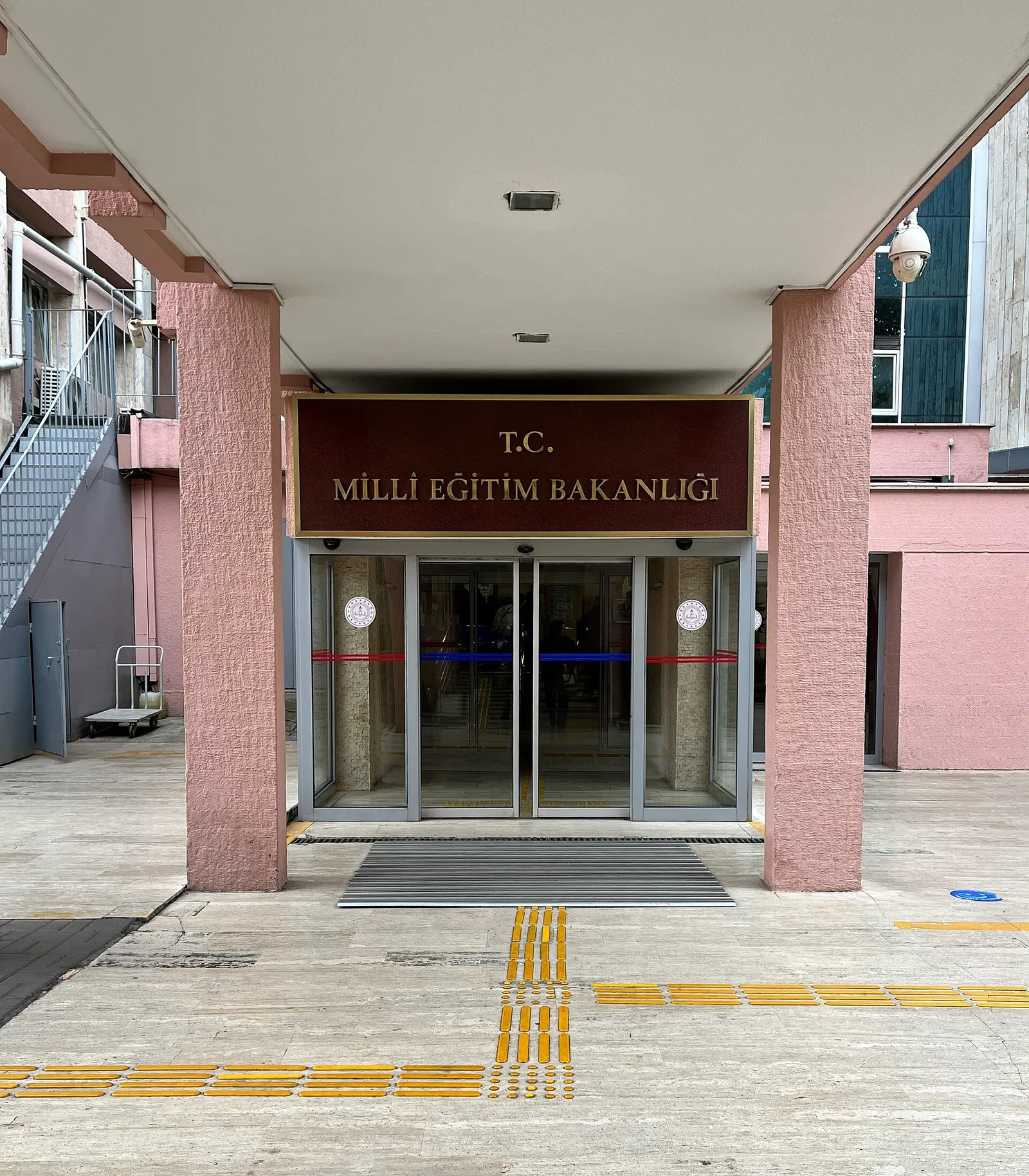
This page tests each route against the full bill, then looks at what universities themselves pay. For every route in one table, start with scholarships in Germany for international students.
What a full award has to cover
- Semester contributionSemesterbeitrag
- The amount every student pays each semester to the Studierendenwerk and the student body, often including a transport ticket. It is not tuition and is charged at tuition-free universities too, so a "full" award should cover it or leave you the margin to pay it. The semester contribution explained has current examples.
| Cost | What it is | Figure |
|---|---|---|
| Tuition | None at most public universities for a first degree; non-EU fees in Baden-Württemberg, at several Bavarian institutions (TUM, TH Nürnberg, FAU Erlangen-Nürnberg from summer semester 2027) and at a few others such as HMT Leipzig | €1,500 per semester in Baden-Württemberg; TUM master's usually €4,000 to €6,000 per semester; TH Nürnberg €1,000 per semester; FAU €1,000 to €6,000 per semester |
| Semester contribution | Paid every semester at every university; often includes a transport ticket | DAAD's range is €70 to €430 per semester, now exceeded where the Deutschlandsemesterticket is included |
| Living costs | The amount German immigration law treats as a student's minimum | €992 per month |
| Health insurance | Compulsory; the statutory student rate is the same uniform part at every fund, plus each fund's add-on and care insurance | €87.38 per month plus add-ons |
| Getting there | Visa, flights, a deposit on a room | National visa fee €75 |
Read every "fully funded" claim against these five lines. An award of €992 per month with health insurance matches the immigration minimum and is, for a student at a tuition-free university, effectively full. The same award at TUM leaves the tuition uncovered. Tuition fees in Germany and where non-EU students pay tuition explain the exceptions.
What a scholarship pays a month
Monthly amount for a master's-level student, € · 2026
For a master's-level student, a Jean Monnet scholarship pays €1,450 a month in Germany and an Erasmus Mundus Joint Master €1,400; DAAD and the foundations' Foreign Office programmes pay €992, Avicenna at most €844 and the Deutschlandstipendium €300.
- Jean Monnet (from Türkiye)€1,450
- Erasmus Mundus€1,400
- DAAD master's scholarship€992
- FES, KAS, Böll grants€992
- Avicenna (maximum)€844
- Deutschlandstipendium€300
| Item | Value |
|---|---|
| Jean Monnet (from Türkiye) | €1,450 |
| Erasmus Mundus | €1,400 |
| DAAD master's scholarship | €992 |
| FES, KAS, Böll grants | €992 |
| Avicenna (maximum) | €844 |
| Deutschlandstipendium | €300 |
Avicenna: the income-tested maximum. Erasmus Mundus: a unit cost that also covers travel, visa and installation. Jean Monnet is a programme for Turkish citizens and also pays tuition up to €22,000. Most awards are competitive and partial; the visa asks for €992 per month.
Source: T.C. Dışişleri Bakanlığı Avrupa Birliği Başkanlığı, European Commission, DAAD +9 more. Last checked:
Image (PNG)Funding routes tested against the full bill
| Route | What it pays | Open to Turkish citizens? | The catch | Verdict |
|---|---|---|---|---|
| DAAD Doctoral Programmes in Germany | €1,400 per month plus research allowance, insurance and travel; up to 4 years | Yes; deadline 16 November 2026 (selection in March 2027, funding from October 2027) | No more than 15 months in Germany by the deadline; highly competitive | Fully funded (doctoral study is tuition-free for at least 6 semesters at public universities) |
| Erasmus Mundus Joint Master | €1,400 per month for the whole programme, covering travel, visa, installation and living costs; insurance included | Yes; no more than 10% of a consortium's scholarships go to one nationality | Only the joint programmes; one Erasmus Mundus scholarship per person | Fully funded: no tuition or application fee for scholarship holders |
| Salaried doctoral post | A salary on the TV-L scale (E 13, step 1: €4,759.37 gross per month (full-time)), usually as a part-time post | Yes, as employment | It is a job: you apply for an advertised post | Fully funded, as a salary |
| Jean Monnet Scholarship | €1,450 per month for Germany, tuition up to €22,000 and €3,500 one-off | Turkish citizens in the eligible groups | Only 3 to 12 months, on EU-related subjects; the 2027–28 call closed 27 October 2026 (17:00 for hand delivery) | Fully funded for a programme of up to a year |
| YLSY (MEB, Law 1416) | In Germany €1,650 (bachelor's) / €1,840 (master's, doctorate and above) per month, plus school costs the Ministry approves, visa and residence-permit fees | Turkish citizens only | compulsory service in Türkiye of twice the time spent abroad; costs repaid in foreign currency if broken | State-funded, with a long service obligation |
| TÜBİTAK 2213-A | US$1,900 a month in every country; total support up to US$60,000 a year (living costs, tuition, health insurance) for two years of the doctorate | Turkish citizens; deadline 31 December 2026, 17:30 (TYBS) | Covers only part of a German doctorate, which usually takes 3 to 5 years | Full for two years |
| TEV–DAAD master's | €992 per month plus travel, insurance and a German course | Turkish citizens only; window 12 October 2026, 10:00 – 8 February 2027, 17:00 (for studies starting in winter semester 2027/28) | No tuition; TEV's half repayable unless you return to Türkiye | Close to full at a tuition-free university |
| Foundation scholarships (FES, KAS, Böll, Naumann) | €992 per month plus health insurance and, at most of them, a family supplement | Yes, after enrolment in Germany | Good German expected; one award at a time | Living costs at the visa level |
| Avicenna International Scholarship Programme | €844 per month at most (master's), income-tested, plus allowances | International Muslim master's and doctoral students | Income-tested; spring window | Partial to near-full |
| Deutschlandstipendium | €300 per month | Yes | Excludes other merit awards | Partial |
Two patterns stand out. The fully funded routes are concentrated at doctoral level and in joint or Turkish-funded programmes; for a bachelor's degree we could not verify a single award that covers the whole bill. And timing splits them: DAAD, Erasmus Mundus, TEV–DAAD and the Turkish programmes have to be won before you move, while the foundations, Avicenna and the Deutschlandstipendium mostly fund students already enrolled. DAAD scholarships, the political and church foundations and BAföG and Turkish state funding cover each in detail.
What universities themselves pay
- Tuition waiverGebührenerlass / Studiengebührenbefreiung
- A decision by a fee-charging university not to collect its tuition fee from a particular student, for a set period, on grounds of merit, need or a status the rules name. It is credited to the fee account and is never paid out as money.
German public universities are funded by the state, not by endowments, and their own scholarship money is modest. Most of it does one of three things: it waives or reduces tuition where tuition exists, it distributes the Deutschlandstipendium, or it funds small, targeted grants. Universities in Germany rarely pay an international student's living costs in full.
| Type | Example | Who | What you get |
|---|---|---|---|
| Tuition waiver (merit or need) | TUM, in fixed windows: master's (merit or need): 1 January – 31 May for winter, 1 November – 15 January for summer; bachelor's (need): 15 May – 15 July for winter; current students (merit, from semester 3): 31 May – 30 June and 30 November – 31 December | Non-EU students who pay TUM's tuition | The fee waived for the award period; credited to the fee account, never paid out |
| One-off study grant | TUM's scholarship for international students | Enrolled fee-paying international students, on merit and financial need | €500 to €1,800 per semester, credited against tuition (TUM's scholarships page prints a lower ceiling) |
| Exemption quota | Every Baden-Württemberg university may exempt up to 5% of its international students | Merit or need, with a share reserved for ACP states and the least developed countries — not Türkiye | The €1,500 semester fee waived |
| Turkish-specific exemption | TUM | Turkish citizens where at least one parent lives in Germany, has been legally employed there for at least one year (now, or for one continuous year in the past; self-employment does not count), and the applicant lives with that parent and is registered at that address | No international tuition |
| Deutschlandstipendium | Every participating university | Students of all nationalities, selected by the university | €300 per month |
| Programme scholarships | Company-funded scholarships for two data-science master's programmes at TUM | Admitted students of those programmes | Set by the sponsor |
The most reliable route: a salaried doctoral post
At doctoral level the best-funded option is usually not a scholarship. Universities and research projects employ doctoral candidates as research staff on an employment contract, paid under the public-sector pay scale. The TV-L benchmark for pay group E 13, step 1 is €4,759.37 gross per month (full-time), with further rises agreed (+2.0% on 1 March 2027 and +1.0% on 1 January 2028); doctoral posts are usually part-time fractions of it, and you are an employee with the rights and the social insurance that come with employment. Doctoral study itself is tuition-free at public universities for at least 6 semesters.
A post is applied for as a job: you answer an advertisement for a specific project, and the university, not a scholarship committee, decides. That also means it can complete a funding plan that a scholarship cannot. TÜBİTAK 2213-A, for instance, pays for two years while a German doctorate usually takes 3 to 5 years, so a Turkish doctoral candidate can plan to move onto a post for the remaining years. Doing a PhD in Germany explains individual and structured doctorates, and student assistant jobs covers the smaller university contracts open to students.
- Doctoral positionPromotionsstelle / wissenschaftliche Mitarbeiterstelle
- A paid post as a research associate at a university or research institute that allows you to write a doctorate, usually on a fixed-term contract. Unlike a scholarship (Stipendium), it is employment, with a salary, tax and social insurance.
Where Turkish citizens stand
- Open from Türkiye: DAAD's doctoral, research, cotutelle and summer-course grants, the TEV–DAAD master's, the DAAD master's for architecture and the arts, Erasmus Mundus Joint Masters, YLSY, TÜBİTAK 2213-A and Jean Monnet.
- Open after enrolment in Germany: the Deutschlandstipendium, the political foundations' programmes for international students, Avicenna's programme for Muslim master's and doctoral students, and university waivers where tuition is charged.
- Not open, or not from Türkiye: DAAD's general master's scholarship for all disciplines (not on DAAD Türkiye's list), KAS's selections abroad (none run in Türkiye in 2026), BAföG and the KfW loan on a study permit, and the priority share of Baden-Württemberg's exemption quota.
How competitive is full funding?
No funder publishes acceptance rates by country, but the scale of the programmes is telling. TEV–DAAD runs as follows: about 45 new scholars a year; on average about €25,000 over two years, half from DAAD and half from TEV; €992 a month for 9–24 months; tuition fees not covered. Jean Monnet plans about 170 scholarships for 2027–28 across all sectors in Türkiye. The Deutschlandstipendium, the largest programme, reached about 33,500 students in 2025, among 2,864,160 students. Set against the 24,171 students from Türkiye already studying in Germany, the conclusion is plain: plan your studies so that they work without full funding, and treat an award as a gain rather than a precondition.
In practice: a two-track plan for a 2027 start
Track A: apply for every full-funding route that fits
Doctoral applicants: DAAD (16 November 2026 (selection in March 2027, funding from October 2027)), TÜBİTAK 2213-A (31 December 2026, 17:30 (TYBS)) and advertised doctoral posts. Master's applicants: TEV–DAAD (12 October 2026, 10:00 – 8 February 2027, 17:00 (for studies starting in winter semester 2027/28)) and the Erasmus Mundus consortia, each with its own deadline.
Track B: build the plan that works without an award
Apply to universities in the usual window (15 April – 15 July for winter), favour tuition-free universities if money is tight, and prepare €11,904 per year for the blocked account.
Decide when the results arrive
If an award comes, use it; if not, Track B goes ahead and the visa is already financed.
After enrolment, apply for the partial awards
The Deutschlandstipendium, the foundations (KAS by 15 July, 12:00 (each year), Böll 1 March and 1 September (portal opens 15 January and 15 July)) and, where you pay tuition, the university's waivers.
In practice: reading a "fully funded" offer as a Turkish applicant
Red flags and checks
- An application fee. Erasmus Mundus consortia may not charge one, and DAAD, TEV, the foundations and universities take scholarship applications through their own portals or offices.
- A guaranteed award. Every award on this page is decided by the funder's own committee or, for a doctoral post, by the employer.
- A web address that is not the funder's. DAAD's office for Türkiye is daad-turkiye.org; the old daad.org.tr domain no longer belongs to DAAD.
- An offer you did not apply for, or one that asks you to pay an agent to "process" a scholarship.
- A "full scholarship" that is really a loan. TEV–DAAD and YLSY both carry conditions that can turn the money into a debt; read the commitment before you sign.
- A full award that ignores the visa: check that it covers the €992 per month living-cost minimum, health insurance and any tuition.
Before relying on any award, check the proof of means rules for your visa.
Frequently asked questions
Are there fully funded master's scholarships in Germany?
A few. Erasmus Mundus Joint Masters pay €1,400 per month for the whole programme, with no tuition for scholarship holders, and Jean Monnet funds up to a year for Turkish citizens on EU-related subjects. For Turkish graduates, TEV–DAAD pays €992 per month plus travel and insurance but not tuition, and part of it is repayable unless you return to Türkiye.
What do fully funded scholarships in Germany cover?
A genuine full award covers living costs at least at the €992 per month immigration minimum, health insurance and travel, plus tuition where the university charges it. Tuition is often not an issue, because most public universities charge none for a first degree, but Baden-Württemberg's universities, several Bavarian ones such as TUM and TH Nürnberg, and a few others charge non-EU students.
How competitive are fully funded scholarships in Germany?
Very. No funder publishes acceptance rates by country, but the programmes are small: Jean Monnet plans about 170 scholarships for 2027–28 across all sectors, and TEV–DAAD's intake is a few dozen scholars a year, against 24,171 students from Türkiye already in Germany. Apply, but plan to study without one.
Do German universities give scholarships to international students?
Yes, but mostly as fee waivers and through the Deutschlandstipendium rather than as full living-cost awards. TUM, for example, runs tuition waivers and a one-off grant of up to €1,800 per semester, credited to the fee account, and every participating university awards the €300 monthly Deutschlandstipendium.
What is the difference between a PhD position and a PhD scholarship in Germany?
A position is employment: you receive a salary under the public-sector pay scale (E 13, step 1: €4,759.37 gross per month (full-time), usually part-time) with social insurance. A scholarship is a stipend, such as DAAD's €1,400 per month, without an employment contract. Both can fully fund a doctorate.
Can I study in Germany for free?
Tuition-free, often yes: most public universities charge no tuition for a first degree. Living costs are another matter: for the visa you must show €992 per month, usually as €11,904 per year in a blocked account, unless a scholarship or sponsor covers it.
Sources
23 sources, all official
- Doctoral Programmes in Germany, 2027/28 (DAAD scholarship database, country of origin Türkiye)DAAD (Official)
- Information for Scholarship Applicants (sections A–F: eligibility, combinations, language, rates, allowances)DAAD (Official)
- Türkiye'ye yönelik DAAD burs programlarıDAAD Türkiye (DAAD Information Centres Istanbul/Ankara) (Official)
- Erasmus+ Programme Guide 2026 (version published November 2025)European Commission (Official)
- Jean Monnet Scholarship Programme – Announcement for the 2027-2028 Academic Year (English)Central Finance and Contracts Unit (CFCU) / Directorate for EU Affairs (Official)
- Jean Monnet Scholarship Programme – amount of scholarship and monthly stipend by host countryT.C. Dışişleri Bakanlığı Avrupa Birliği Başkanlığı (Directorate for EU Affairs) (Official)
- 657 sayılı Devlet Memurları Kanunu, Ek Madde 34 (Yurtdışı Eğitim Masraflarının Tahsili)T.C. Cumhurbaşkanlığı Mevzuat Bilgi Sistemi (mevzuat.gov.tr) (Official)
- 2213-A Yurt Dışı Doktora Burs ProgramıTÜBİTAK – Bilim İnsanı Destek Programları Başkanlığı (BİDEB) (Official)
- TEV-DAAD (Deutscher Akademischer Austauschdienst) Almanya Yüksek Lisans BursuTürk Eğitim Vakfı (TEV) (Official)
- Scholarship – Information in EnglishFriedrich-Ebert-Stiftung (FES) (Official)
- Internationale Nachwuchsförderung (scholarships for international students and doctoral candidates)Konrad-Adenauer-Stiftung (KAS) (Official)
- Internationales Stipendienprogramm (ISP)Avicenna-Studienwerk (Official)
- Gesetz zur Schaffung eines nationalen Stipendienprogramms (Stipendienprogramm-Gesetz – StipG)Bundesministerium der Justiz / gesetze-im-internet.de (Official)
- Deutschlandstipendium – Startseite (news item 'Deutschlandstipendium weiter auf Wachstumskurs')Bundesministerium für Forschung, Technologie und Raumfahrt (BMFTR) – deutschlandstipendium.de (Official)
- TUM ScholarshipsTechnical University of Munich (TUM) (Official)
- Waiver scholarships, exemptions and waivers (tuition fees for international students)Technical University of Munich (TUM) (Official)
- Tuition Fees for Students from Non-EU Countries (incl. special regulations for Switzerland, Turkey and the UK)Technical University of Munich (TUM) (Official)
- 1416 Sayılı Kanun ve Buna Bağlı Yönetmelik Uyarınca Yurt Dışında Lisans ve Lisansüstü Öğrenim Gören Öğrencilere Yapılacak Ödemeler Hakkında Tebliğ (Resmî Gazete, 30 Eylül 2026, Sayı 33386) and its annex Ek-1T.C. Resmî Gazete (Millî Eğitim Bakanlığı / Hazine ve Maliye Bakanlığı) (Official)
- Costs of education and livingDAAD (German Academic Exchange Service) (Official)
- Studienkosten (Semesterbeitrag, Langzeitstudiengebühren)Leibniz Universität Hannover (Official)
- Internationale SemesterbeiträgeTechnische Hochschule Nürnberg Georg Simon Ohm (Official)
- Studiengebühren für Studierende aus Nicht-EU-StaatenFriedrich-Alexander-Universität Erlangen-Nürnberg (FAU) (Official)
- StudiengebührenHochschule für Musik und Theater 'Felix Mendelssohn Bartholdy' Leipzig (Official)