Studying in Germany is free of tuition for most students at most public universities, whatever their nationality. That holds for a first bachelor's and for a master's that follows on from a related bachelor's. It does not mean the degree costs nothing. Every student pays a semester contribution every semester, a non-EU student must prove living costs for the visa, and in a few places non-EU students do pay tuition. This page sorts out which is which.
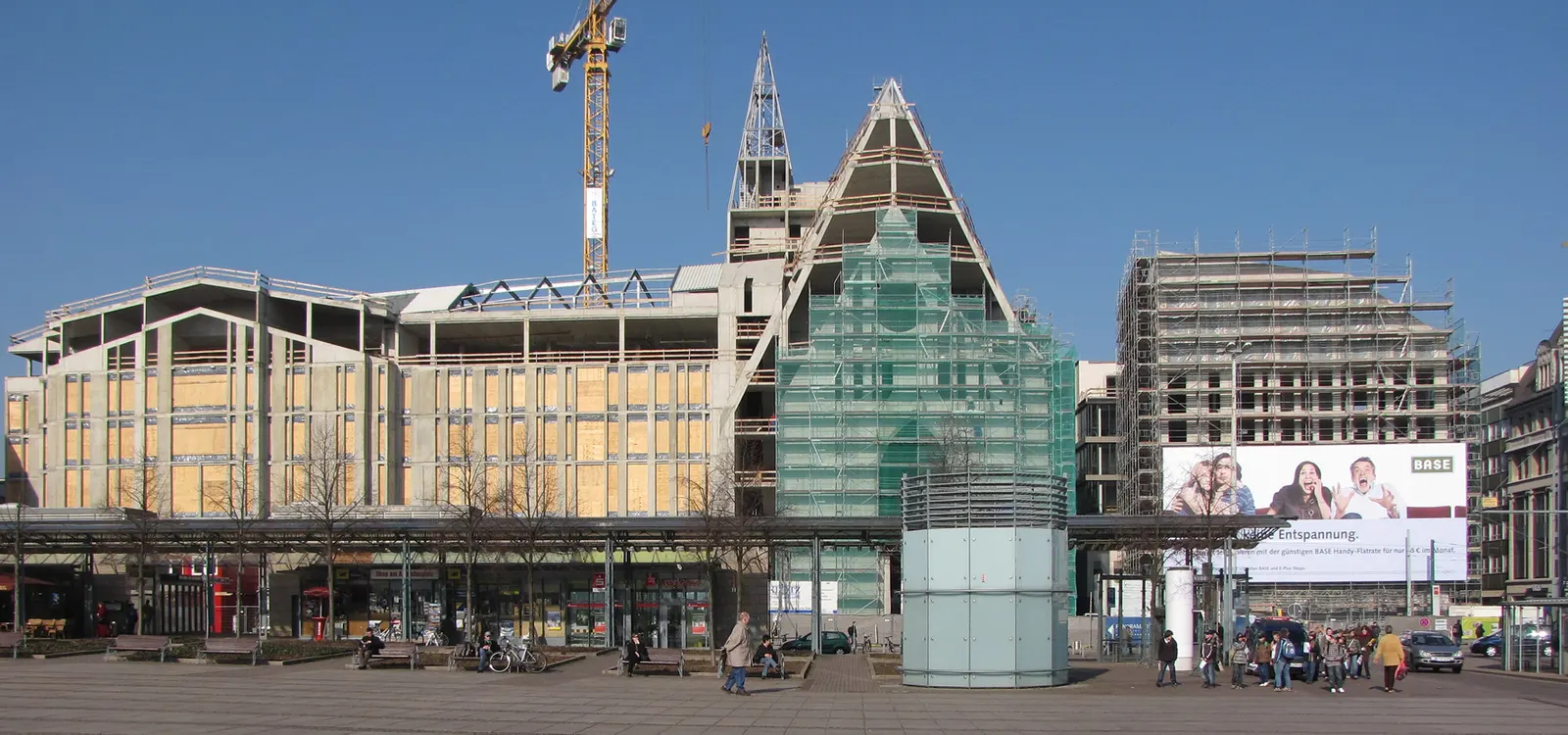
Tuition is a Land matter: each Land's higher education law decides whether its universities may charge fees, and to whom. That is why two universities in the same city can treat you differently. TUM charges new non-EU students, while LMU, a few kilometres away, charges no tuition for its regular degrees. For the overall budget, including rent and the blocked account, see the cost of studying in Germany.
Who pays no tuition
- First bachelor's degrees at most public universities, for German, EU and non-EU students alike, apart from the exceptions below.
- Consecutive master's degrees at most public universities: a master's that builds directly on a related bachelor's.
- Doctoral candidates. DAAD states that doctoral study is tuition-free at all public universities for at least 6 semesters.
- State Studienkollegs, the one-year preparatory colleges, which charge no tuition. Their students pay a semester contribution, typically €100–400 per semester.
- Students at LMU Munich, which charges no tuition for its regular degree programmes, non-EU students included.
- Consecutive master'skonsekutiver Master
- A master's that builds on a bachelor's in the same or a related subject and normally follows it directly. At public universities it is part of the tuition-free first course of study. The opposite case is a continuing-education master's, described below.
- Continuing-education master'sweiterbildender Master
- A master's designed for graduates with professional experience, often part-time. Universities may charge fees for it even where regular degrees are free: FU Berlin names continuing-education programmes as its only fee-charging courses, and Heidelberg lists separate fees for continuing-education master's programmes.
Where tuition is charged
The cases below are the ones an international student is most likely to meet. They were verified at the Land ministries and the universities themselves; for a few Bavarian institutions only the ministry's list of August 2025 was available. If your university is not listed, its own fee page decides; look under 'Studiengebühren', 'Gebühren' or 'Semesterbeitrag'.
| Case | Who pays | Amount | Key detail |
|---|---|---|---|
| Baden-Württemberg, international fee | Non-EU/EEA students who came to Germany to study | €1,500 per semester | At every state institution in the Land, since winter semester 2017/18; many exemptions |
| Baden-Württemberg, second degree | Anyone starting a second degree, whatever their nationality | €650 per semester | Not charged on top of the international fee; a first bachelor's plus one master's is not a second degree |
| TUM | Non-EU/EEA students enrolled since winter semester 2024/25 | Bachelor's €2,000–€3,000 per semester; master's €4,000–€6,000 per semester | Exact amount per programme; higher for intakes from winter semester 2027/28 |
| Other Bavarian institutions | Non-EU students at the institutions concerned | For example €1,000 per semester at TH Nürnberg from winter semester 2026/27, €1,000–€6,000 per semester at FAU Erlangen-Nürnberg from summer semester 2027, or €1,500 per semester at Hochschule Coburg | Each institution decides; several charge 'service fees' instead. Check the institution's own fee page |
| HMT Leipzig (Saxony) | Non-EU students | €1,800 per semester | A state university of music and theatre; the only case outside Baden-Württemberg and Bavaria this guide found |
| Long-term study fee, Lower Saxony | Anyone who has used up their study credit | €500 per semester | Credit: the standard period of study plus six tolerance semesters; for master's students whose previous degree is from abroad, twice the master's standard period (usually 8 semesters) |
| Private universities | Everyone | Example: €10,000 per semester at Constructor University Bremen | Set freely by each institution; no official typical range exists |
The Baden-Württemberg, TUM and Bavarian cases are explained in full, with every exemption and the rules that apply to Turkish citizens, in where non-EU students pay tuition. University profiles add programme-level detail: see the TUM guide and the overview of types of universities in Germany.
Baden-Württemberg and Bavaria: the exceptions you are most likely to meet
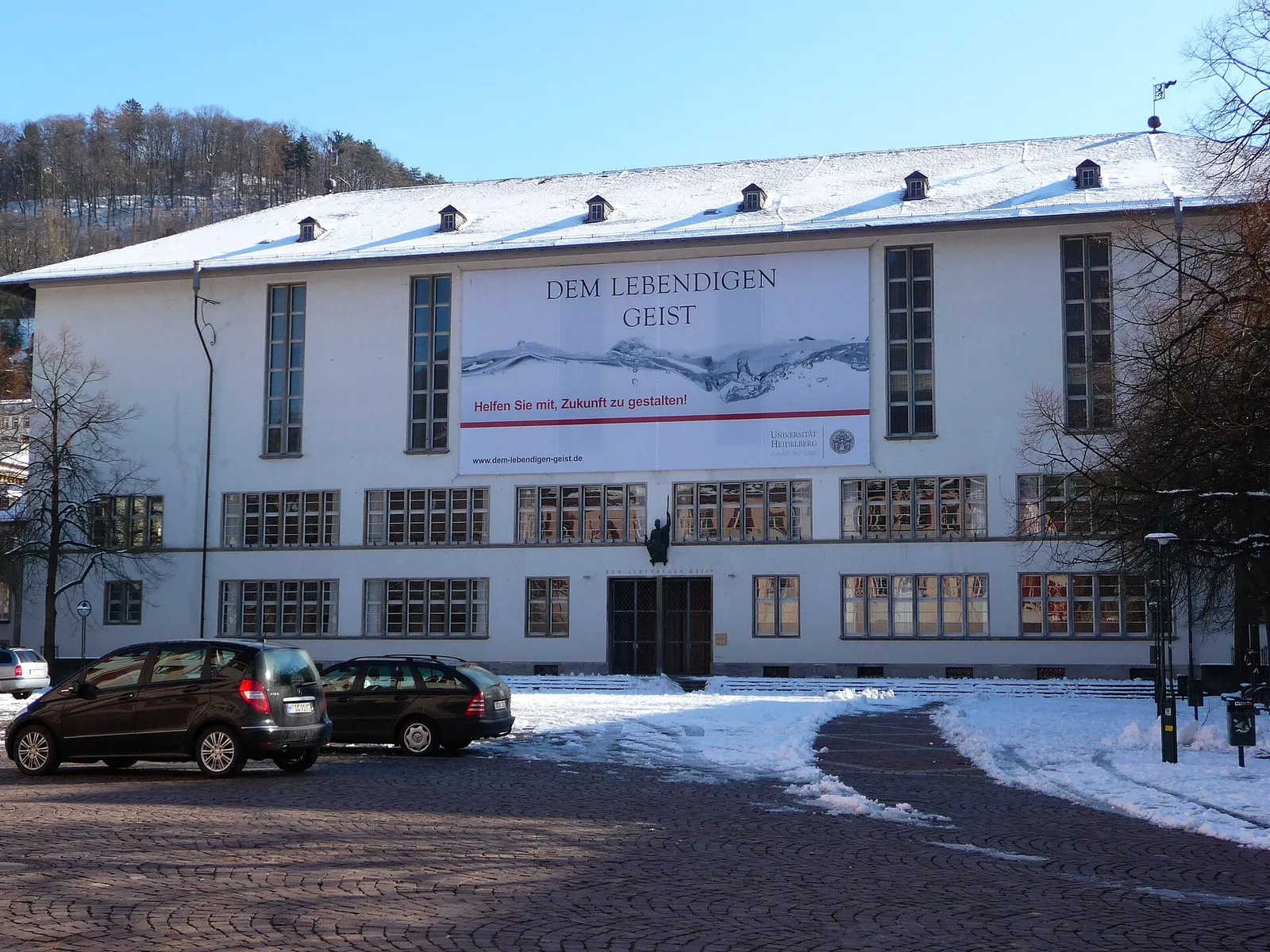
Baden-Württemberg has charged non-EU/EEA students €1,500 per semester since winter semester 2017/18, at its universities, universities of applied sciences and other state institutions alike. University forms dated January 2026 confirm the amount for 2026/27. On top comes the administrative fee that every student in the Land pays, €80 per semester. Exemptions exist for exchange students, holders of a German school-leaving qualification, several residence statuses and people with long legal residence and work in Germany, and each institution may waive the fee for up to 5% of its international students.
Bavaria lets its institutions decide. TUM charges new non-EU students per programme, usually €2,000 per semester or €3,000 per semester for a bachelor's and €4,000 per semester or €6,000 per semester for a master's. A completed German bachelor's, proven by TUM's deadline, makes the master's permanently tuition-free. Others have followed: TH Nürnberg charges new non-EEA students €1,000 per semester from winter semester 2026/27, FAU Erlangen-Nürnberg charges new non-EU students €1,000–€6,000 per semester from summer semester 2027, and several universities of applied sciences have added tuition or 'service fees', as the science ministry's list of August 2025 shows. LMU Munich charges no tuition. One brochure from April 2026 wrongly lists it among the fee-charging universities, but LMU's own pages and the ministry's list contradict that.
Second degrees and long study durations
- Long-term study feeLangzeitstudiengebühr
- A fee charged in some Länder to students who stay enrolled far beyond the standard period of study (Regelstudienzeit). It is not tied to nationality. Lower Saxony's version is the one verified for this guide.
A second degree is where fees appear for everyone, Germans included. In Baden-Württemberg a second bachelor's, or a second master's after a completed first one, costs €650 per semester. A first bachelor's followed by one master's is not a second degree, and international students who already pay the international fee do not pay both. Lower Saxony charges a long-term study fee of €500 per semester once a student's study credit is used up. The credit is the standard period of study plus six tolerance semesters; for master's students whose previous degree is from abroad, twice the master's standard period (usually 8 semesters). Semesters on leave do not use up credit. Other Länder have their own rules, which this guide has not verified one by one, so read your university's fee regulations if you expect to study well beyond the standard period.
Private universities
State-recognised private universities set their own fees, usually the same for EU and non-EU students, and no official source publishes a typical range. Constructor University Bremen is one example: €10,000 per semester for undergraduate programmes, rising to €11,925 per semester for the 2027 intake. Before you sign, ask whether fees rise during the degree, what housing or enrolment fees come on top, and how the institution's degree is recognised in your home country. The guide to private universities covers recognition and quality.
Tuition also changes your visa file. German missions can ask for proof that the first year's tuition is covered in addition to living costs; the embassy in Tehran's study-visa sheet, for example, says so. Check the document list your mission or the Auslandsportal gives you, and see proof of financial means.
What this means for Turkish students
- At most public universities you pay no tuition, only the semester contribution, exactly like German students.
- In Baden-Württemberg you pay the international fee unless an exemption applies. A Turkish school diploma or a Studienkolleg certificate is not a German school-leaving qualification. Türkiye is neither an ACP state nor a Least Developed Country, so it is not among the groups that get priority within each university's 5% quota.
- At TUM, Turkish citizens are exempt only in a narrow case: at least one parent lives in Germany, has been legally employed there for at least one year (now, or for one continuous year in the past; self-employment does not count), and the applicant lives with that parent and is registered at that address. Otherwise the international fees apply.
- A German bachelor's pays off at TUM: proven by five weeks after the start of lectures, it exempts you permanently from master's tuition.
- LMU Munich and most universities outside Baden-Württemberg and Bavaria charge no tuition, so the choice of university can matter more than the choice of city.
Turkish-specific steps, from the diploma rules to military-service deferral, are collected in the guide for Turkish students.
Quick check: tuition in common situations
| Your situation | Tuition | Why |
|---|---|---|
| First bachelor's at a public university outside Baden-Württemberg and Bavaria | Normally none | The general rule; confirm on the university's fee page |
| Any degree at a state institution in Baden-Württemberg, with a Turkish school diploma | €1,500 per semester | No German school-leaving qualification, so no automatic exemption |
| Master's at TUM after a bachelor's in Türkiye | €4,000–€6,000 per semester | International fees for new non-EU students |
| Master's at TUM after a completed German bachelor's | None | Exempt for good if proven by five weeks after the start of lectures |
| Master's at LMU Munich | None | LMU charges no tuition for regular degrees |
| Second master's in Baden-Württemberg | €650 per semester | Second-degree fee, if you do not already pay the international fee |
| Doctorate at a public university | None | Tuition-free for at least 6 semesters (DAAD) |
| State Studienkolleg | None | Semester contribution only |
| Private university | Set by the institution | For example €10,000 per semester at Constructor University |
In practice: checking the fee for your programme
Read the fee statement on the programme page
TUM gives the exact amount under 'Program details'. Baden-Württemberg institutions publish an international-student fee page and an exemption form. If a page says nothing, look for the university's fee regulations (Gebührensatzung) or ask the international office in writing.
Check exemptions before the deadline, not after
At HTWG Konstanz, for example, proof of an exemption must reach the university by the deadline for accepting your place, or the fee is charged; ask your own university for its deadline. Some exemptions, for a practical semester or a leave of absence applied for before the semester starts, need an application after the payment notice.
Note the payment dates
TUM must receive the semester fee and tuition by these dates: enrolment by 15 March (summer) or 15 September (winter); re-registration by 15 February (summer) or 15 August (winter). Enrolment is complete only once the money has arrived, and instalments are not possible.
Apply for grants and waivers each semester
TUM awards one-time study grants of €500–€1,800 per semester, credited against tuition, and full waivers for need or merit. Its application windows are: master's (merit or need): 1 January – 31 May for winter, 1 November – 15 January for summer; bachelor's (need): 15 May – 15 July for winter; current students (merit, from semester 3): 31 May – 30 June and 30 November – 31 December. Wider funding options are in the scholarships guide.
Plan the money in your visa file
Add the first year's tuition to the means you prove if your mission asks for it, and pay from abroad so that the full amount arrives. Sending fees from a Turkish bank are explained in sending money to Germany.
Frequently asked questions
Is university free in Germany for international students?
At most public universities, yes: a first bachelor's or a consecutive master's carries no tuition for German, EU and non-EU students alike. You still pay a semester contribution each semester and must cover your living costs. Non-EU students pay tuition in Baden-Württemberg, at TUM and at a growing number of other Bavarian institutions.
Which German states charge tuition fees?
Baden-Württemberg charges non-EU/EEA students €1,500 per semester at all its state institutions. In Bavaria the institutions decide: TUM, TH Nürnberg, FAU Erlangen-Nürnberg (from summer semester 2027) and several universities of applied sciences charge non-EU students. In Saxony, HMT Leipzig charges non-EU students €1,800 per semester. Lower Saxony charges a long-term fee of €500 per semester to anyone who exceeds their study credit.
Is a master's degree free in Germany?
A consecutive master's at most public universities is tuition-free. Continuing-education master's programmes can charge fees, and in Baden-Württemberg and at TUM non-EU students pay tuition for a master's too. At TUM a German bachelor's, proven in time, exempts you from master's tuition.
Do I pay tuition at a Studienkolleg?
Not at a state Studienkolleg, which charges only a semester contribution, typically €100–400 per semester. Private Studienkollegs charge fees. Note that the Studienkolleg certificate does not exempt you from tuition later in Baden-Württemberg or at TUM.
Is a PhD free in Germany?
DAAD states that doctoral study is tuition-free at all public universities for at least 6 semesters. Doctoral candidates who enrol still pay the semester contribution. Baden-Württemberg and TUM exempt doctoral candidates from their international fees.
Do I have to pay the semester contribution even if tuition is free?
Yes. Tuition-free study at a state university still means paying the semester contribution each semester, which funds the Studierendenwerk, the student union and usually the semester ticket; DAAD gives a range of €70 per semester to €430 per semester. It is not a tuition fee, and the amount differs by university; see the semester contribution and the higher education system.
Sources
21 sources, 20 official
- Costs of education and livingDAAD (German Academic Exchange Service) (Official)
- Tuition Fees for International StudentsMinisterium für Wissenschaft, Forschung und Kunst Baden-Württemberg (MWK) (Official)
- FAQs zu den Gebühren für Internationale Studierende und das ZweitstudiumMinisterium für Wissenschaft, Forschung und Kunst Baden-Württemberg (MWK) (Official)
- Auskunftsformular für die Beurteilung der Studiengebührenpflicht/-befreiung internationaler Studierender (Stand 01/2026)HTWG Hochschule Konstanz (Official)
- Beitrags- und GebührenübersichtKarlsruher Institut für Technologie (KIT), Studierendenservice (Official)
- Tuition Fees for Students from Non-EU CountriesTechnical University of Munich (TUM) (Official)
- Studium und Studien- bzw. Servicegebühren von Nicht-EU-Ausländern an bayerischen Hochschulen und Universitäten — Schriftliche Anfrage und Antwort des Staatsministeriums für Wissenschaft und Kunst (Drucksache 19/7884)Bayerischer Landtag / Bayerisches Staatsministerium für Wissenschaft und Kunst (Official)
- Internationale SemesterbeiträgeTechnische Hochschule Nürnberg Georg Simon Ohm (Official)
- Studiengebühren für Studierende aus Nicht-EU-StaatenFriedrich-Alexander-Universität Erlangen-Nürnberg (FAU) (Official)
- Tuition fees for students from non-EU countriesHochschule Coburg (Official)
- StudiengebührenHochschule für Musik und Theater 'Felix Mendelssohn Bartholdy' Leipzig (Official)
- Beiträge und GebührenLudwig-Maximilians-Universität München (Studentenkanzlei) (Official)
- Semester fees for the Munich Student Union (Studierendenwerk)LMU Munich (Office of the University Registrar) (Official)
- Living costs (International Student Guide)LMU Munich (Official)
- Studium in Bayern (Stand: April 2026)BAYHOST (Bayerisches Hochschulzentrum für Mittel-, Ost- und Südosteuropa), Universität Regensburg (Institutional)
- Studienkosten (Semesterbeitrag, Langzeitstudiengebühren)Leibniz Universität Hannover (Official)
- Gebühren (Semestergebühren und -beiträge)Freie Universität Berlin (Official)
- Beiträge & GebührenUniversität Heidelberg (Official)
- FAQ — Undergraduate Study (Tuition and other fees)Constructor University Bremen (private university) (Official)
- Merkblatt Studium mit Zulassung einer Universität in DeutschlandDeutsche Botschaft Teheran (Auswärtiges Amt) (Official)
- Bildungsaufenthalte / Studium und StudienplatzsucheDeutsche Vertretungen in der Türkei (Auswärtiges Amt) (Official)