A private flat gives you what a hall or a WG room cannot: your own front door and the full protection of German tenancy law, usually with an open-ended lease. It is also the hardest kind of housing to get as a newcomer. Berlin's official Welcome Centre describes a market in which many people apply for the same flats and it can take weeks or months to be invited to a viewing; studierendenWERK BERLIN and the Berliner Mieterverein add that private landlords and housing companies offer most of the flats, so standing out in your application matters. This guide covers where to search, what agents may and may not charge, the application folder, the SCHUFA question, the viewing, renting from abroad and the steps from "yes" to the keys. The legal detail of leases is in German rental contracts.
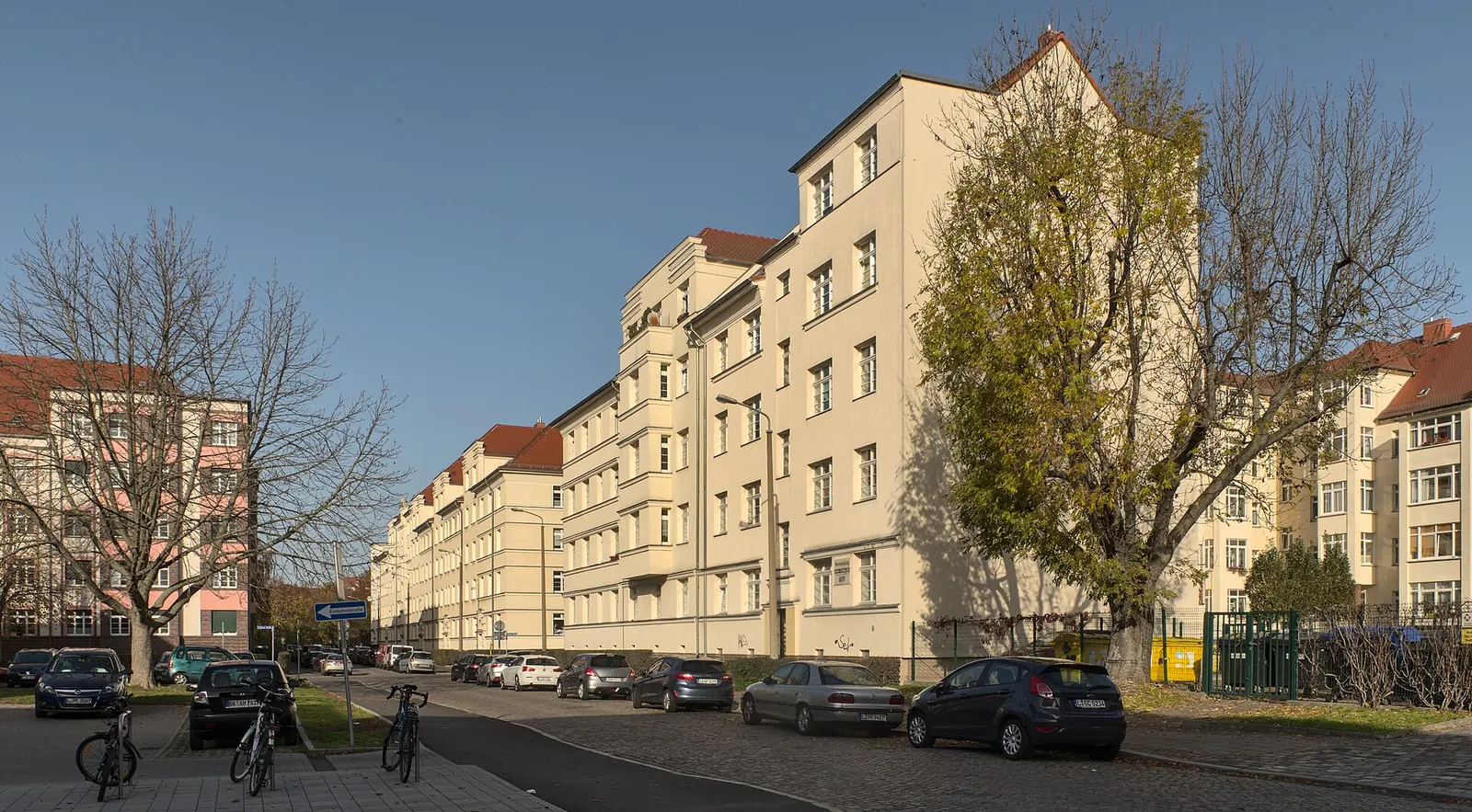
Where to search for a flat
Search on several channels at once, as Berlin's Welcome Centre advises, and set alerts wherever a portal offers them. No official body ranks the platforms; the names below are examples, not recommendations, and the same caution applies on all of them.
| Channel | What you find there | Points to note |
|---|---|---|
| Property portals such as ImmoScout24 and immowelt, both linked by studierendenWERK BERLIN, and classified-ad sites | Flats from private landlords, housing companies and agents | Large volume and strong competition; respond quickly to alerts |
| Flatshare platforms (e.g. WG-Gesucht) | WG rooms, but also studios and flats, often for students | Many temporary offers — check that sublets are approved |
| State-owned housing companies | In Berlin, companies such as Degewo, Gewobag, Howoge, Stadt und Land and WBM advertise on inberlinwohnen, including studios and subsidised flats (Sozialwohnungen) | For students they check affordability against income, counting a guarantor's income; subsidised flats need a Wohnberechtigungsschein (WBS) |
| Housing cooperatives (Genossenschaften) | Flats let to the cooperative's members; Berlin's Welcome Centre suggests them especially for flats with several rooms | Ask each cooperative how to become a member and whether it is taking new ones |
| Studierendenwerk and university boards | Munich's Studierendenwerk runs a free agency for private rooms and flats and points to TUM's private housing market | Offers aimed at students; the contract is with the private landlord |
| Notice boards, local papers, property managers | Offers that never reach a portal | Berlin's Welcome Centre suggests visiting property managers (Hausverwaltungen) and cooperatives in person and leaving your documents |
Tell everyone you know that you are looking: studierendenWERK BERLIN notes that many Berlin flats are let through personal contacts. And read every advert the way the Verbraucherzentrale suggests: a serious advert normally states both the cold and the warm rent and gives energy-certificate details, while a price far below the local Mietspiegel, the city's table of typical rents, is a warning sign. The full list of red flags is in housing scams in Germany.
Estate agents: what you never pay
- Makler and the BestellerprinzipMakler / Bestellerprinzip
- A Makler is an estate agent. Under the Bestellerprinzip ("whoever orders, pays") in the Wohnungsvermittlungsgesetz, an agent may take no fee at all from a flat seeker unless the agent obtained the landlord's mandate to offer the flat solely because the seeker had commissioned a search (§ 2(1a)). For a flat an agent advertises on behalf of a landlord, you pay the agent nothing.
Even where you genuinely commissioned an agent to find you a flat, the law caps the fee at 2 monthly rents plus VAT (§ 3(2)), payable only if a lease actually results. The same act bans advance payments to agents and any registration, writing or expense fees on top. Two other demands are worth knowing because they come up in tight markets. A payment to the previous tenant merely for moving out is void (§ 4a(1)). And an agreement to buy the outgoing tenant's or landlord's furniture or fitted kitchen holds only if the lease is concluded, and the price is void to the extent that it is strikingly out of proportion to the items' value (§ 4a(2)).
The application folder: what landlords ask for
Landlords choose among applicants, and Berlin's Welcome Centre notes that many applications fail because documents are missing. studierendenWERK BERLIN and the Berliner Mieterverein recommend having a folder ready with proof of income, a few sentences on why you want the flat, a friendly photo, a SCHUFA report and the move-in date and number of people. What a landlord may demand, and when, is limited by data-protection law; the table follows the guidance of Germany's data-protection authorities.
| Document | What it is and when it may be requested | If you have just arrived |
|---|---|---|
| Mieterselbstauskunft | A self-disclosure form from the landlord or agent. Lawful questions include the number of people moving in, your profession and employer, your net income (stating that it exceeds a threshold is enough) and any open insolvency; questions on nationality, religion, ethnic origin, criminal record or pregnancy are not allowed, and you need not answer them | Fill in only the lawful questions; describe your funding honestly |
| Proof of income | May be required once the landlord has chosen you, just before signing: a pay slip, bank statement or tax assessment, with details that are not needed blacked out | A blocked-account statement, scholarship letter or the income of a guarantor |
| SCHUFA report | Requested by many landlords; only a report designed for tenancy applications may be asked for, never your full GDPR data copy | Explain that you have no German credit history yet and offer the alternatives above |
| Mietschuldenfreiheitsbescheinigung | A letter from your previous landlord confirming you owe no rent; landlords cannot demand it, and the previous landlord is not obliged to issue one | You will not have one from Germany; a reference from a previous landlord abroad may help |
| Identity document | May be shown at a viewing so that your identity can be checked; a copy is not needed at that stage and is not permitted | Show your passport; send copies only once a lease is agreed, and only to a verified landlord |
| Introduction and photo | Recommended by the Welcome Centre and studierendenWERK BERLIN, not required | A few lines on your studies, plans and how long you will stay |
The blocked account, scholarship and guarantor options in the last column are Scholway's suggestions built on the authorities' list of acceptable income proof, not rules a landlord must accept. A guarantee (Bürgschaft) from a parent is a familiar instrument in German tenancies — studierendenWERK BERLIN mentions it as an alternative to a cash deposit, and Berlin's state-owned companies count a guarantor's income when they check whether a student can afford a flat. Being turned down because of your ethnic origin can be unlawful discrimination under the General Equal Treatment Act (AGG § 19(2)), although the act has exceptions, for example where landlord and tenant live on the same plot; discrimination and where to get help explains what you can do.
The SCHUFA question
- SCHUFASCHUFA-Auskunft / SCHUFA-BonitätsCheck
- SCHUFA is Germany's largest credit bureau, a private company rather than an authority. It stores information on your contracts and payments and calculates a creditworthiness score; since 17 March 2026 its new score runs from 100 to 999 points. Its landlord-facing report, the SCHUFA-BonitätsCheck, costs €29.95 and can be shared as a PDF; a free data copy under Article 15 GDPR exists but is not meant for landlords.
No law requires a tenant to produce a SCHUFA report; it is a landlord's selection practice, and the data-protection authorities allow a landlord to ask for a tenancy report only at the final stage, once you are the chosen applicant. A landlord who already has enough information about your finances may not run a credit check of their own. The practical difficulty for international students is that a newcomer starts without any German credit history, and SCHUFA's pages read for this guide do not say what a report shows for someone who has none. So lead with what you do have: proof of your blocked account or scholarship, your admission letter and, where possible, a guarantor. Studierendenwerk halls work differently: Berlin's application asks for your admission or enrolment letter, the semester-fee receipt and your passport — no credit report. How SCHUFA works once you live here is explained in SCHUFA for international students.
The viewing: what to check
- BesichtigungBesichtigung / Wohnungsbesichtigung
- The viewing of a flat. In tight markets viewings are arranged at short notice and frequently during the working day, as Berlin's Welcome Centre notes, and landlords receive many requests for each one. Arrive on time, bring your folder and prepare questions.
Questions and checks at a viewing
- The rent broken down: cold rent, the advance for operating costs, heating — and the total warm rent
- Which operating costs are passed on (they must come from the statutory list of 17 categories) and when the last annual statement came
- Electricity and internet: separate contracts in your own name, or included?
- The deposit: at most 3 months' net cold rent, payable in 3 equal monthly instalments
- Open-ended or fixed-term lease — and is there a mutual waiver of notice, and for how long?
- A stepped rent (Staffelmiete) or index rent (Indexmiete)?
- Is the city a rent-brake area, and how does the rent compare with the Mietspiegel?
- Existing damage, mould, the state of windows, heating and bathroom — note them for the handover report
- Furniture and kitchen: included, or for sale by the outgoing tenant — and at what price?
- Who is the landlord or property manager, and will they give you the Wohnungsgeberbestätigung at move-in?
If the city is a designated rent-brake area — Berlin is — the rent agreed at the start of a new lease may be at most 10% above the local comparative rent, with exceptions such as flats first let after 1 October 2014 and furnished rooms in the landlord's own flat. To reclaim rent above the limit you have to complain to the landlord (rügen), and a landlord relying on an exception must have disclosed it when you signed. German rental contracts explains these rules and the clauses to look for.
Renting a flat from abroad
Private landlords choose tenants after a viewing, and you cannot judge a flat, its street or its landlord from a screen — which is why many students arrange a hall place or temporary housing first and look for a flat after arriving (see finding housing before you arrive). If you do try to rent before you travel, the police advice relayed by the University of Göttingen gives the minimum standard: ask a contact on site to view the flat for you, and pay the deposit only after the flat has been viewed, the lease signed and the key handed over. The Verbraucherzentrale adds that a deposit is due only once the lease is signed and the tenancy begins — never in advance, never for a key sent by post.
Shortlist from abroad, decide on site
Use portals and alerts to learn the market and contact landlords, but plan to sign after a real viewing. A video call can introduce you; it cannot prove the flat exists or that the person is entitled to let it.
Send a trusted person to the viewing
A friend, a fellow student already in the city or a relative can check the flat, the name on the doorbell and the person showing it.
Verify the landlord
Ask for the landlord's full name and address, check them against the lease, and pay only to an account in that name. Since 9 October 2025, euro-area banks check free of charge whether the payee's name matches the IBAN — treat a mismatch warning as a reason to stop.
Sign before you pay
Read the lease in full, keep a copy and pay the first deposit instalment only at the start of the tenancy, alongside the first rent.
In practice: from "yes" to the keys
Once a landlord chooses you, things move quickly. The sequence below is the usual order; the costs table shows what to have ready.
Proof of income and lease
The landlord may now ask for your proof of income and a tenancy credit report. Read the lease before signing — fixed term and its reason, any notice waiver, stepped or index rent, the operating costs and the deposit — and ask for changes before, not after.
Handover appointment
Walk through the flat with the landlord or property manager and record its condition in a handover report with photos, signed by both sides; note the meter readings too. Berlin's Welcome Centre recommends this so that the deposit comes back without a dispute.
Keys and confirmation
Take the keys and the Wohnungsgeberbestätigung. You have 2 weeks to register your address — see address registration in Germany.
Electricity and internet
Unless your rent includes them, set up an electricity contract and an internet contract in your own name; they are not operating costs a landlord passes on.
Broadcasting fee and name on the door
Register for the broadcasting fee once per flat, and put your name on the letterbox so that official letters, including your tax ID, reach you.
| Item | Amount or rule |
|---|---|
| First month's rent | Warm rent, due as the lease states |
| Deposit | Up to 3 months' net cold rent; the first of 3 equal monthly instalments is due at the start of the tenancy |
| Agent's fee | Nothing for an advertised flat; at most 2 monthly rents plus VAT if you commissioned the agent yourself |
| Furniture or kitchen from the previous tenant | Only by agreement; the price must not be strikingly out of proportion to the value |
| Broadcasting fee | €18.36 per month per dwelling |
| Electricity and internet | Your own contracts unless included; set-up terms vary by provider |
Before committing to a private flat, compare it with the alternatives. A room in a shared flat needs less paperwork and money up front, and a hall place is cheaper if you can wait. Rents differ hugely by city, as the city comparison shows, and the first months bring costs beyond the rent (see hidden costs). Pay the deposit by bank transfer, as explained in sending money, and ask for the landlord confirmation at the key handover. Proof of means for a landlord can be the same documents you used for the visa, see financial proof.
Furnished flats and short lets: read the small print
Furnished and temporary flats look like an easy answer from abroad, and that is exactly where studierendenWERK BERLIN urges care: some providers use furnished letting under the cover of student housing to demand grossly excessive rents. Check what the furniture surcharge is, whether the stay is genuinely temporary and whether you can register at the address. Change may be coming. On 29 April 2026 the federal government adopted a draft law that would require the furniture surcharge to be shown separately (otherwise the flat would count as unfurnished), set a flat surcharge for fully furnished flats and limit short-term leases. It was still a bill at the end of October 2026: the Bundestag's legal-affairs committee held a public hearing on it on 14 October 2026, and no final vote had followed, so check its status before relying on it.
Frequently asked questions
Which websites are best for renting in Germany?
No official ranking exists. Large property portals such as ImmoScout24 and immowelt list offers from private landlords, housing companies and agents, and flatshare platforms such as WG-Gesucht also list studios and flats — studierendenWERK BERLIN links to all three; in Berlin, the state-owned companies advertise on inberlinwohnen. Search several at once with alerts, and add Studierendenwerk agencies, university housing boards, notice boards and personal contacts.
Can I rent a flat in Germany without SCHUFA?
Yes: no law requires a SCHUFA report, although many landlords ask for one. A newcomer has no German credit history, so offer other evidence — a blocked-account statement, a scholarship letter or a guarantor's income. Under the data-protection authorities' guidance a landlord may ask for a tenancy credit report only once you are the chosen applicant, and halls of residence do not ask for one.
How do I rent a flat from abroad?
Carefully, and ideally not unseen. Shortlist online, ask a trusted person in the city to view the flat, verify the landlord's name against the lease and the bank account, and pay the first deposit instalment only at the start of the tenancy after signing and receiving the keys. Many students book a hall place or temporary housing first and sign a lease once they are in Germany.
Do I have to pay an estate agent's fee in Germany?
Usually not. Under the Bestellerprinzip an agent may charge a flat seeker only if the seeker commissioned the agent and the agent then obtained the landlord's mandate solely for that seeker. Even then the fee is capped at 2 monthly rents plus VAT, and agents may not take advance payments or extra registration or writing fees.
Can a German landlord ask about my nationality?
According to the guidance of Germany's data-protection authorities, no: a question about nationality is not necessary for a tenancy and therefore not permitted, and questions on religion or ethnic origin are prohibited. You do not have to answer unlawful questions on a self-disclosure form. Turning someone down because of their ethnic origin can be unlawful discrimination under the General Equal Treatment Act.
What documents do German landlords ask for?
Typically a self-disclosure form, proof of income once you are chosen, a SCHUFA report designed for tenancy applications, and your ID at the viewing. Newcomers can offer a blocked-account statement, a scholarship letter or a guarantor's income instead of German pay slips. See SCHUFA for the credit report.
Sources
30 sources, 28 official
- Housing search (Willkommenszentrum Berlin)Willkommenszentrum Berlin (Land Berlin) (Official)
- Rental contract (Willkommenszentrum Berlin)Willkommenszentrum Berlin (Land Berlin) (Official)
- Die erste eigene Wohnung! (Top 9 questions, compiled with the Berliner Mieterverein)studierendenWERK BERLIN (Official)
- Orientierungshilfe zur Einholung von Selbstauskünften bei Mietinteressent:innen, Version 2.0 (Stand: Januar 2026)Konferenz der unabhängigen Datenschutzaufsichtsbehörden des Bundes und der Länder (Datenschutzkonferenz, DSK) (Official)
- SCHUFA-BonitätsCheck — für Vermieter & WohnungsbewerbungSCHUFA Holding AG (meineschufa.de) (Institutional)
- Gesetz zur Regelung der Wohnungsvermittlung (WoVermRG) §§ 2, 3, 4a, 6Bundesministerium der Justiz / gesetze-im-internet.de (Official)
- Fake-Wohnungen im Internet: So erkennen Sie falsche Immobilienanzeigen (Stand: 07. August 2026)Verbraucherzentrale (verbraucherzentrale.de) (Official)
- Online-Betrug: Schütze dich vor Vorkassebetrug (section 'Auch bei der Wohnungssuche lauern Gefahren')Polizeiliche Kriminalprävention der Länder und des Bundes (polizei-beratung.de) (Official)
- Augen auf bei der Kautionsüberweisung (Kaution — Wohnungen für Studierende)Georg-August-Universität Göttingen (Accommodation Service) (Official)
- PrivatzimmervermittlungStudierendenwerk München Oberbayern (Official)
- FAQ — Wohnplatzbewerbung und WohnplatzStudierendenwerk München Oberbayern (Official)
- Wie bewerbe ich mich um einen Wohnplatz? / Wann weiß ich, ob es mit einem Platz klappt?studierendenWERK BERLIN (Official)
- Schriftliche Anfrage Drucksache 19/22916: Studentisches Wohnen in Berlin (Antwort vom 26. Juni 2025)Abgeordnetenhaus Berlin / Senatsverwaltung für Wissenschaft, Gesundheit und Pflege (Official)
- Bürgerliches Gesetzbuch (BGB) § 551 — Begrenzung und Anlage von MietsicherheitenBundesministerium der Justiz / gesetze-im-internet.de (Official)
- BGB § 556d — Zulässige Miethöhe bei Mietbeginn (Mietpreisbremse); § 556f — AusnahmenBundesministerium der Justiz / gesetze-im-internet.de (Official)
- BGB § 556 — Vereinbarungen über BetriebskostenBundesministerium der Justiz / gesetze-im-internet.de (Official)
- Betriebskostenverordnung (BetrKV) § 2 — Aufstellung der BetriebskostenBundesministerium der Justiz / gesetze-im-internet.de (Official)
- BGB § 553 — Gestattung der Gebrauchsüberlassung an Dritte (subletting); § 558 — Mieterhöhung bis zur ortsüblichen Vergleichsmiete; § 557b — IndexmieteBundesministerium der Justiz / gesetze-im-internet.de (Official)
- Mehr Mieterschutz bei möblierten Wohnungen, Indexmieten, Kurzzeitmietverträgen und Schonfristzahlungen: Bundesregierung beschließt Gesetzentwurf (Pressemitteilung Nr. 31/2026, 29 April 2026)Bundesministerium der Justiz und für Verbraucherschutz (BMJV) (Official)
- Sachverständige bewerten Änderungen im Mietrecht unterschiedlich (Anhörung, Ausschuss für Recht und Verbraucherschutz)Deutscher Bundestag (Official)
- Weitere Tipps zur WohnungssuchestudierendenWERK BERLIN (Official)
- § 19 AGG – Zivilrechtliches BenachteiligungsverbotBundesministerium der Justiz und für Verbraucherschutz (gesetze-im-internet.de) (Official)
- § 556g BGB – Rechtsfolgen; Auskunft über die MieteBundesministerium der Justiz und für Verbraucherschutz (gesetze-im-internet.de) (Official)
- Bundesmeldegesetz (BMG) § 19 — Mitwirkung des Wohnungsgebers; § 54 — BußgeldvorschriftenBundesministerium der Justiz / gesetze-im-internet.de (Official)
- Neuer Schufa-Score: Die wichtigsten InfosVerbraucherzentrale (Bundesverband / Verbraucherzentralen der Länder) (Official)
- Kostenlose Kopie der bei der SCHUFA gespeicherten Daten zu Ihrer PersonSCHUFA Holding AG (meineschufa.de) (Institutional)
- New EU rules make instant euro payments faster and saferEuropean Commission (DG Financial Stability, Financial Services and Capital Markets Union) (Official)
- Bundesmeldegesetz (BMG), consolidated text (last amended by Art. 10 G v. 22.7.2026, BGBl. 2026 I Nr. 222)Bundesministerium der Justiz / gesetze-im-internet.de (Official)
- Anmelden — Rundfunkbeitrag (online form for a first registration)ARD ZDF Deutschlandradio Beitragsservice (Official)
- Anmeldung (residence registration)Willkommenszentrum Berlin (Land Berlin) (Official)