In most German university towns a bicycle is the fastest way between your flat, the campus and the city centre, and it costs nothing per trip. The price of that freedom is a set of traffic rules that apply to cyclists as much as to drivers, fines set out in the national catalogue of traffic fines, and a real risk of theft. This guide covers the rules and fines, how to buy a used bike without ending up with a stolen one, how the police recommend locking it, and how to take it on trains. Other ways of getting around, including the Deutschlandsemesterticket, are in getting around Germany as a student.
- Cycle pathRadweg
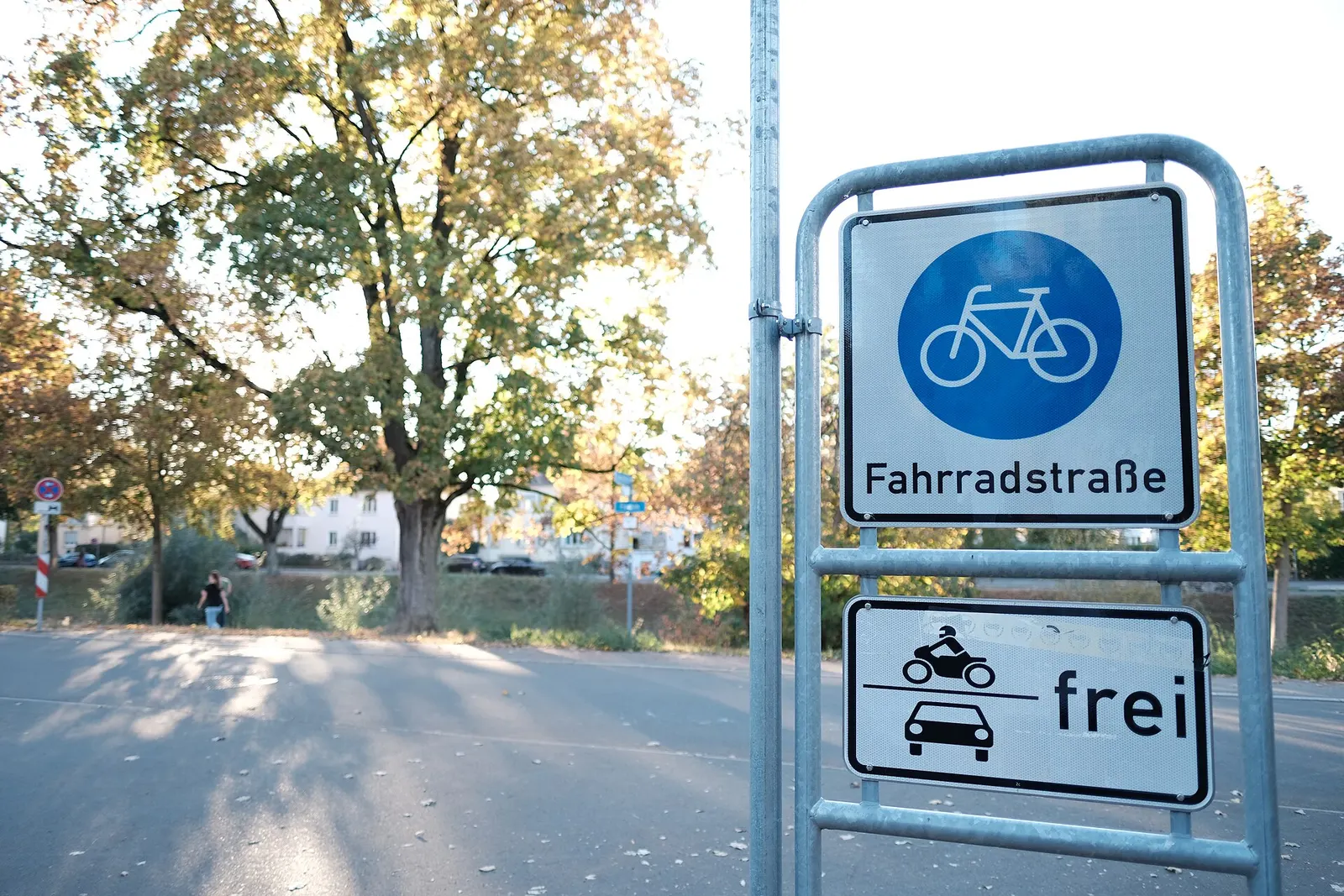
- A path or lane for bicycles. You must use one in your direction of travel only where a round blue sign showing a bicycle orders it; elsewhere you may use the road.
- Catalogue of traffic finesBußgeldkatalog
- The federal list of standard fines for traffic offences (Bußgeldkatalog-Verordnung), including those committed on a bicycle or e-scooter. Amounts assume ordinary circumstances; authorities can deviate.
The rules of the road for cyclists
Bicycles are vehicles under the Road Traffic Regulations (StVO), so cyclists ride on the road, keep right and obey traffic lights and signs like drivers. Section 2(4) StVO adds the cycling-specific rules: you may ride two abreast only if this does not obstruct other traffic; you must use a cycle path in your direction of travel only where one of the blue mandatory cycle-path signs (signs 237, 240 or 241) orders it; you may use a right-hand cycle path without such a sign; and you may ride on a left-hand cycle path only where a sign says 'Radverkehr frei'. Footpaths are for pedestrians; the exceptions in § 2(5) StVO concern young children and the adults accompanying them.
| Offence | Standard fine | Notes |
|---|---|---|
| Riding through a red light | €60 | More if you endanger or damage others |
| Red light that had already been red for more than a second | €100 | More with danger or damage |
| Using a phone or other electronic device while riding | €55 | Applies to cyclists as well as drivers |
| Riding on a footpath or in a pedestrian zone where not allowed | €25 | More with obstruction, danger or damage |
| Lights not as required | €20 | A missing or non-compliant bell is fined too |
| Crossing a level crossing while the barrier is closed | €350 | Also on foot |
E-scooters are motor vehicles
Rental and private e-scooters count as small electric motor vehicles. You must be at least 14 years old, the scooter needs an insurance plate, and it may not be ridden on footpaths unless a sign allows it; inside and outside built-up areas you use cycle paths, cycle lanes and bicycle streets where they exist, and otherwise the road (eKFV § 10). Because e-scooters are motor vehicles, the drink-driving limit of 0.5 per mille under § 24a of the Road Traffic Act applies — and so does that section's limit for cannabis (THC): cannabis has been legal for adults since 2024, riding under its influence has not. Red-light and phone fines are the same as for cyclists.
Buying a bike — and not buying a stolen one
New bikes are sold by bike shops and department stores; used ones by bike shops, on online classified sites, at flea markets and among students leaving town at the end of a semester. Used bikes are where the risk lies, and German law puts it on the buyer. Under § 935 of the Civil Code (BGB), nobody acquires ownership of a stolen item, even in good faith: if the bike you bought turns out to be stolen, the rightful owner can take it back and your money is lost. Knowingly buying a stolen bike is the crime of receiving stolen goods (Hehlerei), punishable by up to five years' imprisonment or a fine.
- Receiving stolen goodsHehlerei
- Buying or otherwise obtaining an item someone else has stolen, to enrich yourself or another person (§ 259 StGB). It is a crime in its own right, separate from the theft.
One route is safe from the stolen-goods rule: items sold at a public auction. Lost-property authorities may auction unclaimed found items publicly, including online (§ 979 BGB), and § 935(2) BGB excludes such purchases from the rule that stolen items cannot be acquired. Whether your city auctions bicycles, and when, is announced by its lost-property office (Fundbüro).
No official checklist for buyers of used bikes exists. The steps below are practical guidance built on that legal position and on the police's advice to record a bike's frame number in a bike pass.
Before you pay for a used bike (practical guidance)
- Ask for the original purchase receipt or the owner's police bike pass (Fahrradpass) with the frame number
- Check that the frame number on the bike exists and matches the papers — a filed-off number is a warning sign
- Be wary of a price far below what comparable bikes cost, or a seller who wants to meet only briefly in a public place
- Write a short purchase contract with the date, price, frame number and the seller's name and address, and check them against the seller's ID
- Test the brakes, lights and bell — you need working lights and a bell to ride legally
- Budget for a proper lock at the same time
Locks and theft protection
The police crime-prevention programme of the Länder and the Federation (ProPK) recorded 214,264 bicycle thefts in 2025, often at large bike parks at stations, schools, swimming pools and sports grounds. Its advice is concrete: the best mechanical protection is a sturdy U-lock (Bügelschloss) or armoured cable lock (Panzerkabelschloss) of tested quality — look for locks certified by the insurers' testing body VdS (class A is for bicycles) or for independent test results; always lock the bike to something fixed so it cannot be carried away; and consider a hidden GPS tracker for an e-bike. If your bike is stolen, report it to the police and never try to recover it yourself. More on staying safe and dealing with the police is in safety, police and your rights in Germany.
- Police bike passFahrradpass
- A record of your bike's frame number, any security coding, your name and address and a photo of the bike. It helps the police identify a recovered bike and return it to you. A printed version is in the police leaflet 'Räder richtig sichern', free from police advice centres.
Bike sharing: sometimes already in your semester fee
Before you buy a bike, check what your semester contribution already includes. Some student bodies negotiate bike-sharing deals that are paid for through the semester fee, so every enrolled student can use shared bikes without a separate contract, typically free for a set time per ride. At TU Darmstadt, €2.98 per semester of the contribution goes to the Call a Bike scheme; at TU Dresden the student-body share of €361 covers the semester ticket and the bike-sharing systems together. Your university's student union (AStA or StuRa) page lists what is included and how to register with your student e-mail address.
| Option | Upfront cost | Good for | Watch out for |
|---|---|---|---|
| Bike sharing included in the semester fee | Already paid with the contribution | Short trips, first weeks, trying out routes | Free minutes per ride are limited; check the student-union terms |
| Second-hand bike | Lowest of the owned options | Daily commuting | Stolen bikes on the market; ask for a receipt |
| New bike | Highest | Long daily distances, hills | Theft risk; budget for a good lock |
| Commercial bike subscription | Monthly fee instead of a purchase | Students who stay one or two semesters | Contract length and theft liability |
Whatever you choose, cycling rules and fines are the same everywhere, but city conditions differ: compare Munich, Berlin, Leipzig and Dresden on their city pages, and check which of the bike options your semester contribution already pays for. Cycling also cuts the monthly budget in cities where the ticket is not included, such as Heidelberg and Stuttgart.
Taking your bike on trains
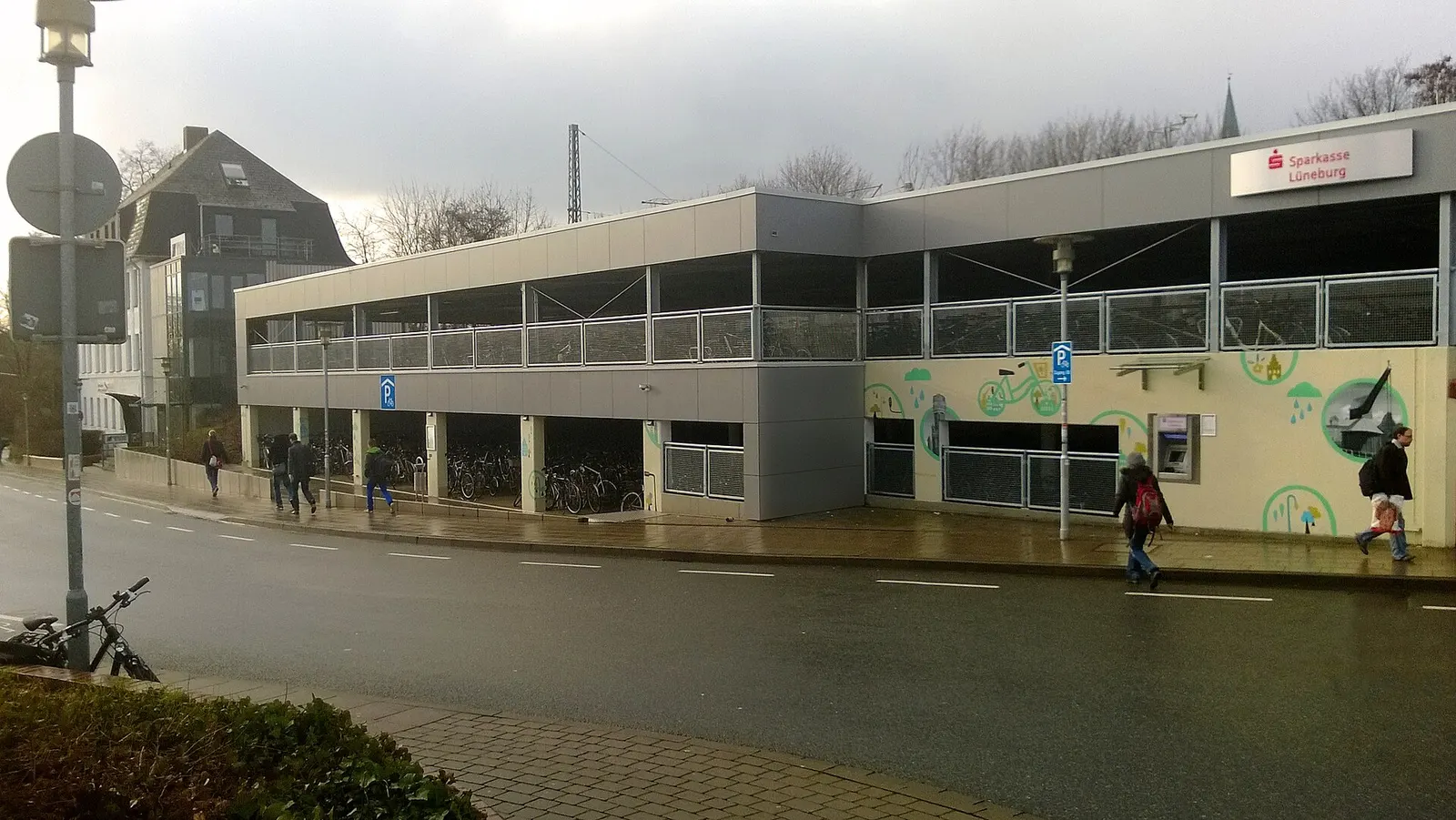
Your Deutschlandticket or semester ticket covers you, not your bike: wherever the local tariff charges for bicycles, you need a bike ticket as well. On regional trains, DB's Fahrradtageskarte Nahverkehr costs €7.50 and is valid for one day throughout Germany, together with your own ticket. Some Länder carry bikes free at certain times — in Baden-Württemberg's regional trains, for example, on weekdays outside the morning peak — so check the local rules. On long-distance trains you always need a Fahrradkarte Fernverkehr with a reserved bike space, from €7.99; bikes travel on IC and EC trains and on some ICEs. A folding bike, folded and stored in the luggage racks, travels free as hand luggage. Fares and rail rules are in train travel in Germany.
| Train | What your bike needs | Price |
|---|---|---|
| Regional trains, S-Bahn (with a Deutschlandticket or semester ticket for you) | A bike ticket wherever the local tariff charges for bikes; some Länder carry bikes free at certain times | DB Fahrradtageskarte Nahverkehr €7.50 for the day |
| IC, EC and some ICE trains | Fahrradkarte Fernverkehr plus a compulsory reserved bike space | From €7.99 |
| Any train, folding bike folded in the luggage rack | Nothing — it counts as hand luggage | Free |
In practice: your first weeks on a bike
Get the bike road-legal
Lights that meet the rules and a working bell are required; fines start at €20 for faulty lights.
Record the frame number
Fill in a police bike pass with the frame number and a photo, and keep it with your documents.
Lock it properly every time
Use a tested U-lock or armoured cable lock and lock the frame to something fixed, especially at stations and campus bike parks.
Learn the signs
Watch for the blue cycle-path signs that make a path compulsory, and for 'Radverkehr frei' signs on left-hand paths.
Keep your phone in your pocket
Using it while riding costs €55; a fixed holder for navigation is the safer habit.
Frequently asked questions
What are the cycling rules in Germany?
Cyclists follow the same traffic rules as drivers: ride on the road or a cycle path, keep right, obey lights and signs. Cycle paths are compulsory only where a blue cycle-path sign orders it, riding two abreast is allowed only if traffic is not obstructed, and footpaths are off-limits to adults. Standard fines include €60 for a red light and €55 for using a phone.
Where can I buy a second-hand bike in Germany?
From bike shops that sell used bikes, online classifieds, flea markets and students leaving town. Ask for the receipt or bike pass, check the frame number and write a purchase contract, because nobody acquires ownership of a stolen bike in good faith. Bikes bought at a public auction, such as a lost-property auction, are the exception.
Can I take my bike on German trains?
Yes, with a bike ticket. Regional trains need one wherever the local tariff charges for bikes — DB's day ticket costs €7.50 — and long-distance trains need a bike ticket with a reserved space, from €7.99. A folded folding bike travels free as luggage.
Is there an alcohol limit for cycling in Germany?
The 0.5 per mille administrative limit applies to motor vehicles, including e-scooters, not to ordinary bicycles. But cycling with 1.6 per mille or more leads to a medical-psychological assessment before you can get or keep a driving licence, and riding while unfit can be a crime.
What should I do if my bike is stolen?
Report it to the police with the frame number and, ideally, your bike pass and a photo. The police advise never to try to recover a stolen bike on your own, even if you find it advertised or tracked by GPS.
Is bike sharing free for students in Germany?
At some universities it is effectively prepaid: the student body includes a bike-sharing deal in the semester contribution, as at TU Darmstadt and TU Dresden, so enrolled students can ride shared bikes without a separate fee, usually for a limited time per ride. Elsewhere you pay the provider's normal rates. Check your student union's page for what your semester fee covers.
Sources
16 sources, all official
- Straßenverkehrs-Ordnung (StVO) § 2 — Straßenbenutzung durch FahrzeugeBundesministerium der Justiz / gesetze-im-internet.de (Official)
- Bußgeldkatalog-Verordnung (BKatV), Anlage (Bußgeldkatalog), as last amended by Art. 4 V v. 12.8.2026 (BGBl. 2026 I Nr. 236)Bundesministerium der Justiz / gesetze-im-internet.de (Official)
- Fahrerlaubnis-Verordnung (FeV) § 13 — Klärung von Eignungszweifeln bei AlkoholproblematikBundesministerium der Justiz / gesetze-im-internet.de (Official)
- Straßenverkehrsgesetz (StVG) § 24a — 0,5 Promille-Grenze, Tetrahydrocannabinol-GrenzwertBundesministerium der Justiz / gesetze-im-internet.de (Official)
- Elektrokleinstfahrzeuge-Verordnung (eKFV) §§ 1, 3, 10 (as last amended by Art. 2 V v. 30.1.2026, BGBl. 2026 I Nr. 32)Bundesministerium der Justiz / gesetze-im-internet.de (Official)
- § 10 eKFV – Zulässige VerkehrsflächenBundesministerium der Justiz und für Verbraucherschutz (gesetze-im-internet.de) (Official)
- Bürgerliches Gesetzbuch (BGB) § 935 — Kein gutgläubiger Erwerb von abhanden gekommenen SachenBundesministerium der Justiz / gesetze-im-internet.de (Official)
- Bürgerliches Gesetzbuch (BGB) § 979 — Verwertung; Verordnungsermächtigung (Fundsachen)Bundesministerium der Justiz / gesetze-im-internet.de (Official)
- Strafgesetzbuch (StGB) § 259 — HehlereiBundesministerium der Justiz / gesetze-im-internet.de (Official)
- Diebstahl von ZweirädernPolizeiliche Kriminalprävention der Länder und des Bundes (ProPK), polizei-beratung.de (Official)
- Hilfe bei gestohlenen Fahrrädern: der FahrradpassPolizeiliche Kriminalprävention der Länder und des Bundes (ProPK), polizei-beratung.de (Official)
- Fahrradkarte: Ihr Fahrrad im ZugDeutsche Bahn (bahn.de) (Official)
- Tarifbedingungen für das Deutschland-Ticket der Deutschlandtarifverbund GmbH (Stand 15.06.2026)Deutschlandtarifverbund-GmbH (DTV) (Official)
- Semesterbeiträge und RückmeldungTechnische Universität Darmstadt (Official)
- Rückmeldung zum SemesterTechnische Universität Dresden (Official)
- StVO Anlage 2, Zeichen 244.1 (Beginn einer Fahrradstraße)Bundesministerium der Justiz (gesetze-im-internet.de) (Official)